There are 10 energy-saving ways you can use to keep your home cool without ac in 2025. You do not need fancy gadgets or expensive upgrades. If you want to keep cool without air conditioning, try these heat-evading tricks. Many of these ideas help you save money every month. When you focus on cooling small room without ac, you can save money and still feel comfortable. Anyone can use these tips—renters, students, or homeowners.
Use blackout curtains, insulated drapes, and reflective blinds. These help block sunlight and keep heat out of your room.
Open windows on opposite sides to make cross ventilation. This lets cool air in and pushes hot air out.
Use ceiling fans and portable fans the right way. They move air and help you feel cooler. Fans use less energy than AC.
Open windows at night to let in cooler air. This helps push out heat that built up during the day.
Do not use heat-making appliances during hot hours. Switch to LED lights to lower extra heat inside.
Put window films or solar screens on your windows. These block solar heat and UV rays to keep your room cooler.
Seal gaps around doors and windows with weatherstripping. This stops hot air from coming in and keeps cool air inside.
Add indoor plants with big leaves for natural shade. They also make the air more comfortable by adding moisture.
You want to keep your room cool, right? Blackout curtains make a big difference. These curtains block sunlight and stop heat from sneaking in. When you use blackout curtains instead of regular ones, you get better insulation. This means your room stays cooler in the summer and warmer in the winter. You also save money on your energy bills because your fan or AC does not have to work as hard.
Insulated drapes work like a shield for your windows. They use thick, tightly woven fabrics and sometimes have foam backing. This extra layer blocks sunlight and keeps out heat. If you pick light-colored drapes with a reflective backing, you get even more protection. These drapes reflect the sun’s rays and help your room stay cool. The U.S. Department of Energy says that thermal curtains can lower cooling loads by up to 33% in summer. That means you can feel a real difference just by hanging the right drapes.
Here are some tips to get the most out of insulated drapes:
Hang them from the ceiling down to the floor. Cover the whole window.
Make sure there are no gaps at the sides or bottom.
Use triple-weave or foam-backed drapes for the best results.
Always close and cover windows during the hottest part of the day, usually from 11 am to 4 pm.
If you rent, you can use tension rods or removable hooks. Homeowners can install permanent rods for a tighter fit. You can also combine insulated drapes with cellular shades or reflective window films for even more cooling power.
Reflective blinds are another smart way to keep your room cool. These blinds have a shiny surface, like aluminum or a metallic layer, that bounces sunlight away. When you fully close the blinds, you can cut heat gain by about 45%. Some advanced blinds, like faux wood with heat-blocking fillers, can reduce heat flow by up to 80%. That is a huge help on hot days.
You can use reflective blinds with other window treatments, such as blackout curtains or shades, for extra comfort. Try to stick to the shade whenever possible, especially if your windows face the sun. If you want to save even more, use smart shades that adjust themselves based on the sunlight. Remember, the more you block the sun, the cooler your room will feel.
Tip: Use a mix of blackout curtains, insulated drapes, and reflective blinds for the best results. You do not need to spend a lot. Even simple changes can help you beat the heat.
If you want to cool down a room fast, cross ventilation is your best friend. This method uses the power of moving air to push out hot air and bring in fresh, cooler air. You do not need fancy equipment. You just need to know how to create a cross breeze and where to place your windows.
You can create a cross breeze by opening windows on opposite sides of your room. When you do this, air flows straight through, carrying heat out and letting cooler air in. This simple trick can cool down a room by several degrees. Scientific studies show that cross ventilation can lower the temperature inside buildings by up to 5.3°C compared to rooms with no natural ventilation. On the hottest days, it can even make your room feel up to 6.4°C cooler than the outside peak temperature. That is a big difference when you want to stay comfortable.
Want to boost the effect? Try these steps:
Open windows wide on both sides of your room.
Place a fan near one window to pull in cool air or push out hot air.
Keep doors open to let air move freely.
Use this method early in the morning or late in the evening when the outside air feels cooler.
Tip: If you live in a hot and humid area, cross ventilation can reduce discomfort hours by up to 58%. You will feel the difference right away.
The way you place your windows matters a lot when you want to cool down a room. For the best results, put windows on opposite or adjacent walls. This setup lets air flow straight through, making it easy to create a cross breeze. If you have a choice, use larger windows on the side that faces the wind. Smaller windows on the other side help air exit, which cools your space faster.
Here is a quick guide to window placement for natural ventilation:
| Aspect | Recommendation |
|---|---|
| Window Positioning | Place windows on opposite or adjacent walls to enable cross ventilation and airflow. |
| Wind Consideration | Position larger windows on the windward side to capture breezes; smaller windows on the opposite side to allow air exit. |
| Window Type | Use casement windows as they open outward and effectively catch breezes, enhancing ventilation. |
| Sill Height | Lower window sills increase ventilation and views, improving airflow especially if unobstructed. |
If you rent and cannot change your windows, try opening doors or using fans to help create a cross breeze. Even small changes can help cool down a room without AC.
Note: Cross ventilation not only helps you cool down a room, but it also improves air quality and makes your space feel fresh.
You do not need air conditioning to cool down a room. Fans can do the job for a fraction of the cost. When you use ceiling fans, box fans, or portable fans the right way, you can feel cooler and save money at the same time.
Ceiling fans are a smart choice for cooling small rooms. They use much less energy than air conditioners. For example, a typical ceiling fan uses only 15–75 watts, while a central air conditioner can use up to 4,000 watts. That means you spend less on your electric bill every month. Take a look at this table to see the difference:
| Cooling Method | Typical Power Use (Watts) | Daily Usage (8 hours) | Monthly Cost Estimate (30 days) | Seasonal Cost Estimate (90 days) |
|---|---|---|---|---|
| Central Air Conditioner | 2,000–4,000 W | ~16–32 kWh | $76.80–$153.60 | $230.40–$460.80 |
| Window Air Conditioner | 500–1,500 W | ~4–12 kWh | $19.20–$57.60 | $57.60–$172.80 |
| Ceiling Fan | 15–75 W | ~0.12–0.6 kWh | ~$2.40 | ~$7.20 |
| Box/Table Fan | 40–100 W | ~0.32–0.8 kWh | ~$6.00–$9.60 | ~$18.00–$28.80 |
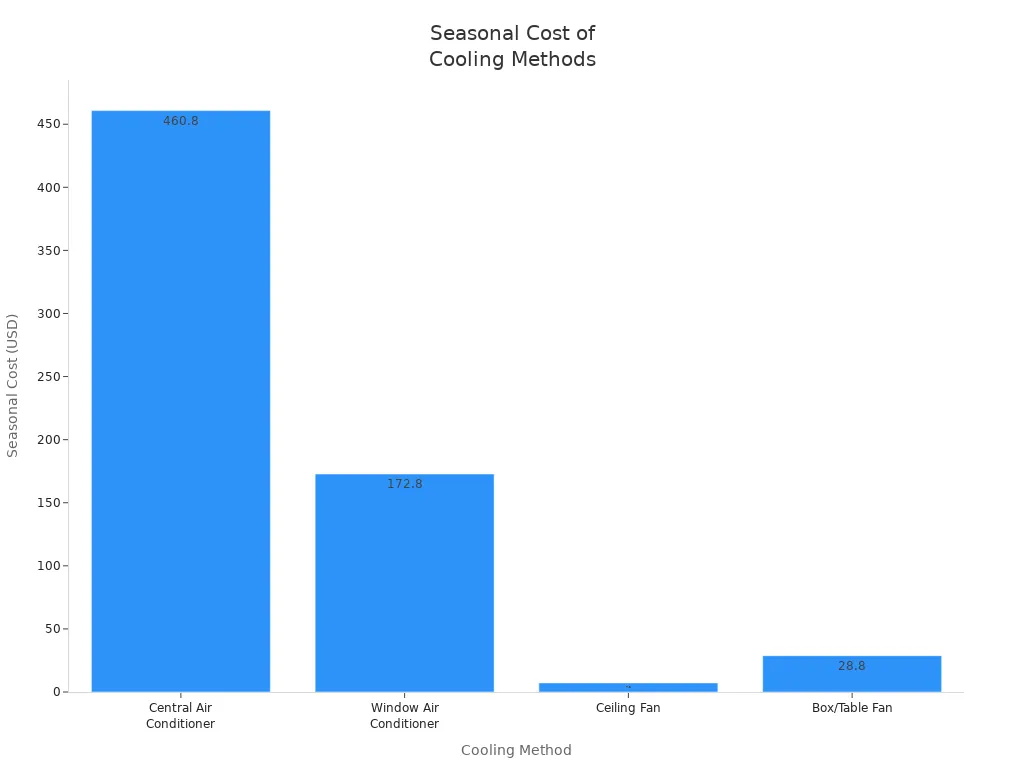
To get the most out of your ceiling fan, set it to spin counterclockwise in the summer. This creates a breeze that cools your skin. You can also adjust ceiling fans to higher speeds for bigger rooms. Always turn off the fan when you leave the room to save energy.
Tip: Raise your thermostat by 3–5 degrees when you use ceiling fans. You will still feel cool and save even more on your energy bill.
You can utilize portable fans and box fans to cool down a room quickly. These fans are easy to move and set up wherever you need them. Place a box fan near an open window to pull in cool air or push out hot air. If you want to make the most of fans, try using more than one at different heights. This helps mix the air and break up hot spots.
Here are some ways to use portable fans for better airflow:
Put fans near open doors or windows to create a breeze.
Elevate fans to mid-height to catch rising heat.
Keep fans at least 3 feet from walls or furniture.
Aim fans at spots where people gather or where heat builds up.
Combine different sizes and angles to keep air moving.
Run fans during cooler parts of the day and turn them off when it gets hot outside.
Pair fans with a dehumidifier to spread cool, dry air.
Box fans work well for bedrooms, dorms, or small living rooms. They do not lower the air temperature, but they help you feel cooler by moving air across your skin.
Where you put your fans matters. Good placement can help you cool down a room faster and use less energy. Try these tips:
Place fans both high and low to move warm air from the ceiling and bring cool air down.
Point fans downward in summer to send breezes right to you.
Use window fans to pull in cool air at night and push out hot air during the day.
Keep fans away from walls and clutter so air can flow freely.
You can also close doors to unused rooms. This keeps the cool air where you want it. If you use fans with blackout curtains or cross ventilation, you will notice an even bigger difference.
Note: Fans work best when you use them in rooms you are actually in. Turn them off when you leave to save power.
By following these tips, you can cool down a room, save money, and stay comfortable all summer long.
You might notice that your room feels hottest during the day. When the sun goes down, outdoor temperatures usually drop. This is the perfect time to focus on cooling small room without ac. Nighttime cooling works because the air outside becomes cooler than the air inside. If you take advantage of this, you can cool down a room and sleep better.
Many people find that opening windows at night lets in fresh, cool air. This simple trick helps push out the warm air that built up during the day. You do not need fancy gadgets or expensive upgrades. Just a little planning can make a big difference. Studies show that comfort ventilation, like using fans and letting in cool air, works well for cooling small room without ac. Fans help move the air across your skin, making you feel cooler even if the temperature does not drop much.
Here is a quick look at some effective non-AC cooling strategies:
| Cooling Strategy | How It Works | Best For |
|---|---|---|
| Comfort Ventilation | Moves air with fans or wind | Any climate |
| Exhaust Cooling | Pushes out hot air, brings in cooler air | Dry or moderate humidity |
| Whole-House Fans | Pulls cool air through open windows | Non-humid climates |
| Evaporative Coolers | Uses water to cool air | Dry climates |
Tip: Use a portable fan near your window at night. This helps pull in even more cool air and speeds up the cooling process.
When you want to start cooling small room without ac, try to open a window as soon as the outside air feels cooler than your room. This usually happens after sunset. You can create a gentle breeze by opening windows on opposite sides of your room. This cross-breeze helps sweep out the warm air and brings in the fresh night air.
Safety matters, especially if you live on the ground floor or have children. Here are some steps for safe and effective nighttime cooling:
Open only windows that are hard to reach from outside. Second-floor windows work best.
Use window restrictors or locks to keep windows open but secure.
Move beds and furniture away from windows to prevent climbing hazards for kids.
Clean your bedding and carpets often. This keeps dust and pollen out when you let in fresh air.
If you worry about rain, use a rain screen or adjust your window opening to keep water out.
Limit how wide you open windows if noise is a problem. Try earplugs or a white noise machine for better sleep.
Note: Always check the weather before you leave windows open at night. If you expect rain or strong winds, close them or use a restrictor.
You can make cooling small room without ac even more effective by combining nighttime cooling with other tips, like blackout curtains and fans. This way, you keep your space comfortable all night long without ac.
Keeping your room cool gets much easier when you block out extra heat. Many things in your home make more heat than you think. If you want to stay comfortable, you need to know which appliances and lights to avoid during hot weather.
Some household appliances act like mini heaters. When you use them, they add warmth to your room and make it harder to cool down. Take a look at this table to see which appliances create the most heat:
| Appliance | Energy Consumption (%) | Heat Generation and Recommendation |
|---|---|---|
| Clothes Dryers | 3.2 | Generate significant heat; recommended to reduce use or line dry. |
| Cooking Appliances | 1.3 | Produce heat during use; usage habits can reduce heat impact. |
| Refrigerators | 4.0 | Consume energy but designed to cool, not generate heat indoors. |
| Cooling Appliances | 10.7 | Consume energy to cool; do not add heat inside the home. |
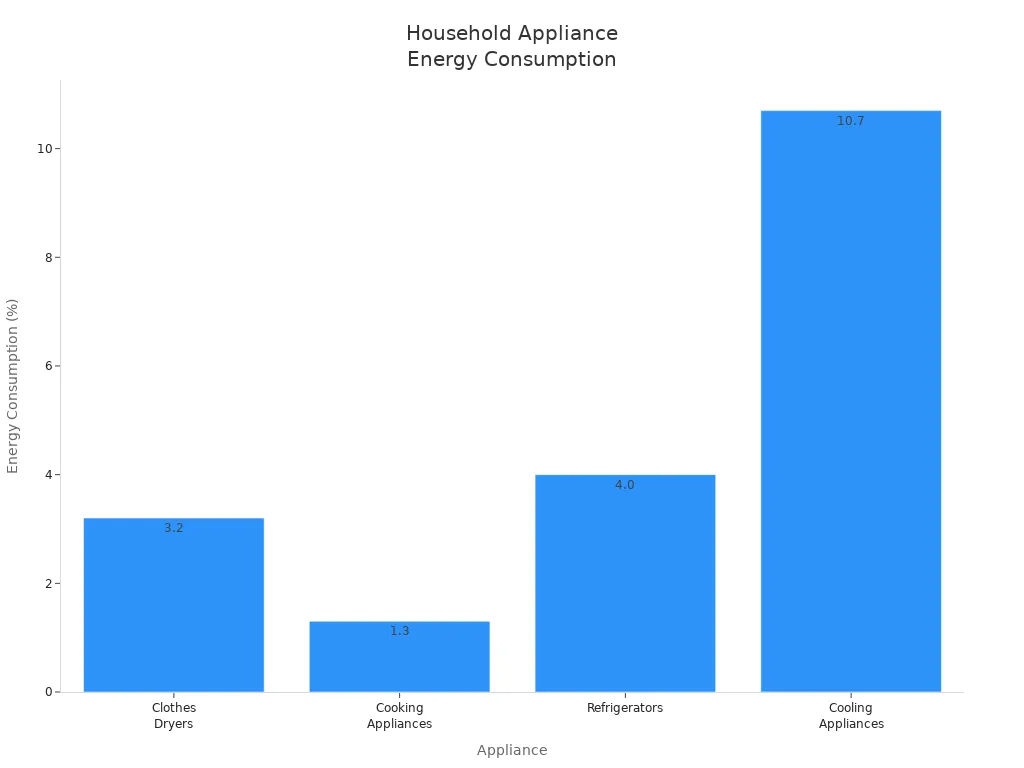
You can see that clothes dryers and cooking appliances are the main culprits. Try these tips to keep your room cooler:
Dry your clothes outside on a line instead of using the dryer.
Cook meals in the microwave, air fryer, or outside on a grill.
Avoid using the oven or stovetop during the hottest part of the day.
Unplug electronics when you are not using them. Many devices give off heat even when turned off.
If you make these small changes, you will notice your room stays cooler. You also save money and reduce electricity use at the same time.
Tip: Plan your chores and cooking for early morning or late evening when it is cooler.
Lighting can make a big difference in room temperature. Old-style incandescent bulbs give off a lot of heat. In a small room, just a few bulbs can raise the temperature by about two degrees Fahrenheit. That extra heat can make you feel uncomfortable and may even make you want to turn on the AC.
LED lights are a much better choice. They use less energy and give off almost no heat. Here is a quick comparison:
| Light Type | Heat Emission | Energy Efficiency | Effect in Small Rooms |
|---|---|---|---|
| Incandescent | Approximately 90% of energy emitted as heat | Around 10 lumens/watt (low efficiency) | Can raise temperature by about 2°F in small rooms |
| LED | Emits very little forward heat | Much higher efficiency (less wasted energy) | Minimal heat emission, thus negligible temperature increase |
Incandescent bulbs make your room warmer and waste energy.
LEDs stay cool to the touch and keep your space comfortable.
Switching to LEDs means you use less power and your room does not heat up.
If you want to keep your room cool and save on your energy bill, swap out every old bulb for an LED. You will feel the difference right away.
Note: LEDs last much longer than regular bulbs, so you will not have to replace them as often.
Window films are a smart way to keep your room cooler without AC. You stick these thin layers right onto your windows. They block out heat and UV rays, so your space feels more comfortable. You can choose from different types, like reflective, solar control, or low-e films. Each type offers its own level of heat protection.
Take a look at how much heat different window films can block:
| Window Film Type | Solar Heat Gain Reduction (%) |
|---|---|
| High efficiency films | 50 - 75 |
| Reflective films | ~78 |
| Solar control films | Up to 84 |
| Low-E films (some types) | Up to 93 |
If you want the best results, go for low-e or reflective films. These can block up to 93% of solar heat gain. That means your room stays cooler, and you use less energy to keep it that way.
Solar screens work a bit differently from window films. You install them on the outside or inside of your windows. They look like mesh screens, but they do a lot more than keep bugs out. Solar screens block sunlight before it even hits your glass. This keeps your room cooler and protects your furniture from fading.
Here’s what you get when you use solar screens:
Block 80-90% of harmful UV rays, so your skin and furniture stay safe.
Lower indoor temperatures by up to 15°F, especially on sunny days.
Cut down on glare, so you can watch TV or use your computer without squinting.
Let fresh air in while keeping dust and insects out.
Reduce your cooling costs by up to 25%.
Work best on south- and west-facing windows, where the sun is strongest.
Give you year-round benefits, helping with insulation in winter too.
Tip: If you want the most heat protection, install solar screens on the outside of your windows. This stops the sun’s rays before they reach the glass.
You can install window films and solar screens yourself, but you need to avoid some common mistakes. If you want your window film to last and work well, follow these tips:
Clean your windows really well before you start. Any dirt or dust will show up as bubbles under the film.
Use the right tools. A clean squeegee and a spray bottle with water help you get a smooth finish.
Measure your windows carefully. Cut the film a little bigger than the glass, then trim the edges after you stick it on.
Pick the right film for your needs. Some films block more heat, while others focus on privacy or glare reduction.
Check the specs before you buy. Look for films that list high solar heat gain reduction.
If you want a perfect job, consider hiring a pro. They have the tools and experience to get it right.
Note: Take your time with installation. A little patience now means a cooler, more comfortable room all summer long.
You might not notice small cracks or spaces around your doors and windows, but they can let in a lot of heat. These tiny gaps make your room warmer and force your fans or AC to work harder. If you want to keep your space cool and save money, sealing these gaps is a must. The U.S. Department of Energy says that sealing air leaks and adding insulation can cut your heating and cooling bills by up to 20%. That’s a big difference for such a simple fix!
Your door can be a major source of heat entry, especially if it’s old or not well-insulated. Not all doors are created equal when it comes to keeping out the heat. Here’s a quick look at which types work best:
| Door Type | Insulation (R-Value) | Durability | Maintenance |
|---|---|---|---|
| Fiberglass | High (around 6) | Excellent | Low |
| Steel | High (5-6, with foam core) | Very Good | Low |
| Wood | Moderate (3-4) | Fair | High |
Fiberglass doors do the best job. They have a foam core and don’t let heat pass through easily. Steel doors also work well if they have a foam core inside. Wood doors look nice, but they don’t block heat as well and can warp over time. If you can’t replace your door, you can still make it better. Try adding a door sweep at the bottom and use foam or felt strips along the edges. These simple steps help stop hot air from sneaking in.
Tip: If you rent, use removable weatherstripping or draft stoppers. They work just as well and won’t damage your door.
Weatherstripping is one of the easiest ways to seal gaps around doors and windows. You can buy it at any hardware store, and it only takes a few minutes to install. When you add weatherstripping, you block drafts and keep cool air inside your room. This means your fan or AC doesn’t have to work as hard, so you save energy and money.
Here’s what weatherstripping can do for you:
Keeps your room at a steady, comfortable temperature.
Stops dust, bugs, and noise from getting in.
Prevents water from leaking inside during storms.
Makes your home feel less drafty and more peaceful.
You have lots of options, like foam tape, felt, or rubber strips. Just pick the one that fits your door or window best. Make sure you press it down firmly and check for gaps. Replace it if it starts to peel or wear out.
Note: Combine weatherstripping with other energy-saving tips, like blackout curtains and window films, for the coolest results.
Sealing gaps is a small job that brings big rewards. You’ll notice your room feels cooler, your energy bills drop, and your space stays comfortable all summer long.
Bringing indoor plants into your room does more than just make the space look nice. You can use plants to help cool your room and create a more comfortable place to relax or study. Some plants even give you a bit of natural shade, which helps block sunlight and keeps things cooler.
You might wonder how plants can help cool a room. Plants use a process called transpiration. They take in water through their roots and release it as vapor from their leaves. This process adds moisture to the air and can make the room feel cooler, especially when the air is dry. Some studies show that plants can increase thermal comfort by about 12% in office buildings. However, research on how much plants lower the actual air temperature is mixed. Some studies say there is no big change in temperature, while others find that living walls or lots of plants can make a room feel cooler. The effect depends on the type of plant, how many you have, and where you put them.
Here’s a quick look at what scientists have found:
| Study / Finding | Effect on Indoor Temperature | Notes |
|---|---|---|
| Current PMC study | No significant change | Matches other studies by Ghazalli et al. and Tudiwer and Korjenic |
| Some past studies | Living walls can decrease temperature | Cooling effect depends on plant type and placement |
| Meng et al. (2022) | Sometimes temperature goes up | Opposite effect in some cases |
| Overall conclusion | Mixed results | Influenced by plant type, volume, and light |
If you want to get the most out of your plants, place them near windows or spots where sunlight comes in. Large-leaf plants can act like a mini umbrella, giving you shade and blocking some of the sun’s heat. You can even group several plants together to create a cool, green corner. When you stick to the shade, you’ll notice your room feels more comfortable, especially during the hottest part of the day.
Tip: Water your plants regularly and keep them healthy. Healthy plants give off more moisture and help cool the air better.
Not all plants work the same way. Some are better at providing shade and cooling your room. If you want to pick the best ones, look for plants with big leaves and a tropical background. These plants are great at blocking sunlight and adding moisture to the air.
Here are some top choices for natural shade and cooling:
Bird of Paradise: This plant has huge leaves that spread out and block sunlight. It loves bright spots and gives your room a tropical feel.
Parlor Palm: You can put this palm in low light, and its large fronds help create shade. It’s easy to care for and safe for pets.
Money Tree: This plant can grow tall, up to eight feet, and its broad leaves offer plenty of shade. It also brings a calming vibe to your space.
Monstera: Known for its big, split leaves, Monstera grows well in shade and humid rooms. It’s perfect for adding a cool, green touch.
You can mix and match these plants to fit your style and space. Place them near windows, desks, or anywhere you want to block sunlight. Remember, the more leaf coverage you have, the more shade you’ll get. You don’t need to fill your room with plants, but even a few can make a difference.
Note: If you have pets, check if your chosen plants are safe for them before bringing them home.
Adding indoor plants is a simple way to make your room feel cooler and more inviting. You get a touch of nature, a bit of shade, and a boost in comfort—all without using extra energy.
You might not realize it, but the way you arrange your furniture can make a big difference in how cool your room feels. When you push big items like sofas or bookshelves against windows or doors, you block the natural flow of air. This makes your room feel stuffy and uneven. If you want to feel cooler, start by moving large pieces away from windows, doors, and air vents. This simple change lets air move freely and helps your fans or cooling systems work better.
Try to keep your floor plan open. Avoid overcrowding your room with too much furniture. When you create open pathways, air can circulate without hitting obstacles. You’ll notice the room feels less hot and more comfortable. Minimalistic setups work best in small spaces. If you have a lot of furniture, pick the pieces you use most and store or donate the rest. Open floor plans and fewer items allow air to move around, which helps cool the space faster.
You can also check if any furniture blocks your air vents. If you find a couch or dresser in front of a vent, move it aside. This small adjustment can make your heating and cooling systems much more effective. You don’t need to buy anything new—just rearrange what you already have. Sometimes, even shifting a chair or table a few feet can make a big difference.
Tip: Stand in the doorway and look around. If you see a clear path from one side of the room to the other, you’re on the right track for better airflow.
Clutter doesn’t just make your room look messy—it also traps heat and blocks air from moving. When you have piles of clothes, stacks of books, or too many decorations, air can’t flow as easily. You end up with hot spots and more dust. If you want to breathe easier and stay cool, start by clearing off surfaces and picking up items from the floor.
Here are some easy ways to declutter and boost air circulation:
Remove items you don’t use often. Store them in bins or closets.
Keep surfaces like desks and shelves clear. This makes dusting easier and stops dust from floating around.
Vacuum regularly with a good filter. This helps get rid of dust and allergens that can make the air feel heavy.
Use a damp cloth when you dust. This keeps dust from becoming airborne.
Open your windows when you clean. Fresh air helps carry away dust and keeps your room feeling fresh.
Confined spaces often lack built-in ventilation, so you might need to use a box fan or open windows to get air moving. If you keep your room tidy, fans and fresh air can do their job much better. Decluttering also makes cleaning faster, so you spend less time sweating over chores.
Note: A clean, open room not only feels cooler but also looks bigger and more inviting. You’ll enjoy your space more and stay comfortable all summer long.
Keeping your room cool starts from the top. The roof and the area around your home play a big role in how much heat gets inside. If you want to lower indoor temperatures and save on energy, focus on two things: reflective roofing and planting shade trees.
When you make your roof reflective, you bounce sunlight away instead of letting it heat up your home. This simple change can have a big impact. Reflective roofing materials, sometimes called "cool roofs," lower the temperature of your roof surface by up to 4.7°C (about 8.5°F). Inside, you can feel a difference of 2.2 to 5.9°F cooler, especially if you do not use air conditioning. That means your room stays more comfortable, even on the hottest days.
You do not have to replace your whole roof to get these benefits. You can use reflective paint or special coatings on your existing roof. Light-colored shingles or metal roofing also work well. These options are great for homeowners. If you rent, talk to your landlord about adding a reflective coating or suggest temporary solutions like reflective tarps.
Tip: Check your roof for dark spots or worn areas. These places absorb more heat. Cover them with a reflective coating for a quick fix.
Here is a quick table to help you choose:
| Option | Best For | How It Helps |
|---|---|---|
| Reflective paint | Homeowners/renters | Easy to apply, lowers roof temp |
| Light-colored shingles | Homeowners | Long-lasting, reflects sun |
| Metal roofing | Homeowners | Durable, very reflective |
| Reflective tarps | Renters | Temporary, easy to remove |
Planting trees around your home is one of the best ways to block heat and keep your room cool. Trees provide natural shade, which stops the sun from hitting your walls and windows. Air under trees can feel up to 25°F cooler than areas without them. When you plant deciduous trees on the south and west sides, you block the strongest summer sun. This can cut your need for air conditioning by up to 30% and save 20-50% on cooling energy.
You get even more benefits. Trees cool the air through a process called transpiration. They also create a layer of cool air near your walls, which acts like extra insulation. Fast-growing trees give you shade sooner, while slow-growing ones last longer. Shrubs and vines near your walls help too.
Here are some quick tips for both renters and homeowners:
Renters: Use potted trees or tall plants on balconies or patios for instant shade.
Homeowners: Plant trees on the south and west sides for the best cooling effect.
Choose deciduous trees so you get shade in summer and sunlight in winter.
Add shrubs or vines near walls for extra cooling.
Use pergolas or awnings if you cannot plant trees.
Note: Plan where you plant trees. Place them close enough to block the sun but far enough from your house to avoid root problems.
By making smart choices with your roof and the area around your home, you can keep your room cooler, save energy, and enjoy a more comfortable space all summer.
You have 10 smart ways to keep your home cool without ac. Try blackout curtains, fans, and indoor plants to make your space comfortable. When you use these tips together, you can save money and enjoy a cooler room. Some people face challenges like poor airflow or old windows, but small changes help a lot. Over time, using several methods without ac leads to even bigger energy savings. Start today and see how easy it is to feel better at home!
Open your windows at night and use a fan to pull in cool air. Close your curtains during the day. Move furniture away from windows. Try using blackout curtains and window films for extra help.
Yes, blackout curtains block sunlight and keep heat out. You will notice your room feels cooler, especially in the afternoon. They also help you sleep better by making your room darker.
Place fans near windows or doors to move air through your room. Set ceiling fans to spin counterclockwise in summer. You can also turn on the exhaust fan in your kitchen or bathroom to push hot air outside.
Indoor plants add moisture to the air and give you some shade. Large-leaf plants work best. While they may not drop the temperature a lot, they make your room feel fresher and more comfortable.
You can open windows at night if you feel safe. Use window locks or restrictors for security. Choose upper-floor windows if possible. Always check the weather before leaving windows open.
Try not to use your oven or dryer during the hottest part of the day. Unplug electronics when you are not using them. Switch to LED lights to cut down on extra heat in your room.


