Are you torn between an infrared cooker and an induction cooker? Choosing the right cooking appliance can transform your kitchen experience.
In this article, we will compare these two popular technologies: infrared and induction cookers.
You’ll learn about their features, advantages, and disadvantages. By the end, you'll be equipped to make an informed decision that suits your cooking style.
An infrared cooker uses infrared radiation to generate heat. This technology heats the cookware directly, rather than the cooktop surface. It provides a unique cooking experience by transferring heat through a glass-ceramic plate, which allows various types of cookware to be used.
There are different types of infrared cookers, including:
Halogen Cookers: Utilize halogen bulbs for rapid heating.
Radiant Cookers: Feature electric coils that emit infrared heat.
Infrared cookers stand out for several reasons. Here’s a quick look at their key features:
Heating Technology: They use radiant heat, which means the heat is emitted from the element beneath the surface. This allows for quick and efficient cooking.
Cookware Compatibility: You can use almost any flat-bottom cookware, including:
Stainless steel
Aluminum
Glass
Ceramic
Energy Efficiency Ratings: Infrared cookers typically have energy efficiency ratings around 65-70%. This makes them a solid choice for energy-conscious consumers.
Feature | Description |
Heating Method | Radiant heat from beneath the glass surface |
Cookware Compatibility | Works with various materials |
Energy Efficiency | 65-70% efficiency |
Infrared cookers come with several advantages that make them appealing:
Versatility: They can accommodate non-magnetic cookware, which means you don’t need to buy new pots and pans. This flexibility is a significant advantage over induction cookers, which require magnetic cookware.
Even Heating: Infrared cookers provide consistent and even heat distribution. This results in well-cooked meals without hot spots, making them great for tasks like simmering sauces or baking.
Cost-Effectiveness: The initial investment for infrared cookers is often lower than that for induction cookers. For instance, Windspro's infrared cookers offer customizable designs and high power, making them ideal for various cooking tasks without breaking the bank.
While infrared cookers have their perks, they also come with some drawbacks:
Safety Concerns: The surfaces can get extremely hot, posing a burn risk. Care must be taken, especially in households with children or pets.
Slower Temperature Control: Compared to induction cookers, infrared cookers may take longer to adjust temperatures. This can be a drawback for recipes requiring precise heat adjustments.
Cleaning Challenges: The high heat can cause spills to burn onto the surface, making cleanup more difficult. Regular maintenance is needed to keep the cooktop in good condition.
In summary, when comparing infrared cooker vs induction cooker, it’s essential to weigh these features and drawbacks. Infrared cookers offer versatility and cost-effectiveness, but safety and cleaning challenges should be considered. Understanding these aspects helps you make an informed choice for your cooking needs.
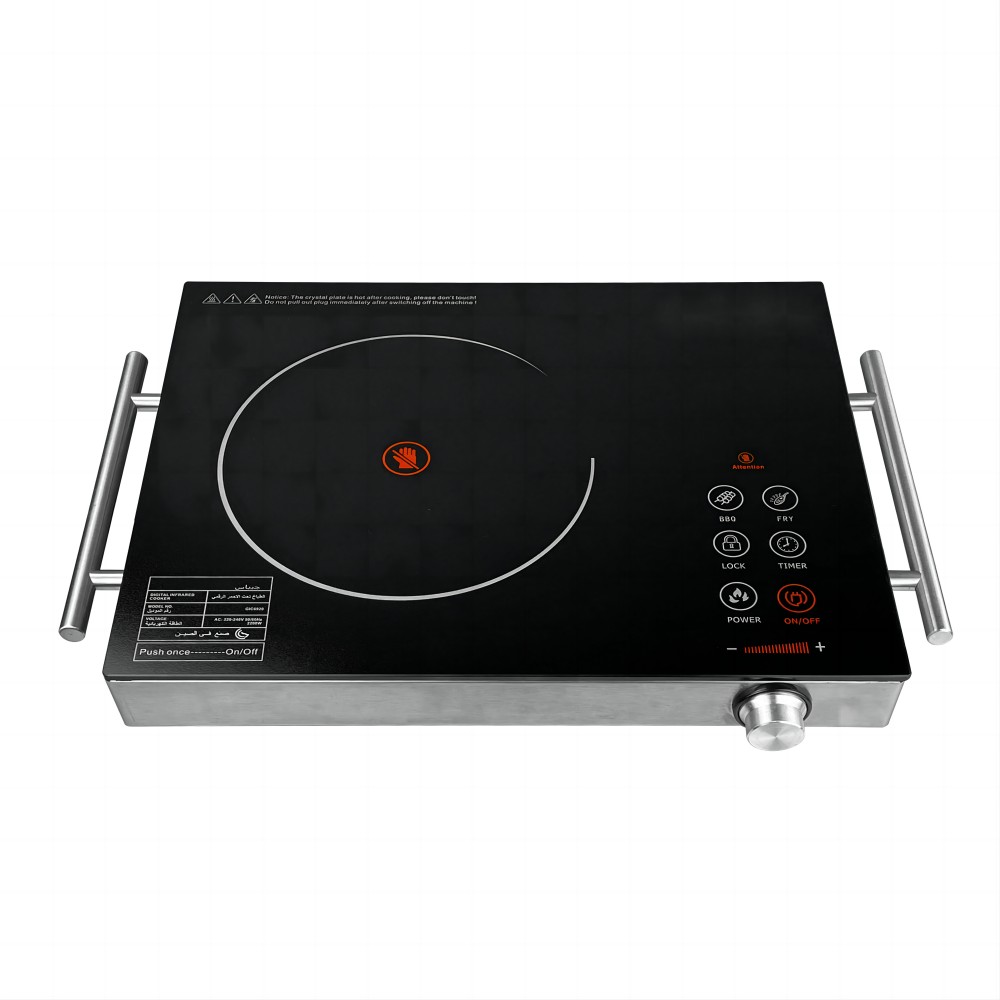
An induction cooker is a modern cooking appliance that uses electromagnetic energy to heat pots and pans directly. Unlike traditional cooking methods, it doesn’t rely on heating the cooktop surface. Instead, a copper coil beneath the glass-ceramic surface generates a magnetic field when activated.
This magnetic field induces heat directly in compatible cookware, allowing for rapid and efficient cooking. Key components include:
Induction Coil: Generates the magnetic field.
Control Unit: Regulates power and temperature settings.
Glass-Ceramic Surface: Provides a smooth, easy-to-clean cooking area.
Induction cookers have several standout features that differentiate them from infrared cookers:
Heating Technology: Induction cooking heats cookware directly through electromagnetic induction. This method is faster and more efficient compared to infrared cooking, which heats the cooktop surface first.
Cookware Compatibility: Induction cookers require magnetic cookware. Suitable materials include:
Cast iron
Magnetic stainless steel
Some enameled cookware
Energy Efficiency Ratings: Induction cookers typically boast energy efficiency ratings of 84-90%. This high efficiency means less energy waste and lower utility bills.
Feature | Description |
Heating Method | Electromagnetic induction |
Cookware Compatibility | Requires ferromagnetic materials |
Energy Efficiency | 84-90% efficiency |
Induction cookers offer several advantages that make them popular among home cooks:
Rapid Heating: They can boil water faster than gas or electric stovetops. This speed is a significant advantage for busy kitchens.
Precise Temperature Control: Induction cookers respond quickly to temperature adjustments. This allows for delicate cooking techniques, such as simmering sauces or melting chocolate.
Safety Features: Many induction cookers come equipped with safety features, including:
Cool-to-Touch Surface: The cooktop remains relatively cool, reducing burn risks.
Automatic Shut-Off: This feature activates when no cookware is detected, enhancing safety.
For instance, Windspro's induction cookers are recognized for their high energy efficiency and quick response times, making them ideal for precise cooking tasks.
Despite their benefits, induction cookers have some drawbacks:
Cookware Limitations: They only work with magnetic cookware. This can be a hassle if you have a collection of non-magnetic pots and pans.
Higher Initial Cost: Induction cookers tend to be more expensive upfront than infrared models. Additionally, purchasing compatible cookware can increase the overall investment.
Potential Noise: Some induction cookers may produce a low humming sound during operation. This noise comes from the interaction between the magnetic field and the cookware.
When considering the infrared cooker vs induction cooker debate, it’s important to weigh these pros and cons. Induction cooking offers rapid heat and efficiency, but the limitations on cookware and initial costs are factors to consider.
When it comes to heating speed, induction cookers take the lead. They can boil water in about half the time compared to infrared cookers. For example, boiling a pot of water can take around 3-4 minutes on an induction cooker, while it may take 6-8 minutes on an infrared model.
Induction cookers typically boast energy efficiency ratings of 84-90%, meaning they convert most of the energy used into heat for cooking. In contrast, infrared cookers have slightly lower efficiency ratings, generally around 65-70%. This difference can impact long-term costs, especially for frequent cooks.
Cooker Type | Heating Time (Boiling Water) | Energy Efficiency |
Induction Cooker | 3-4 minutes | 84-90% |
Infrared Cooker | 6-8 minutes | 65-70% |
Temperature control is crucial for achieving perfect results. Induction cookers excel in this area, offering precise temperature adjustments. When you change the setting, the response is immediate, allowing for delicate tasks like simmering sauces.
Infrared cookers, on the other hand, can take longer to adjust temperatures. This delay may lead to fluctuations in cooking results. For best practices, it’s essential to:
Preheat the infrared cooker for even results.
Use a thermometer to monitor temperatures closely when using infrared cookers.
Safety is a top priority in any kitchen. Induction cookers have several safety features, such as:
Cool-to-Touch Surface: The cooktop remains relatively cool, reducing burn risks.
Automatic Shut-Off: This feature activates when no cookware is detected, enhancing safety.
Infrared cookers also have safety features but come with some risks. The surfaces can become extremely hot, posing a burn hazard. Users must be cautious, especially in homes with children or pets.
Both types of cookers are designed for ease of use, but there are differences in maintenance. Induction cookers are generally easier to clean. Since the surface stays cooler, spills are less likely to burn on. A quick wipe down is often all that’s needed.
Infrared cookers require more attention. Because they reach higher temperatures, spills can burn onto the surface, making cleanup more challenging. Regular maintenance is essential to keep the cooktop in good condition.
Feature | Induction Cooker | Infrared Cooker |
Cleaning Ease | Easy, quick wipe down | Requires more effort to clean |
Surface Temperature | Cool during cooking | Can get very hot |
Maintenance Frequency | Low, occasional cleaning | Higher, regular cleaning needed |
In the debate of infrared cooker vs induction cooker, it’s clear that both have their strengths and weaknesses. Understanding these differences can help you choose the right appliance for your cooking needs.
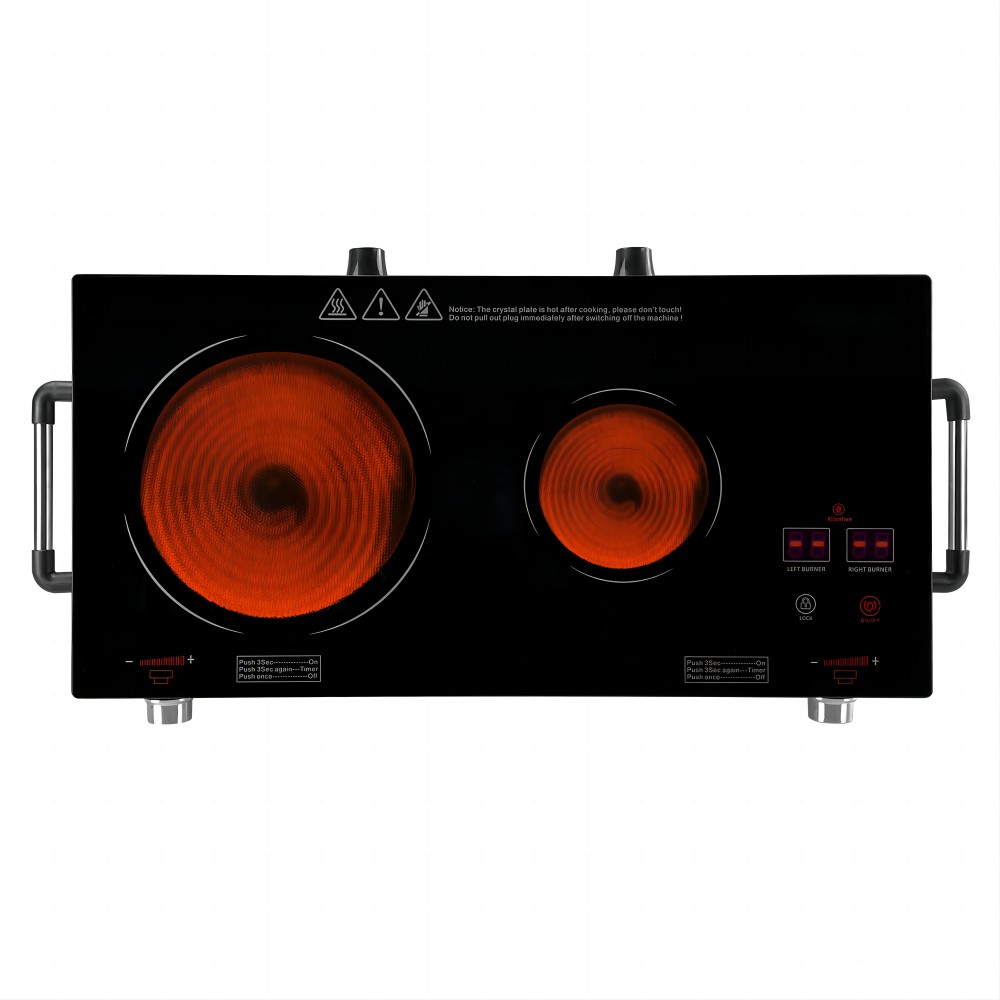
Infrared cookers are perfect for a variety of users, especially those who value versatility and ease of use. Here are some profiles of ideal users:
Home Cooks Who Use Various Cookware: If you have a collection of non-magnetic pots and pans, infrared cookers are a great fit. They work well with materials like aluminum, glass, and ceramic.
Budget-Conscious Consumers: Infrared cookers often come at a lower price point compared to induction models. This makes them an appealing choice for those looking to save on initial investment without sacrificing quality.
Occasional Cooks: For users who don’t cook daily but still want reliable performance, infrared cookers offer a straightforward solution. They heat up quickly and are easy to operate, making them ideal for quick meals.
Infrared cookers shine in several cooking scenarios:
Grilling and Roasting: Their ability to provide consistent, even heat makes them excellent for grilling meats and vegetables.
Baking: Infrared technology ensures that baked goods cook evenly, producing great results for cakes and bread.
Versatile Cooking Styles: Whether you’re simmering a sauce or sautéing vegetables, infrared cookers handle various cooking methods effectively.
Induction cookers are best suited for users who prioritize speed and precision in their cooking. Here are some profiles of ideal users:
Professional Chefs and Serious Home Cooks: Those who demand control over their cooking processes will appreciate the precise temperature adjustments that induction cookers offer.
Busy Families: Induction cookers are perfect for families that need to prepare meals quickly. Their rapid heating capabilities help streamline meal prep during busy weeknights.
Health-Conscious Individuals: With safety features like cool-to-touch surfaces and automatic shut-off, induction cookers are ideal for those who prioritize kitchen safety, especially in homes with children.
Induction cookers perform exceptionally well in a variety of cooking tasks:
Rapid Boiling: They can boil water in a fraction of the time it takes other cookers, making them ideal for pasta and rice dishes.
Precise Cooking Techniques: For delicate tasks like tempering chocolate or making sauces, the precise temperature control is invaluable.
Energy-Efficient Cooking: Induction cookers are designed to minimize energy waste, making them an environmentally friendly option.
User Profile | Best Cooker Type | Key Benefits |
Home Cooks | Infrared Cooker | Versatile cookware compatibility |
Budget-Conscious Consumers | Infrared Cooker | Lower initial cost |
Occasional Cooks | Infrared Cooker | Quick and easy operation |
Professional Chefs | Induction Cooker | Precise temperature control |
Busy Families | Induction Cooker | Rapid heating for quick meal prep |
Health-Conscious Individuals | Induction Cooker | Enhanced safety features |
In the infrared cooker vs induction cooker discussion, understanding user profiles helps clarify which appliance suits your cooking style best. Each type has unique strengths, catering to different culinary needs and preferences.
A: No, induction cookers require magnetic cookware. Only pots and pans made of ferromagnetic materials, like cast iron and certain stainless steels, will work.
A: Clean an infrared cooker by wiping the cool surface with a damp cloth and mild cleaner. For stubborn stains, use a scraper designed for glass-ceramic surfaces.
A: Induction cookers generate electromagnetic fields, but studies show they are safe for most users. Individuals with pacemakers should consult their doctor.
A: Induction cookers are generally more energy-efficient, converting 84-90% of energy into heat, compared to 65-70% for infrared cookers.
A: Many manufacturers advise against using infrared cookers for large-batch canning, as prolonged high heat can damage the appliance.
In this article, we compared infrared cookers and induction cookers. Each has unique strengths and weaknesses.
Induction cookers offer rapid heating and precise control, while infrared cookers provide versatility with cookware.
When choosing between them, consider your cooking habits, safety needs, and energy efficiency.
Ultimately, the best choice depends on your individual preferences and kitchen requirements.


