The best way to cool your home depends on where you live and what makes you feel comfortable. If you live in a dry place, a swamp cooler can help by putting water in the air. Air conditioners work well in both dry and wet places. They can control the temperature very well. When you look at cooling methods, think about these things:
How often you need to take care of it
How much energy it uses and how it affects the environment
The swamp cooler vs air conditioner choice is usually about these real-life things.
Swamp coolers work best in hot, dry places. They add moisture to the air and use less energy. Air conditioners cool well in all types of weather. They remove moisture, so they are good for humid places. Swamp coolers cost less to buy and use. But they need more care and a steady water supply. Air conditioners cost more at first and use more energy. But they give steady cooling and need less care. Pick the right system for your weather, money, and how much work you want to do. Swamp coolers give fresh air and are quieter. Air conditioners clean the air inside but can be louder. Swamp coolers are better for the environment but use more water. Air conditioners use more energy and special chemicals. Portable swamp coolers are easy to set up and move. They are best for dry places. Portable air conditioners work anywhere but need a vent.
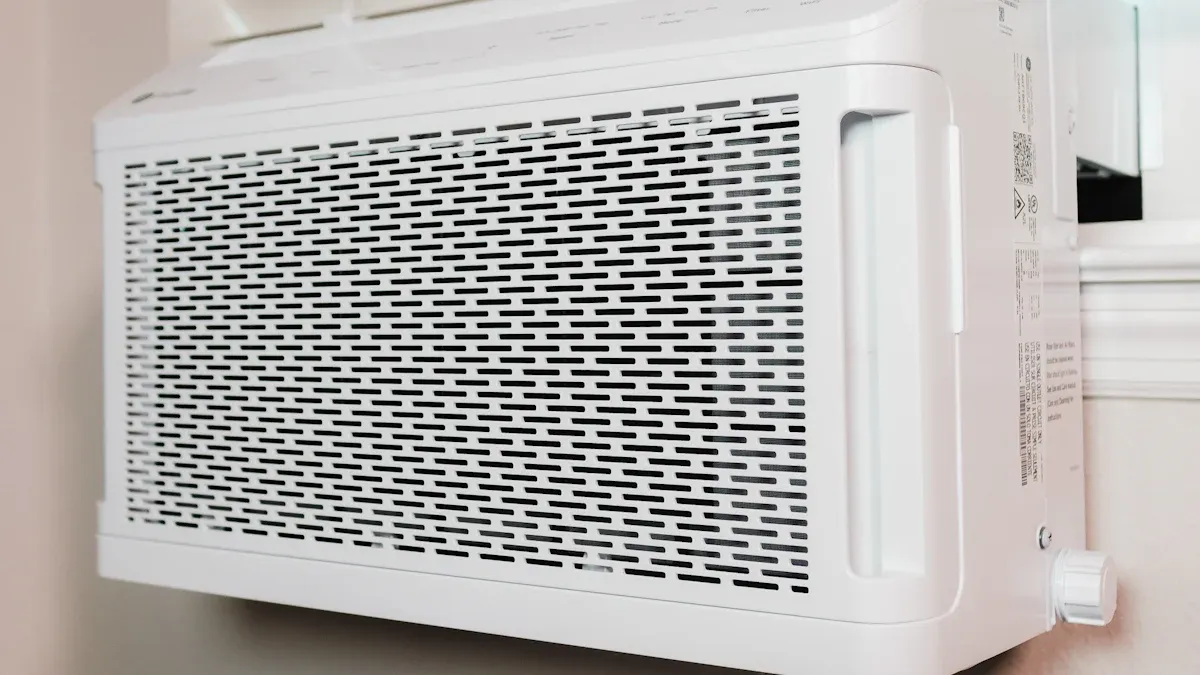
Evaporative coolers use water to make air cooler. Warm air from outside goes into the unit. The air moves through pads that are wet. When the water in the pads turns into vapor, the air gets cooler. The cool air then goes into your house. This adds water to the air, which helps if your skin or eyes feel dry. Swamp coolers work best when the air is not humid.
A swamp cooler is simple inside. It has a fan, a water pump, and cooling pads. The fan brings in air from outside. The water pump keeps the pads wet. Air goes through the pads, cools down, and enters your house. You need to keep the pads wet and check the water. Most swamp coolers need to be checked often to work well.
Swamp coolers are best for dry places. If you live where the air is dry, you will get the most cooling. If it is humid, they do not work as well. Humid air already has a lot of water, so the cooler cannot cool much. Pick a swamp cooler if you want to add water to dry air.
Air conditioners cool air in a different way. They use a closed system with a refrigerant. The refrigerant takes heat from the air inside your house. The system moves the heat outside. This makes the air cool and also takes out water. You get cool and dry air in your house.
An air conditioner has more parts. It has a compressor, a condenser coil, and an evaporator coil. The compressor moves the refrigerant around. The evaporator coil takes heat from the air inside. The condenser coil lets the heat go outside. Air conditioners need more care because they have more parts. You might need a pro to fix them.
Air conditioners work in almost any place. You can use them in dry or humid areas. They take water out of the air, so you feel better when it is sticky outside. Air conditioners cool big spaces better than swamp coolers.
Here is a quick comparison to help you see the main differences:
| Aspect | Swamp Cooler (Evaporative Cooler) | Air Conditioner |
|---|---|---|
| Cooling Method | Cools air by evaporating water, adds moisture to dry air | Uses refrigerant to transfer heat out, removes moisture |
| Moisture Effect | Adds moisture, ideal for dry climates | Removes moisture, ideal for humid climates |
| Energy Efficiency | More energy-efficient, uses 15-35% of electricity compared to AC | Less energy-efficient, higher electricity consumption |
| Climate Suitability | Best in hot, dry climates; ineffective in high humidity | Suitable for nearly all climates, especially humid areas |
| Maintenance | Needs regular checks and water supply | Needs yearly maintenance, more parts can fail |
| Noise Level | Usually quieter | Can be noisy, especially window units |
| Environmental Impact | Lower energy use, no chemicals | Uses refrigerants, higher CO2 emissions |
| Cost Range | $100 to $2,500 | $200 to $6,500 |
When you look at swamp coolers and air conditioners, you see that swamp coolers use less energy and cost less to run. Air conditioners cool better in all places but use more power and need more care. Think about your weather, what makes you comfortable, and how much work you want to do. This overview helps you get ready to compare more details next.
When you look at swamp coolers and air conditioners, think about where you live. Swamp coolers work best in places that are hot and dry. They use water to cool the air and make it less dry. If the air has more than 25% humidity, swamp coolers do not work as well. The air can feel sticky or wet. You might even get mold or too much water inside.
Air conditioners work in almost any climate. They take away heat and water from the air. This helps you feel cool even when it is muggy outside. If you live where it is humid, air conditioners keep your home cool and dry. Here is a quick list to show the differences:
Swamp coolers are best for hot, dry places.
Swamp coolers do not work well if humidity is over 25%.
Air conditioners work in both dry and wet places.
Air conditioners take out water, so they are good for humid areas.
You want your house to be cool when it is hot outside. Swamp coolers can drop the temperature by 15°F to 40°F if the air is dry. This big change only happens when the air is not wet. If the air is damp, swamp coolers only cool by about 10°F. Air conditioners do not care if the air is wet or dry. They use a special cycle to take heat out of your house. This gives you steady and strong cooling no matter the weather.
| Cooling Device | Typical Temperature Reduction | Conditions/Notes |
|---|---|---|
| Swamp Cooler | 15°F to 40°F | Indoor, hot and dry conditions |
| Swamp Cooler | Up to 10°F | Outdoor air temperature reduction, refreshing effect |
| Air Conditioner | Consistent, significant cooling | Works in all humidity levels |
If you want your house to feel the same every day, air conditioners give you better control.
How much water is in the air can change how you feel. Swamp coolers add water to the air. This is good if you live in a dry place. But if your house is already damp, it can make things worse. Too much water can cause mold or make the air feel sticky.
Air conditioners do the opposite. They take water out of the air while cooling it. This is great for places where the air feels heavy or wet. You get cool, dry air that feels nice. If you live in a dry place, air conditioners can make the air too dry. You might need a humidifier.
| Feature | Swamp Cooler (Evaporative Cooler) | Air Conditioner |
|---|---|---|
| Cooling Mechanism | Uses evaporation of water to cool air | Uses refrigeration cycle to cool air |
| Effect on Humidity | Adds moisture to the air, increasing indoor humidity | Removes moisture from the air, decreasing indoor humidity |
| Suitable Climate | Best for dry climates where added humidity is beneficial | Best for humid climates where dehumidification is needed |
| Comfort Impact | Can cause over-humidification in humid environments | Can cause excessively dry air in dry environments |
Tip: Always pick the right cooling method for your weather. This will help you stay comfortable and cool.
You might ask how much power a swamp cooler needs. Swamp coolers are known for using less energy. They use much less electricity than air conditioners. A normal swamp cooler uses about 0.35 kWh each hour. A central air conditioner uses about 3.1 kWh every hour. You can see the difference in this table:
| Cooling System | Estimated Hourly Energy Consumption (kWh) |
|---|---|
| Swamp Cooler | ~0.35 |
| Central Air Conditioner | ~3.1 |
This big difference is why many people in dry places pick swamp coolers.
Many things can change how well your swamp cooler works. The size of the cooler, the fan speed, and how wet the pads are all matter. Swamp coolers work best in dry air with good airflow. If you open your windows a little, fresh air moves through your house. This helps the cooler work better. Clean pads and regular checks help your cooler use less power.
Swamp coolers can help you save money. Some coolers use only about 10% of the energy that air conditioners need. This means you could save up to 90% on cooling costs if you live in the right place. Studies show that swamp coolers or indirect evaporative cooling can cut your electricity use by more than half. Using less energy means your bills are lower. But remember, swamp coolers use water, so you should think about water costs if you live somewhere dry.
Air conditioners use more electricity than swamp coolers. A central air conditioner can use about 3.1 kWh each hour. This higher power use can make your bills bigger, especially in hot months when you use it a lot. Air conditioning works in all climates, but you pay more for that.
You can check how efficient your air conditioner is by looking at its SEER rating. SEER means Seasonal Energy Efficiency Ratio. A higher SEER number means the unit uses less energy to cool your home. For example, if you go from a SEER 10 to a SEER 16 air conditioner, you can cut your cooling costs by almost 38%. Most new air conditioners have SEER ratings between 15 and 18. Some high-efficiency models go above 20. These units often use smart features like variable-speed compressors and eco-friendly refrigerants. They help you save money and lower your effect on the environment.
How much energy your air conditioner uses depends on a few things. The size of your house, how well it is insulated, and how often you use the system all matter. Hotter weather and poor insulation make your air conditioner work harder. New systems with smart thermostats and good care can help you use less energy. Even with these features, air conditioners still use more power than swamp coolers. You get strong, steady cooling, but you should expect higher energy bills.
Tip: If you want to save money and energy, look for a high-SEER air conditioner and keep your system in good shape.
Swamp coolers come in many prices. Most cost between $40 and $2,300. The price changes with the size and type. Small swamp coolers are cheaper. Big ones for the whole house cost more.
You also pay to put in a swamp cooler. Workers charge $50 to $70 each hour. Taking out an old cooler costs $70 to $150 more. Most people pay about $2,500 to install one. The price can change if your house or cooler is bigger.
Some houses need extra work before using a swamp cooler. You might need new ducts, roof help, or water pipes. These things make the total price go up.
Central air conditioners cost more than swamp coolers. The unit and setup together cost about $5,377. If you switch from a swamp cooler to central air, it can cost $3,000 to $7,000.
Putting in an air conditioner takes more time and skill. You pay for labor, new wires, and sometimes new ducts. This makes the total cost higher than a swamp cooler.
You may need better electric parts or new vents. These changes can make your bill bigger.
Here is a quick table to compare the average costs:
| Item | Average Cost Range (USD) |
|---|---|
| Swamp Cooler Unit Price | $40 to $2,300 |
| Labor Cost (per hour) | $50 to $70 |
| Removal and Disposal | $70 to $150 |
| Typical Installation Cost | Around $2,500 |
| Central Air Conditioner Install | About $5,377 |
| Conversion (Swamp to AC) | $3,000 to $7,000 |
Swamp coolers use less power than air conditioners. Most use only 200 to 400 watts. This keeps your energy bill low each month.
Swamp coolers need water all the time. This adds to your costs, especially in dry places.
You may pay more in summer when you use more water. But your electric bill stays low.
Air conditioners use a lot more power. They use several kilowatts. This means your energy bill is higher, especially in hot weather.
You pay more for power in summer when you use the air conditioner more.
Swamp coolers: Energy costs are about $20–$30 each month.
Air conditioners: Energy costs are about $50–$100 each month.
Swamp coolers save money on power, but water costs can add up.
| Criteria | Swamp Cooler | Air Conditioner |
|---|---|---|
| Monthly Energy Cost | $20–$30 | $50–$100 |
| Electricity Consumption | 200–400 watts | Several kilowatts |
| Water Usage | Continuous supply needed | None |
| Maintenance | Water refills, pad cleaning | Professional servicing |
| Best Climate | Dry climates | Any climate |
You need to clean and change pads, wash the tank, clear minerals, and check belts often.
Most jobs are easy and you can do them yourself. Yearly care costs between $50 and $500. Fixing a motor or pump costs $100 to $700.
Swamp coolers last about 10 to 15 years. After that, they may break more and need to be replaced.
You need to change filters, look for leaks, and get pro checkups.
Air conditioner care is harder and costs more. You need a pro for most fixes.
Central air conditioners last about 12 to 17 years. They may need fewer fixes, but each fix costs more.
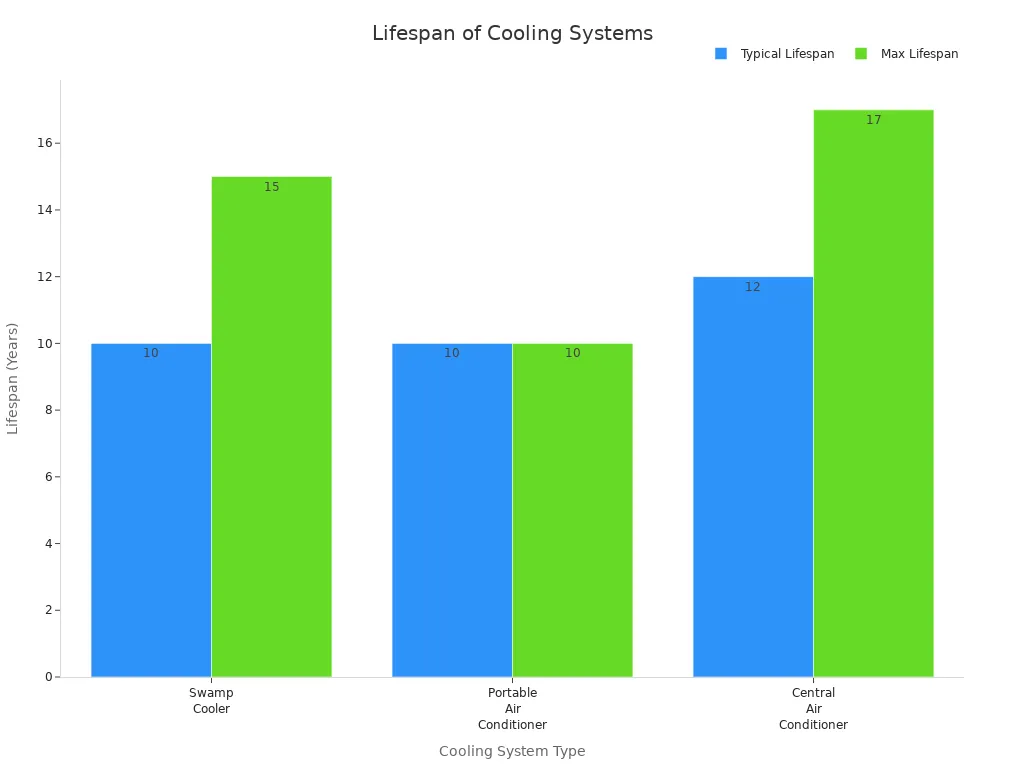
If you want to save money, swamp coolers are cheaper to run and fix, but you must do more work. Air conditioners cost more to buy and use, but they last longer and need less care.
Swamp coolers have many good points, especially in dry places. Here are the main pros and cons:
Pros:
You spend less on energy bills because these coolers use less electricity.
You always get fresh air since the unit brings in air from outside.
The cooler puts moisture in your home, which helps with dry skin and nose problems. It also helps protect wood furniture.
Most units are easy to set up by yourself, and taking care of them is simple and cheap.
The system is quiet, so it works well in bedrooms or living rooms.
Swamp coolers are better for the environment because they do not use chemicals or refrigerants.
Cons:
The cooler does not work as well when the air is humid or when it rains.
You must clean and change pads often to stop mold, mildew, and bad smells.
Swamp coolers work best in hot, dry months. You may need something else in winter or when it is humid.
If you forget to open windows or skip maintenance, you might get poor airflow or water leaks.
Tip: Clean your swamp cooler and change pads often. This keeps it working well and stops most problems.
Air conditioners give strong cooling and work in many places. Here are their main good and bad points:
Pros:
You get steady cooling even if the air is dry or humid.
The system takes water out of the air, so you feel better when it is sticky outside.
You can set the temperature just how you like it.
Many units have timers, remotes, and smart features.
Central air conditioners cool big spaces evenly.
Cons:
You pay more for electricity, especially when it is hot outside.
You need a pro to install and take care of the system, which can cost more over time.
Some units are noisy, especially window or portable ones.
Portable or window units can take up space in your room or window.
If you do not clean filters or drains, you might get leaks or weaker cooling.
Note: Pick a high-efficiency air conditioner and keep it clean. This helps you save money and avoid problems.
Here is a quick table to show the main differences between these two cooling methods:
| Feature | Swamp Cooler | Air Conditioner |
|---|---|---|
| Best Climate | Hot, dry areas | Any climate |
| Energy Use | Very low | High |
| Adds or Removes Humidity | Adds moisture | Removes moisture |
| Air Quality | Brings in fresh air | Recirculates indoor air |
| Maintenance | Frequent, simple tasks | Less frequent, often professional |
| Installation | Easy, often DIY | Needs professional setup |
| Cost | Low purchase and running costs | Higher upfront and running costs |
| Cooling Power | Limited in humid weather | Strong in all conditions |
| Environmental Impact | Eco-friendly, no chemicals | Uses refrigerants, higher emissions |
| Common Issues | Mold, odors, water leaks if neglected | Filter clogs, noise, higher bills |
When you look at swamp coolers and air conditioners, you see each one has special strengths. Your local weather and what makes you comfortable will help you choose the best one for your home.
Noise can make a big difference in how comfortable you feel at home. Swamp coolers usually run quietly. The main sound comes from the fan and water moving through the pads. You might hear a gentle hum or the soft splash of water. Many people find this sound easy to ignore, even at night. Some swamp coolers are so quiet that you can use them in bedrooms or living rooms without any trouble.
Air conditioners can be louder. Window units and portable air conditioners often make more noise because of their compressors and fans. You might hear a steady buzz or a clicking sound when the unit turns on and off. Central air conditioners are quieter inside the house, but you may still hear the outdoor unit running. If you want a very quiet home, you should check the noise rating before you buy any cooling system.
Here is a quick comparison:
| Cooling System | Typical Noise Level | Where You Hear It Most |
|---|---|---|
| Swamp Cooler | Low (gentle hum, water) | Indoors, near the unit |
| Window AC | Moderate to high (buzz) | Indoors, near the window |
| Central Air | Low indoors, moderate outside | Outside, near condenser |
Tip: If you are sensitive to noise, look for models with low decibel ratings or special "quiet" features.
The air you breathe indoors matters for your health and comfort. Swamp coolers bring in fresh air from outside. The fan pulls outdoor air through wet pads, cools it, and sends it into your home. This process keeps the air moving and helps push out stale air. You get a steady supply of fresh air, which can make your home feel less stuffy. However, swamp coolers do not filter the air very well. Dust and pollen can still get inside unless you add special filters.
Air conditioners work differently. Most air conditioners cool and recirculate the same indoor air. They pull warm air from your room, cool it, and send it back. This keeps your home cool, but it does not bring in much fresh air. Some central air systems have filters that catch dust and allergens, which helps improve air quality. Still, you might notice the air feels dry or stale after a while.
Some newer cooling systems, like indirect evaporative coolers, use 100% outside air. These units can add optional filters to trap dust and other particles. This setup gives you both fresh air and better filtration, which helps keep your indoor air clean.
Swamp coolers add moisture and bring in fresh air, but basic models do not filter out dust.
Air conditioners remove moisture and filter indoor air, but they do not bring in much fresh air.
Advanced systems with outside air intake and filters can give you the best of both worlds: cool, clean, and fresh air.
Note: If you have allergies or want cleaner air, look for cooling systems with good filters or fresh air features. This can help you breathe easier and feel more comfortable at home.
You want a cooling system that is easy to set up. Portable air conditioners need a venting kit. You must place the vent hose in a window or door to push hot air outside. This step can take some time and limits where you can put the unit. You do not need to install ducts or make big changes to your room, but you must always keep the vent in place.
Portable swamp coolers are much simpler. You only need to fill the water tank and plug them in. You do not need to vent them outside. You can put them anywhere in the room. This makes setup quick and easy, with almost no effort.
Both portable air conditioners and swamp coolers have wheels, so you can move them from room to room. However, portable air conditioners need to stay near a window or door for venting. This limits your options. Swamp coolers do not need venting, so you can move them anywhere you want. You can even use them in rooms without windows.
If you rent your home or live in a dorm, you may not want to make changes to the building. Portable air conditioners work well because you do not need to install anything permanent. You only need to set up the vent kit. Portable swamp coolers are even better for renters. You do not need to change anything in your room. You can take them with you when you move.
Tip: If you want the fastest and easiest setup, choose a portable swamp cooler. If you need strong cooling in any climate, a portable air conditioner is a good choice.
Small spaces heat up quickly. Portable air conditioners give you strong, steady cooling in any weather. They work well in bedrooms, dorms, or small apartments. Portable swamp coolers use less energy and cost less to run, but they work best in dry places. In humid areas, they may not cool enough.
You may want extra cooling in one room, like a home office or bedroom. Portable air conditioners can cool these spaces well, even if the rest of your home uses a different system. Swamp coolers can also help, but only if the air is dry.
Climate considerations matter when you choose a portable cooler. Portable air conditioners work in all climates, including humid places. They always give you the same cooling power. Portable swamp coolers work best in hot, dry climates. If you live where it is humid, they may not help much.
Portable swamp coolers use up to 75% less electricity than portable air conditioners. This means lower bills if you live in a dry area. Portable air conditioners use more energy, but they cool better in all conditions. Here is a quick table to help you compare:
| Feature | Portable Air Conditioner | Portable Swamp Cooler (Evaporative Cooler) |
|---|---|---|
| Energy Use | High | Up to 75% less than AC |
| Climate Suitability | All climates | Best in hot, dry climates |
| Cooling Power | Strong, steady | Drops in humid weather |
| Maintenance | Filter cleaning, drainage | Water refills, pad changes |
| Environmental Impact | Uses refrigerants | Uses only water |
Portable air conditioners are best for humid or mixed climates.
Portable swamp coolers are best for dry, hot places and for people who want to save energy.
Note: Both options can be noisy. Portable air conditioners often make a steady hum. Swamp coolers can be loud because of the fan and water sounds. Think about where you will use the unit and how much noise you can handle.
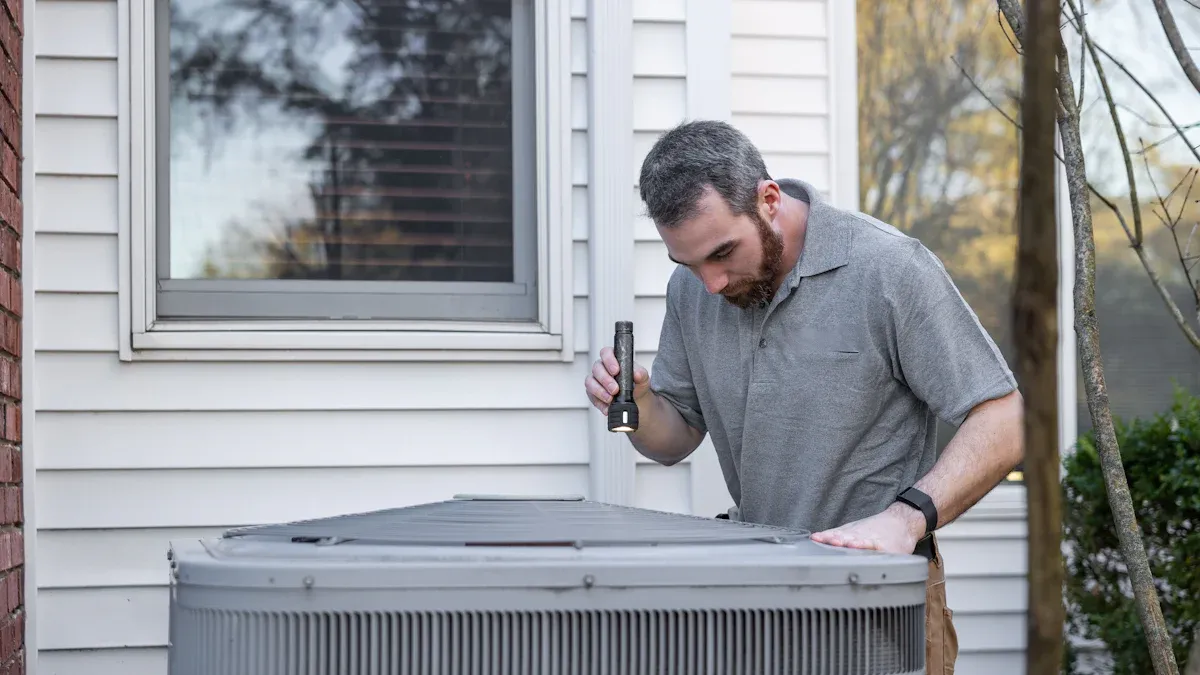
You need to take care of your swamp cooler often to keep it working well. Swamp coolers use water and pads, so they can get dirty or clogged if you do not clean them. Here is a simple list to help you remember what to do:
Clean the water pan with a mix of vinegar and water at least once a month during the cooling season. This stops minerals from building up.
Wash the cooling pads every month. Dirty pads can cause bad smells and make the air less fresh.
Replace the pads every 3 to 5 years. If your water is hard or the pads look worn, you may need to change them sooner.
Run a vinegar cycle once or twice each season. This helps remove mold, odors, and mineral deposits.
In spring, open the cooler and clean all inside parts. Check the pump and motor, and add oil if needed. Test the float valve and clean or change the water filter.
In the middle of summer, check the water level and add vinegar to stop minerals from building up. Clean the water tank and rinse the pads if you see white spots.
When winter comes, drain all the water and disconnect the water line. Take out the pads and store them in a dry place. Cover the cooler with a tarp and block any vents to keep cold air out.
Tip: Clean the outside of your swamp cooler every week with a damp cloth. This keeps it looking nice and helps it last longer.
Swamp coolers need more frequent attention than other cooling systems. You must check water levels, clean pads, and watch for mold or mineral buildup. If you skip these steps, your cooler may not work well or could even break.
You also need to care for your air conditioner, but the tasks are different. Air conditioners use refrigerant and have more complex parts. Here are the main things you should do:
Change or clean the air filter every one to three months. A clean filter helps the system run better and keeps the air fresh.
Check the outdoor unit for leaves, dirt, or debris. Clear anything that blocks airflow.
Schedule a professional checkup once a year. The technician will look at the refrigerant, test the electrical parts, and make sure everything works safely.
Clean the evaporator and condenser coils if they look dirty. Dirty coils can make the system work harder and use more energy.
Make sure the drain line is clear. A clogged drain can cause leaks or water damage.
Swamp coolers and air conditioners both need regular care, but swamp coolers need more frequent cleaning and pad changes. Air conditioners need yearly checkups and filter changes, but you do not have to clean them as often.
Note: If you keep up with maintenance, your cooling system will last longer and work better. You will also save money on repairs and energy bills.
When you pick a cooling system, you use energy and water. Swamp coolers use much less electricity than air conditioners. This helps you save energy and pay less for power. Evaporative coolers can use up to 90% less energy than regular air conditioners. Swamp coolers have a high Energy Efficiency Ratio (EER), sometimes up to 40. This shows they work better than air conditioners.
But swamp coolers need water to run. A normal swamp cooler uses about 4.4 to 10.4 gallons of water every hour when it is working hard. If you use your cooler for many hours each day, you will use a lot of water. This can be a problem if you live where water is hard to find. Air conditioners do not need water to cool, so they use less water.
You can see the main differences in this table:
| Metric | Swamp Cooler (Evaporative) | Air Conditioner (Traditional) |
|---|---|---|
| Annual Electricity Use | Significantly lower | Higher |
| Water Consumption | Higher | Lower |
| Annual CO2 Emissions | Substantially reduced | Higher |
Tip: If you live in a dry place with little water, think about how much water your swamp cooler will use before you choose.
Air conditioners use special chemicals called refrigerants to cool your home. These chemicals can leak out and hurt the environment. Even with better designs, a normal air conditioner loses about 4% to 5% of its refrigerant each year. These leaks can make global warming worse and harm the ozone layer. By 2050, air conditioning could cause up to 25% of global warming if things do not change.
Here is a quick look at refrigerant emissions:
| Parameter | Value / Range | Notes |
|---|---|---|
| Annual refrigerant emission rate | 1% to 10% | Residential and commercial AC systems |
| Typical residential split AC rate | 4% to 5% | Most common in homes |
| Emission reduction trend | From 10-15% down to ~5% | Newer designs help lower emissions |
Swamp coolers do not use refrigerants. They only use water, which does not hurt the air or the ozone. This makes them a greener way to cool your home. You also do not have to worry about chemical leaks. Evaporative coolers can cut CO2 emissions by about 87% compared to air conditioners. This big drop happens because they use less power and do not let out bad gases.
Swamp coolers have a much smaller carbon footprint each year.
Air conditioners make more pollution from using energy and leaking chemicals.
Picking a swamp cooler helps you lower your effect on the planet, especially if you live in a dry place.
Note: If you want to help the earth, pick cooling systems that use less energy and do not use harmful chemicals.
When you choose between a swamp cooler and an air conditioner, think about your local weather, energy use, and how much work you want to do. Swamp coolers work best in dry places like Arizona. Air conditioners give you steady comfort in any climate, even when it is humid. HVAC experts say:
Air conditioners control temperature well and need less upkeep.
In mixed climates, experts recommend air conditioners for reliability.
You can talk to a local HVAC expert to find the best fit for your home.
A swamp cooler uses water to cool air and adds moisture. An air conditioner uses refrigerant to remove heat and moisture from the air. You get fresh, humid air from a swamp cooler and cool, dry air from an air conditioner.
You should not use both at the same time. A swamp cooler adds moisture, while an air conditioner removes it. Running both can make each system work harder and waste energy.
You should clean the water pan and pads every month during the cooling season. Regular cleaning stops mold, odors, and mineral buildup. Always check the manual for your specific model.
Swamp coolers do not work well in humid climates. High humidity makes it hard for the cooler to lower the temperature. You get the best results in hot, dry areas.
You can use high-quality air filters in your air conditioner. Change or clean the filter every one to three months. This helps trap dust, pollen, and other particles, giving you cleaner indoor air.
Yes, swamp coolers use much less electricity than air conditioners. You save money on your energy bills, especially in dry climates. Remember, you may pay more for water if you use the cooler often.
You should match the size of your cooling system to your home’s square footage. Too small will not cool well. Too large wastes energy. Ask an HVAC expert to help you choose the right size.
You can install many swamp coolers yourself, especially portable models. Air conditioners often need professional installation. Central air systems require wiring and ductwork, which need expert help.


