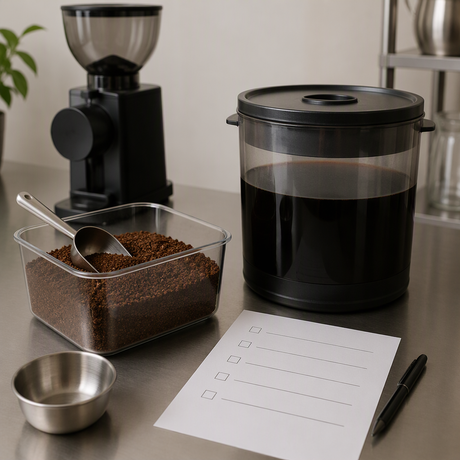
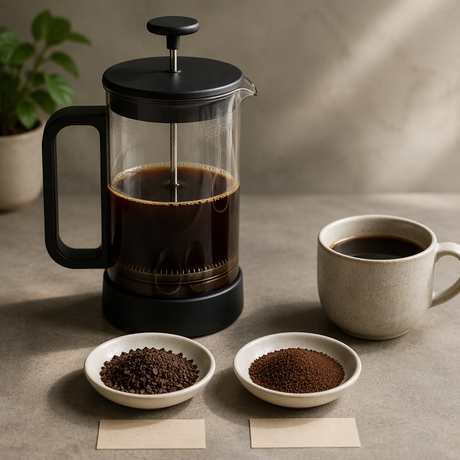
For French press, a useful grinder setting starts coarse and then changes one variable at a time: if the cup is muddy, reduce fines and move coarser; if it becomes weak, adjust ratio, contact time, temperature, or serving workflow before simply grinding finer.
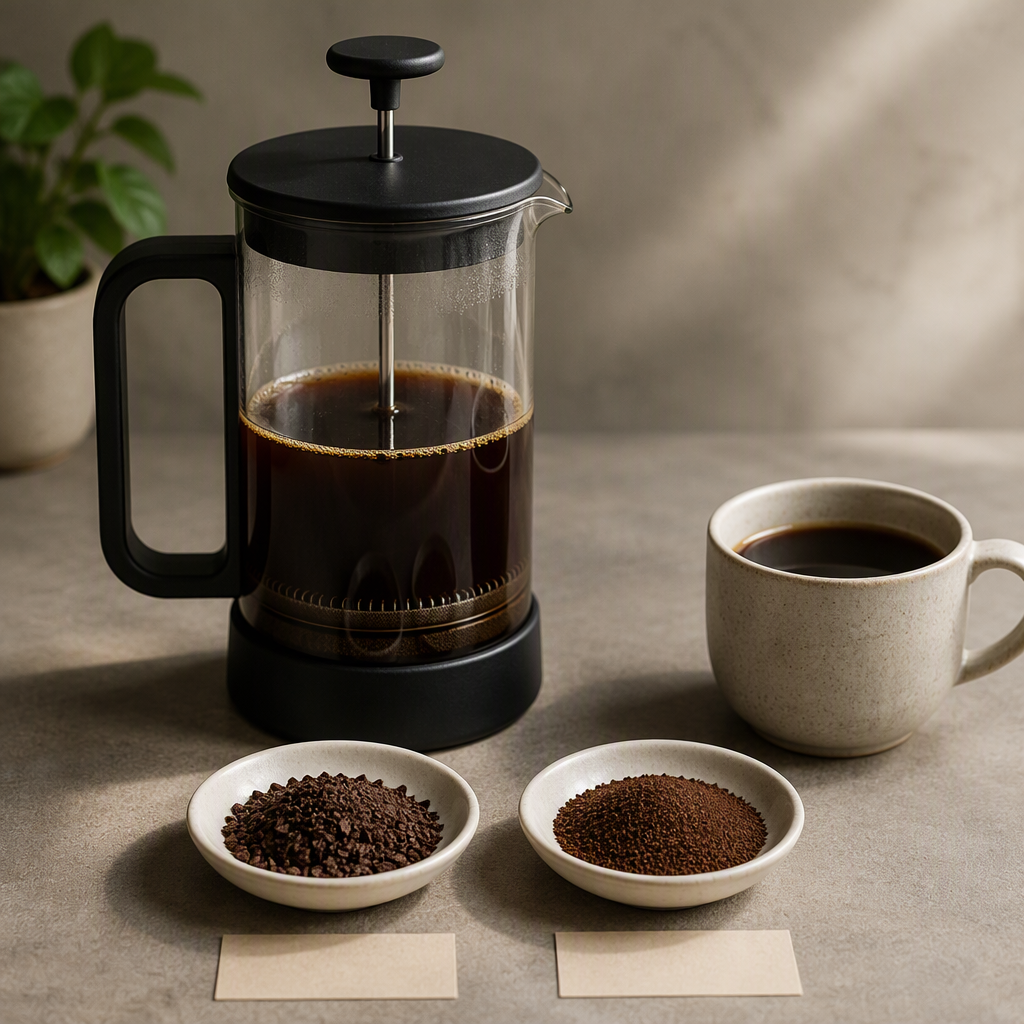
Start With a Range, Not a Universal Click
The best starting point for a french press grinder setting is a coarse grind range, not a universal click number, because French press is an immersion brew that also depends on ratio, water temperature, contact time, and serving practice.
The National Coffee Association French press guide describes French press brewing as immersion with a plunger filter and recommends beginning with a coarse grind. It also gives a coffee-to-water range of 1:10 to 1:16, about four minutes of contact time, and water around 93 ± 3°C.
For brands, buyers, and retailers, that means a product page or staff guide should say “start coarse, then adjust by taste and sediment” rather than promise one grinder number for all mills, roasts, and batch sizes.
Why Sludge Happens in French Press Coffee
Sludge usually appears when too many small particles pass through or around the plunger filter, so the first buyer-facing advice is to move coarser and reduce fines before changing every brew variable at once.
French press uses a plunger filter rather than a paper-filtered percolation method, so sediment control depends heavily on grind texture and pouring/serving behavior.
A Scientific Reports espresso study found that particle-size distribution and fines share changed extraction dynamics under espresso conditions, including permeability, flow rate, and extraction time. This is useful context for explaining why fines matter, but it is not a French press sediment specification.
Do not translate espresso fines findings into a numeric French press fines limit. For French press support copy, keep the claim practical: fewer fines can help reduce muddy texture, but the exact acceptable amount depends on the grinder, coffee, filter fit, and customer preference.
Fix Weak Cups Without Creating More Sludge
If a coarser French press grind reduces sludge but tastes weak, strengthen the brew by changing ratio, contact time, temperature, or agitation before returning to a fine grind that may bring sediment back.
| Customer symptom | Likely variable to check first | Buyer-safe guidance |
|---|---|---|
| Cup is cleaner but thin after moving coarser | Coffee-to-water ratio and contact time | Stay within a coarse range and test a stronger ratio or a slightly longer immersion before making the grind much finer. |
| Cup is both muddy and bitter | Fines, steeping time, and coffee left in the press | Move coarser, avoid extended contact after plunging, and serve or transfer promptly. |
| Cup tastes flat even at a normal steep time | Water temperature and dose | Check whether water temperature and coffee dose match the intended recipe before blaming the grinder setting alone. |
What a Grinder Setting Can and Cannot Mean
A grinder setting can be a useful starting reference inside one grinder system, but it should not be presented as an industry-wide French press standard unless the source actually defines that standard.
| Statement type | Safe for B2B copy? | Why it matters |
|---|---|---|
| “Start with a coarse grind for French press.” | Yes, with recipe context | Open French press guidance supports coarse grind together with ratio, time, temperature, and serving workflow. |
| “Use another grinder brand’s pour-over click chart for French press.” | No | A competitor article discussing pour-over click starting points is brew-method and model specific, and even that article treats starting points as adjustable rather than fixed rules. |
| “Professional coffee uses shared terminology and standards frameworks.” | Yes, if scoped | The SCA standards overview supports standards-framework language, but it does not publicly provide a universal French press click setting. |
Retail and procurement teams should distinguish shared technical language from a publicly verified universal setting. If a supplier claims standards alignment, ask which document, test method, grinder category, and edition the claim refers to.
A Practical Dial-In Sequence for French Press
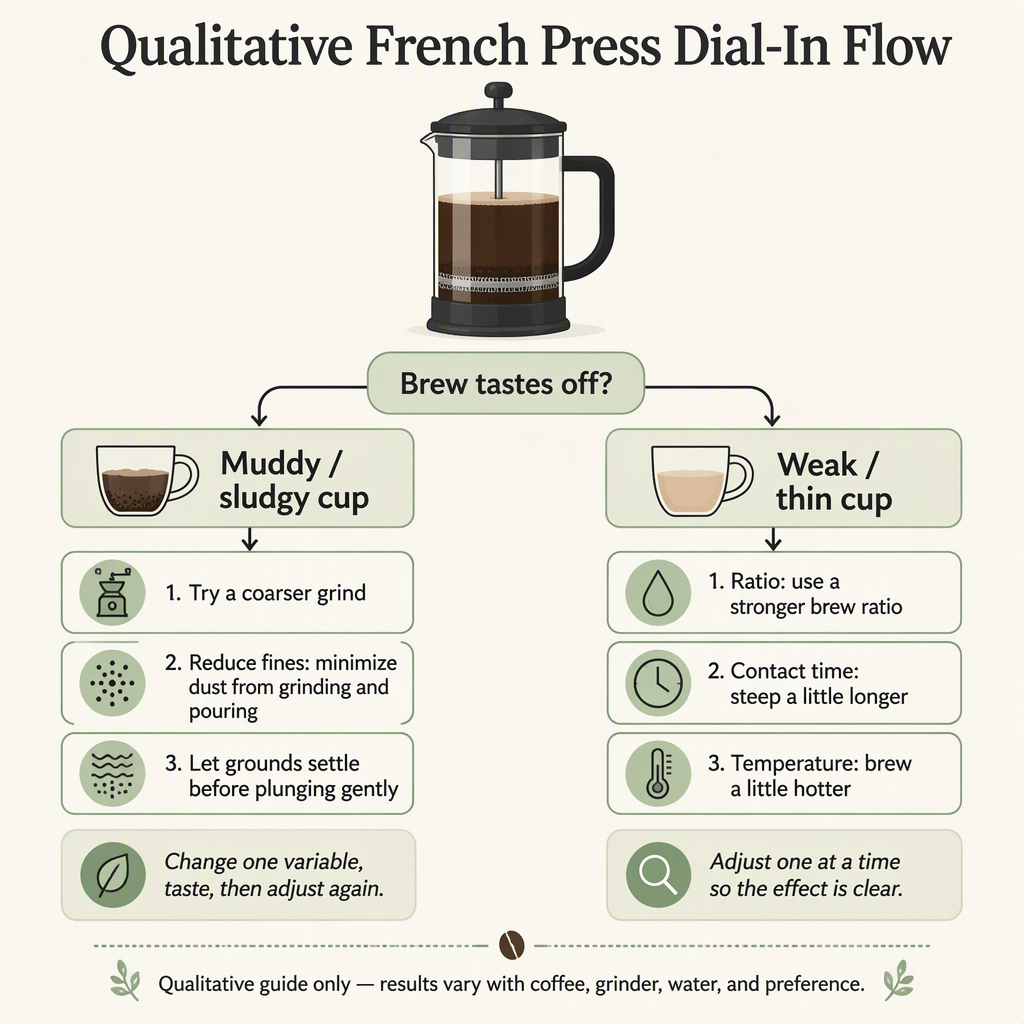
Troubleshoot French press by adjusting one variable at a time: grind texture first for sediment, then ratio, contact time, temperature, and serving workflow for strength and balance.
- Set the grinder to a coarse starting range and brew a baseline batch with a recorded dose, water amount, temperature, and contact time.
- If the cup is muddy, move coarser or improve grind consistency before changing the brew ratio.
- If the cup becomes weak after reducing sediment, keep the coarser direction and test a stronger ratio within the 1:10 to 1:16 range or adjust contact time.
- Check water temperature near the recommended French press range before assuming the grind is the only cause of under-extraction.
- After plunging, serve or transfer the coffee rather than letting it continue brewing in the press.
- Record roast, dose, water, temperature, grind description, contact time, and result for every test.
- Treat particle-size distribution as more than one number; excess fines can affect extraction behavior, but French press copy should not quote espresso-only values as French press limits.
- Change only one variable per trial so staff can explain the result to customers consistently.
Retail and Buyer Guidance for Product Pages and Staff Training
For coffee-equipment brands, buyers, and retailers, the most defensible French press guidance is a troubleshooting range with clear variables, not a copied click chart or an unsupported performance promise.
- Use customer-facing language such as “coarse starting point for French press” and pair it with ratio, time, temperature, and serving guidance.
- When using standards language, keep it general unless the specific standard, certification, test method, and access conditions are verified.
- Do not reuse a competitor grinder’s pour-over click numbers as French press instructions; model-specific starting points are not transferable specifications.
- Train support staff to ask whether the complaint is sludge, weakness, bitterness, or inconsistency before recommending a grind change.
- For any powered grinder cleaning, unclogging, or internal access, tell users to switch off and disconnect the power source first, then follow only the model manual’s permitted access steps.
Serving and Cleaning Workflow Also Affects the Cup
Even with a good coarse grind, French press coffee can taste heavier or more bitter if it keeps sitting on the grounds after plunging, so serving workflow belongs in the troubleshooting script.
- After the target contact time, plunge and serve or transfer the coffee promptly so it does not continue brewing in the press.
- Serve immediately or transfer the brewed coffee to another vessel because coffee left in the French press continues brewing.
- When diagnosing repeated sludge complaints, separate grinder output from recipe and serving workflow: grind coarseness, ratio, contact time, temperature, and delayed serving can all affect the troubleshooting path.
- Clean the press filter assembly according to the product manual so trapped grounds do not distort later troubleshooting; for any electric accessory, disconnect power before access.
Conclusion
French press grind setting guidance should help the user solve a cup problem, not chase a universal number: start coarse, limit fines, and then balance strength with ratio, contact time, temperature, and prompt serving.
- For sludge, move coarser and reduce fines before changing every recipe variable.
- For weak cups, adjust dose, water, contact time, or temperature before grinding much finer.
- For B2B copy, standards and competitor click charts should be scoped carefully and never turned into unsupported universal French press settings.
French Press Grind Setting FAQs
These answers help brands, buyers, retailers, and support teams explain French press grinder settings without overpromising a fixed click number.
Are fines always bad in French press coffee?
No. Fines are part of real ground coffee, and espresso research shows that particle-size distribution can affect extraction dynamics. For French press, the practical issue is excess fines that contribute to muddy texture, not the existence of every small particle.
What grinder setting should I tell a customer to use first?
Tell the customer to start coarse for French press, then adjust by cup result while keeping ratio, contact time, temperature, and serving practice visible.
Why did my cup become weak after I reduced sludge?
Moving coarser can reduce sediment but also change perceived strength. Before returning to a fine grind, test ratio, contact time, and temperature.
Can a retailer publish exact French press click numbers?
Only if those numbers are clearly tied to the specific grinder model and verified source. Open standards-framework language does not by itself provide a universal French press click setting.
Can we use a pour-over grind chart for French press?
No. A pour-over click chart is not a French press specification, and model-specific starting points should not be transferred into another brew method as fixed rules.
Should coffee stay in the press after plunging?
No. Serve or transfer it after plunging because coffee left in the French press continues brewing and can change the flavor.
What should procurement teams ask suppliers about grind guidance?
Ask whether the guidance is a general coarse range, a model-specific setting, or a standards-based claim, and request the exact document or test basis for any formal claim.