You want flawless rice every time and a rice cooker that lasts for years. Simple habits make a big difference. You can avoid common mistakes and keep your appliance running smoothly. Use smart tips to get the most out of your cooking routine. The Windspro Rice Cooker offers features that help you cook with confidence and reduce the risk of errors. Take control of your kitchen and enjoy perfect results.
A rice cooker uses heat and steam to cook rice evenly. You add rice and water, then press a button to start the process. The machine senses when the rice has absorbed enough water and switches to a keep-warm mode. Modern rice cookers, like the Windspro Rice Cooker, use advanced technology to improve results.
Some of the latest features you might find include:
Induction heating for rapid and uniform cooking
8-in-1 multifunctionality with pre-programmed menus for different dishes
Specialized settings for short grain, basmati, congee, and more
Nonstick pots that prevent sticking and make cleaning easy
These features help you get perfect rice every time and make the cooking process simple.
You should always read the manual before using your rice cooker. The manual explains how to use each function and setting. It also gives you tips on cleaning and safety. By following the instructions, you avoid common mistakes and keep your appliance working well. Each rice cooker model can have unique features, so the manual is your best guide.
Tip: Keep your manual in a safe place for quick reference when you need it.
Every rice cooker model works a little differently. Some have more settings or special features. Take time to learn what your model can do. Try out the different cooking programs and see which ones work best for your favorite dishes. Understanding your rice cooker helps you get the most out of it and prevents errors. The Windspro Rice Cooker, for example, offers smart temperature control and easy-clean parts, making it simple to use and maintain.

Rice cookers make meal prep easier, but you can still run into common rice cooker issues if you overlook a few basics. Let’s break down the most frequent errors and how you can avoid them.
Getting the water-to-rice ratio right is essential for perfect rice. Too much water leads to mushy grains, while too little leaves rice undercooked. You should always check the recommended water-to-rice ratio for your rice type. Here’s a quick guide:
Type of Rice | Water-to-Rice Ratio |
|---|---|
Basmati | Slightly higher than 1:1 |
Long Grain | 1:1 |
Calrose | Below the line for water |
Brown Rice | At or slightly above the line |
Short/Medium Grain | More water than recommended |
Modern rice cookers like Windspro use smart heating to adjust for small mistakes, but measuring accurately gives you the best results.
Skipping the rinse step is a common mistake. If you don’t rinse your rice, excess starch causes the grains to stick together and creates a gummy texture. Rinsing removes this starch, so your rice turns out fluffy and separated. You should always rinse until the water runs clear.
Tip: Rinsing rice improves both taste and texture, especially for dishes that need distinct grains.
Overfilling your rice cooker can cause spills and uneven cooking. When you add too much rice or water, foam and bubbles may overflow. This can lead to messy countertops and even damage the cooker. Stick to the recommended capacity and water-to-rice ratio for your model.
Excess starch creates foam and bubbles.
Incorrect ratios cause boiling over.
Overfilling increases the risk of spills.
Neglecting regular cleaning leads to common issues like uneven cooking and sensor problems. You should clean the pot and lid after every use. Experts recommend inspecting and cleaning the heating plate and sensors at least once a week.
Clean after every use and check for residue weekly to maintain performance and prevent contamination.
Windspro’s easy-clean design makes this process simple, with removable nonstick pots and detachable lids.
Your rice cooker may display error codes if something goes wrong. These codes often mean the lid isn’t closed properly or the lock isn’t engaged. You should check for gaps, press down firmly, and listen for a click. If you see an error, unplug the cooker, let it cool, and clean the locking mechanism with a toothbrush and cotton swabs.
Regular maintenance and attention to error codes keep your rice cooker running smoothly.
By following these tips and using features like smart heating and easy cleaning, you can avoid most common rice cooker issues and enjoy reliable results every time.
Taking care of your rice cooker helps you get perfect rice and keeps your appliance working for years. You can follow these tips and techniques to avoid common problems and enjoy reliable results.
You should measure rice and water carefully. Using the right ratio prevents mushy or undercooked rice. Always use the measuring cup that comes with your rice cooker. Most rice cooker cups hold 180ml. Rinse your rice under cold water until the water runs clear. This step removes extra starch and improves texture.
Here is a quick reference table for water ratios and preparation:
Rice Type | Water Ratio (Rice:Water) | Special Preparation |
|---|---|---|
White rice (jasmine, basmati) | 1:1.5 | Rinse 2-3 times until water runs clear |
Brown rice | 1:2 | Soak 20 minutes before cooking |
Sushi rice | 1:1.25 | Rinse thoroughly, rest 30 minutes after washing |
Short-grain rice | 1:1.33 | Rinse gently to preserve starch |
Wild rice blend | 1:2.5 | No rinsing required |
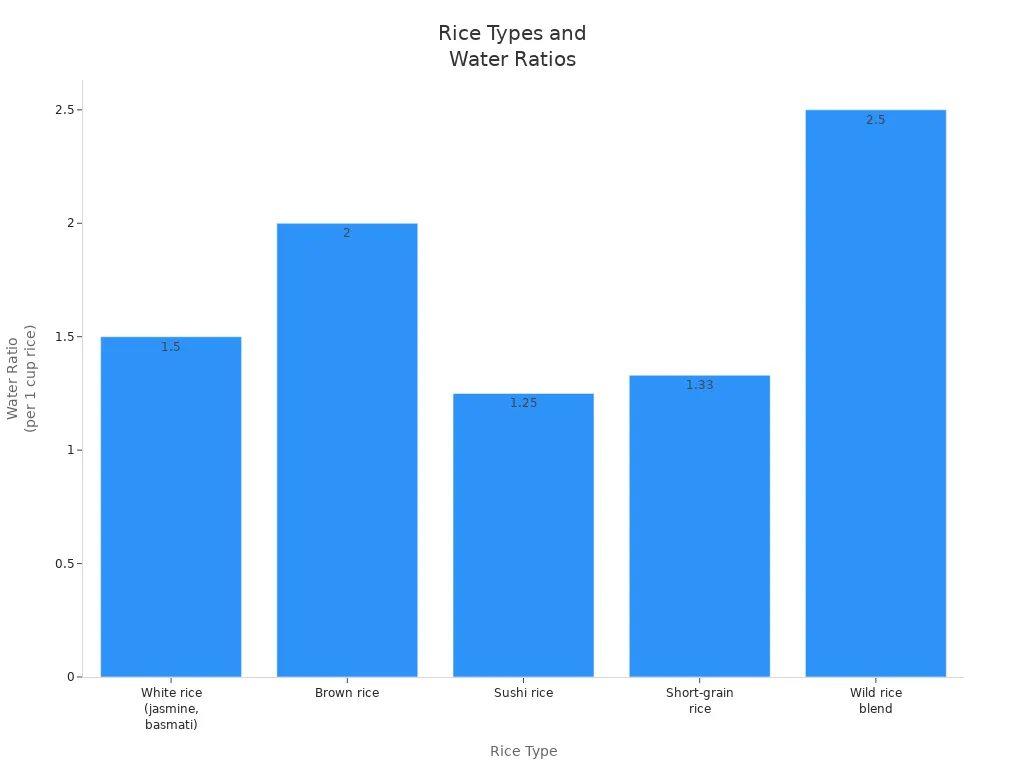
Distribute rice evenly in the pot before starting the cooking cycle. This technique helps the rice cooker heat each grain properly.
Clean your rice cooker after every use. Wipe the pot, lid, and exterior with a gentle cleaner. Remove and wash the nonstick inner pot and detachable lid. Windspro’s easy-clean design makes this process simple. Regular cleaning prevents residue buildup and keeps sensors working well. You should also inspect the heating plate and sensors weekly.
Tip: Clean the steam vent and check for blockages to avoid overflow and uneven cooking.
Choose rice types that work best with your rice cooker. Jasmine rice and germinated brown rice cook well and give you moist, fluffy results. Brown rice needs more water and longer cooking time. Germinated brown rice offers a softer texture and more nutrition.
Rice Type | Amylose Content | Cooking Characteristics |
|---|---|---|
Jasmine Rice (KDML105) | Low (12-20%) | Moist and sticky after cooking, ideal for electric cookers |
Brown Rice (BR) | High (25-33%) | Requires longer cooking time, less compatible with quick cooking methods |
Germinated Brown Rice (GBR) | Low (after germination) | Softer texture, easier to cook, more nutritious than WR |
Try different rice types and adjust water ratios for your favorite dishes.
Inspect the steam vent before each use. Blocked steam vents can cause steam to escape from the wrong places. This may lead to overflow, burns, or damage to your rice cooker. A clear vent helps the appliance maintain the right pressure and temperature for even cooking.
Blocked vents can cause overflow and burns.
Uneven cooking may result from poor pressure control.
Appliance damage can occur if steam cannot escape properly.
Windspro’s detachable lid makes cleaning the steam vent easy.
Read and follow the manufacturer’s instructions for your rice cooker. Skipping steps or using the wrong settings can lead to sticky, burnt, or undercooked rice. Misuse may damage the appliance and ruin your cooking experience. Always check the manual for guidance on settings and cleaning routines.
Note: Following instructions helps you get the best results and protects your rice cooker from damage.
Do not fill your rice cooker above the recommended capacity. Overloading causes spills, uneven cooking, and may damage the appliance. Use the markings inside the pot to guide you. Distribute rice and water evenly for consistent results.
Store your rice cooker in a dry, cool place. Do not leave cooked rice in the appliance for more than 12 hours. If your rice cooker has an Extended Keep Warm feature, you can store rice for up to 24 hours. For leftovers, transfer rice to a container and refrigerate or freeze it. Cool rice to 70°F within two hours, then to 40°F within four hours before storing at 41°F or below.
Tip: Proper storage prevents damage and keeps your rice cooker ready for the next meal.
By using these tips and techniques, you can keep your rice cooker in top shape. Windspro’s smart features and easy-clean design support your efforts and make maintenance simple.
Even with the best habits, you may face occasional problems with your rice cooker. Knowing how to spot issues early and fix them can save you time and prevent bigger headaches. Use this guide to identify, solve, and know when to seek help for common rice cooker troubles.
Start by observing your rice cooker’s behavior. Many issues show clear signs. Here are some of the most frequent problems users report:
The power cord does not connect fully, so the cooker will not turn on.
The cooker switches to hold mode too soon, leaving rice undercooked.
Rice comes out uneven, with runny sides or lumps in the middle.
The unit does not get hot enough, or cooking takes too long.
You see error codes or the display does not work.
The rice cooker produces odd smells or stubborn buildup.
You can often spot the cause by checking a few key areas. Use this checklist to help you identify the source:
Symptom | Possible Cause |
|---|---|
Cooker will not turn on | Power cord not fully inserted, blown fuse |
Rice is runny or lumpy | Wrong water ratio, uneven rice distribution |
Cooker goes into hold mode early | Dirty heater plate or sensor, damaged pot |
Rice not fully cooked | Inaccurate temperature sensor, damaged pot |
Display not working | Battery needs replacement |
Tip: Always check the power cord and make sure it is pushed in all the way. Many users overlook this simple step.
Once you identify the problem, you can try some quick fixes before seeking professional help. Many rice cooker issues have simple solutions you can do at home.
Check the Power Source
Make sure the power cord is firmly connected. Try a different outlet if the cooker does not turn on.
Inspect and Clean
Remove the inner pot and lid. Clean the heating plate, sensors, and steam vent. A dirty sensor or plate can cause the cooker to stop early or cook unevenly.
Adjust Water and Rice
Use the correct measuring cup and follow the recommended water-to-rice ratio. Distribute rice evenly in the pot.
Replace Batteries
If the display does not work, replace the CR2450 battery.
Check Internal Parts
If you feel comfortable, inspect the fuse and wiring for damage. Test the thermostat and heating element for continuity. Look for loose or corroded connections.
Common Problem | Suggested Solution |
|---|---|
Power cord not fully inserted | Push the cord in firmly |
Wrong water level | Measure rice and water accurately |
Dirty heater plate | Clean plate and sensors regularly |
Display not working | Replace the battery |
Note: Over 99% of rice cooker issues come from human error or simple maintenance problems. You can solve most problems without professional help.
Sometimes, you need expert support. If you have tried the steps above and your rice cooker still does not work, consider these situations:
The rice cooker does not turn on at all, even after checking the power cord and outlet.
You have cleaned the sensors and plate, but the cooker still switches to hold mode too soon.
You used a multimeter and found a faulty thermal cutoff or other internal component.
The problem persists after replacing the battery, fuse, or thermostat.
Issue Type | Percentage Resolvable Without Assistance |
|---|---|
Human Error in Most Cookers | Over 99% |
Sensor or Error Code Issues | 90% |
If your rice cooker still fails after basic troubleshooting, contact customer support or a qualified technician. In rare cases, you may need to consider a replacement.
By following these troubleshooting rice cooker steps, you can fix most issues quickly and keep your appliance running smoothly. Regular care and attention help you avoid problems and enjoy perfect rice every time.
You can keep your rice cooker working well by following simple care routines. Regular cleaning and maintenance help you avoid breakdowns and extend the life of your appliance.
Routine cleaning boosts safety and performance.
Protecting critical parts ensures efficient cooking every time.
Feature | Benefit |
|---|---|
Customizable Options | Lets you adjust cooking for best results |
Rigorous Testing | Confirms reliability and quality |
Choose the right rice, measure carefully, and let the rice sit for fluffiness. Apply these tips to enjoy perfect rice with every meal.
You should clean your rice cooker after every use. Wipe the inner pot, lid, and exterior. Regular cleaning keeps your appliance working well and prevents buildup.
Check the manual for the meaning of the error code. Unplug the cooker, let it cool, and clean the lid and sensors. If the error remains, contact customer support.
Yes! You can cook quinoa, oatmeal, and even soups. The Windspro Rice Cooker offers pre-programmed settings for different grains and dishes. Always follow the instructions for best results.
Sticky rice often means you used too much water or did not rinse the rice. Dry rice usually means not enough water. Measure carefully and rinse rice before cooking for the best texture.
Transfer leftover rice to a container. Cool it quickly and refrigerate within two hours. Do not leave rice in the cooker for more than 12 hours. This prevents bacteria growth and keeps your rice fresh.


