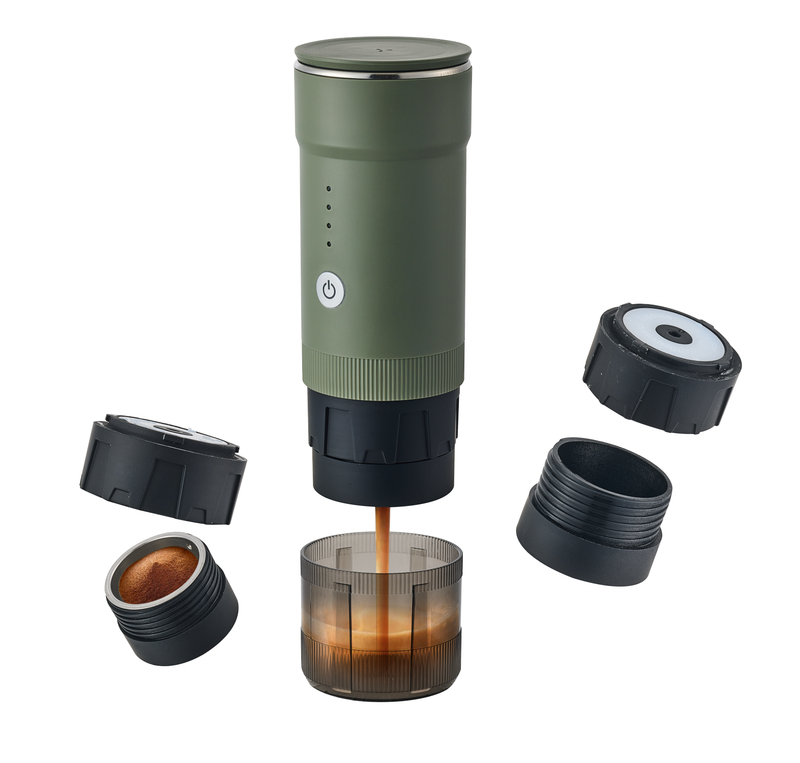
A tiny espresso maker may advertise 15, 18, or even 20 bar. Does more pressure always produce better coffee?
Usually, more pressure does not improve espresso. A Portable Espresso Maker needs about 8–10 bar during extraction, while 9 bar remains the practical benchmark.
This guide explains pump ratings, actual brewing pressure, flavor effects, and simple adjustments. You will also learn what specifications matter before buying or sourcing a portable machine.
Nine bar is the familiar target for espresso extraction. It equals roughly 130.5 pounds per square inch, commonly shortened to psi. That pressure pushes hot water through a compact bed of finely ground coffee.
However, a useful working range is broader than one exact number. Many capable portable machines extract between 8 and 10 bar. Some manual lever systems also produce enjoyable espresso around 6–9 bar.
Pressure at the coffee puck | Likely brewing result | Practical meaning |
Below 6 bar | Light body and limited crema | More similar to strong brewed coffee |
6–8 bar | Softer espresso and gentler flow | Suitable for some manual pressure profiles |
8–10 bar | Concentrated flavor and balanced flow | Best target for most portable espresso makers |
Above 10 bar | Greater channeling or bitterness risk | Requires excellent puck preparation and control |
The Specialty Coffee Association survey supports this range. Respondents used 8.5 bar on average, while 9 bar was the most common setting.
Pressure works because the coffee puck resists water flow. Enough resistance helps dissolve flavors and emulsify oils quickly. This process creates espresso’s dense body and its familiar layer of crema.
Still, the number alone cannot define a good shot. Eight stable bars can outperform twelve unstable bars. Fresh beans, even distribution, correct temperature, and suitable grind matter just as much.
The important phrase is pressure during extraction. A package may show the pump’s highest possible output instead. That larger number can describe capacity, but it does not describe every second of brewing.
Windspro’s portable espresso coffee maker illustrates the difference clearly. Its pump carries a 15-bar rating, while actual extraction pressure is listed at 8–10 bar. That working range is the more meaningful specification for judging espresso performance.
Pump pressure describes the maximum output available from the pressure system. Actual extraction pressure describes what reaches the coffee puck during brewing. These numbers differ because water loses pressure while moving through the machine.
Internal tubing, valves, filters, seals, and the coffee bed create resistance. Water also needs a pressure drop before it can flow. Therefore, a 15-bar pump does not continuously press the puck at 15 bar.
Gauge placement can create further confusion. A gauge near the pump may show a higher reading. A measurement closer to the basket better represents what the coffee experiences.
Æ 6.02 - Understanding Pressure at the Puck - Barista Hustle connects pressure, flow, and puck resistance. It shows why machine pressure cannot be understood without considering water movement. This relationship becomes especially important inside a compact brewing system.
A pump needs some headroom to overcome changing resistance. Different beans, grind settings, doses, and capsules can alter the required force. A higher rating can help the system reach its designed working pressure reliably.
That extra capacity may also support startup performance and system tolerance. However, it should not become the main quality claim. Stable extraction near the intended range matters more than the largest printed number.
Windspro’s HECM-02 pressure explanation separates its 15-bar pump from 8–10-bar extraction. The same model uses a 100-milliliter reservoir and heats water to 90°C. Together, those specifications describe the brewing process more accurately than pump pressure alone.
Ask where pressure was measured and whether the reading came during extraction. Also request a pressure curve when evaluating samples for retail or private-label projects. A single maximum value cannot show how steadily the machine performs.
Useful test details include the coffee dose, grind, capsule type, water temperature, and beverage yield. Without those conditions, two pressure claims cannot be compared fairly. Repeatable testing gives buyers a far clearer performance picture.
Pressure affects how quickly water enters and crosses the coffee puck. It also influences dissolved solids, emulsified oils, and carbon dioxide release. These changes shape body, aroma, flavor balance, and crema.
Too little pressure often produces fast, pale, or watery coffee. Water finds little resistance, so desirable compounds remain inside the grounds. The cup may taste sour, thin, or unfinished.
Balanced pressure supports an even, controlled flow. The shot becomes concentrated without feeling harsh. Fresh coffee can then produce fine, persistent crema and a fuller mouthfeel.
Excessive pressure does not simply extract more flavor. It may compress the puck, open weak channels, or push water unevenly. The result can combine bitterness, dryness, sourness, and inconsistent flow.
What you observe | Possible pressure-related cause | First adjustment |
Fast, pale stream | Low resistance or insufficient pressure | Grind slightly finer |
No flow or difficult pumping | Excessive puck resistance | Grind slightly coarser |
Sudden spurting | Channeling under pressure | Improve distribution and level the bed |
Dark, bitter shot | Flow stayed restricted too long | Reduce resistance or shorten the yield |
Thin crema | Low pressure, stale coffee, or cool water | Check every variable before blaming pressure |
A brief 15-bar spike cannot replace a stable extraction. The useful pressure should remain reasonably controlled while most liquid crosses the puck. Sharp rises and collapses often signal inconsistent resistance, poor sealing, or uneven preparation.
Manual makers depend on the user’s force and rhythm. Smooth pumping or steady lever movement generally works better than aggressive bursts. Electric models should control pressure through their pump, valve, and basket system.
Crema also needs careful interpretation during evaluation. Freshly roasted coffee contains more carbon dioxide, so it often creates more foam. Pressurized baskets and capsules may increase crema even when flavor remains ordinary.
Judge the finished espresso, not only its appearance. Look for sweetness, clarity, pleasant acidity, lasting aroma, and a balanced finish. Pressure is valuable because it supports those qualities, not because it creates a thicker foam alone.
A Portable Espresso Maker is a small brewing system, not merely a pressure pump. Every variable changes how water meets resistance. Good results come from balancing those variables around the machine’s intended pressure range.
Grind size provides the fastest correction. Finer particles create more resistance and usually slow the shot. Coarser particles reduce resistance and allow faster flow.
Use the recommended dose for the supplied basket. Too much coffee can block flow or overload a manual mechanism. Too little coffee may leave excessive headspace and encourage uneven movement.
Distribute the coffee grounds evenly before tamping. A level, moderate tamp is more repeatable than maximum force. Once the puck is level, grind size should control flow more effectively.
Water temperature changes extraction speed and flavor. Most espresso brewing occurs near 90–96°C, depending on coffee and equipment. Portable chambers lose heat quickly, so preheating improves temperature stability.
The cited product uses heating up to 90°C, which suits its compact design. Other models require preheated water from a kettle. Users should follow the model’s instructions and avoid unsafe temperature modifications.
Fresh coffee usually produces clearer aroma and better crema. Very old grounds may create little foam despite correct pressure. Capsules offer consistency, although their coffee dose and age remain fixed.
Start near a 1:2 brew ratio when the basket permits it. For example, 8 grams of coffee can target roughly 16 grams of espresso. Basket size may require a different recipe, so treat this ratio as a starting point.
Pre-infusion can gently wet the puck before full pressure develops. It may reduce channeling and improve evenness. Some electric units manage this automatically, while manual users can pause after the first drops.
Change only one variable after each shot. Adjust grind first, then review dose, temperature, and yield. This method reveals the real cause instead of creating several new problems.
Product pages often place the largest pressure figure near the headline. Treat it as one specification, not a complete quality score. Ask how the machine behaves under realistic brewing conditions.
Begin by requesting actual extraction pressure and its testing method. Confirm the coffee dose, grind range, water temperature, capsule format, and target yield. These conditions determine whether the reported result is repeatable.
Check pressure stability across the shot, not only the initial peak. The pump, seals, valves, filter, and basket must work together. A small leak can reduce pressure even when the pump remains powerful.
Pressure safety also deserves careful attention. A reliable design needs suitable pressure tolerance and controlled release behavior. Users should never force a blocked machine or open a pressurized chamber.
Manual models offer direct control and need no extraction battery. However, results depend on technique and physical effort. Electric models offer easier repetition, yet battery condition and control logic affect performance.
Self-heating models add another major load. Compare heated shots per charge separately from extractions using hot water. A large battery claim means little without these two figures.
For B2B buyers, Windspro operates from Zhongshan and develops small domestic appliances through integrated production workshops. That background is relevant when discussing molds, injection parts, assembly, sealing, and product customization. Buyers should still validate every production sample against agreed test conditions.
● Request working pressure data, not only maximum pump pressure. Test several consecutive shots using the same recipe. Record flow, beverage weight, time, temperature, and visible leakage.
● Test ground coffee and every supported capsule format separately. Check puncture consistency, basket fit, seal wear, and cleanup. Small dimensional differences can change resistance and pressure.
● Repeat testing after charging, transport, and routine disassembly. Inspect safety instructions and pressure-release behavior. Confirm relevant battery and shipping documents for each target market.
A strong sample should deliver repeatable coffee without confusing operation. Consistency reduces returns, complaints, and misleading performance claims. It also matters more commercially than winning a simple bar-number comparison.
Start using the manufacturer’s recommended basket, dose, and water volume. Fully charge electric models before testing. Preheat any model whose instructions allow that step.
Prepare fresh coffee using a fine, even grind. Level the grounds and tamp consistently. Then assemble every seal carefully, because misalignment can release pressure or cause leakage.
Aim near the machine’s intended 8–10-bar extraction range when pressure feedback is available. Begin near a 1:2 ratio and observe the complete flow. Record dose, yield, time, taste, and any gauge reading.
If the shot runs fast and tastes sour, grind slightly finer. Keep the dose and yield unchanged during that test. This raises puck resistance without introducing several new variables.
If pumping becomes difficult or no coffee appears, stop forcing the device. Release pressure according to its instructions, then grind coarser. Also check excessive dose, blocked filters, or misplaced seals.
If the shot tastes bitter and dry, reduce resistance or shorten extraction. A slightly coarser grind often helps. Cooler water may suit darker roasts, provided the machine allows temperature adjustment.
Uneven spurting usually points toward channeling or a poor seal. Redistribute the grounds, level the basket, and inspect each gasket. Higher pump pressure will not repair an uneven coffee bed.
Rinse removable coffee-contact parts soon after brewing. Dried fines can block filter holes and change pressure during the next shot. Allow cleaned parts to dry before packing.
Never submerge a powered main unit unless its instructions explicitly permit it. Wipe the housing and clean removable components separately. Check seals regularly for coffee debris, stretching, or damage.
Altitude can lower water’s boiling temperature during mountain travel. Preheating remains helpful, but boiling water may still be cooler than expected. Use flavor and flow together when making small adjustments.
The best routine is simple and measurable. Hold the recipe steady, change one variable, and taste again. That habit produces better espresso than chasing the highest possible pressure.
A Portable Espresso Maker usually needs 8–10 bar during extraction. Nine bar remains a reliable benchmark, but stable flow matters more than peak pressure.
Compare actual brewing pressure, grind control, temperature, seals, and basket design. When these parts work together, a compact maker can produce balanced espresso far beyond the kitchen.
A: Fifteen bar is not automatically better. It often describes pump capacity, while good extraction usually occurs near 9 bar.
A: Six bar can produce tasty, softer espresso, especially from a well-controlled manual lever maker.
A: Nine bar equals approximately 130.5 psi, while 8–10 bar equals roughly 116–145 psi.
A: Stale coffee, cool water, coarse grinding, channeling, or leaks may limit crema despite strong pressure.
A: Use an integrated gauge or manufacturer test data measured during extraction near the coffee puck.