If you’re wondering what is riceberry, it is a unique whole grain rice from Thailand known for its dark purple color, which sets it apart from other types of rice. Riceberry is a variety of purple rice that offers more nutrients than white rice because it is a whole grain. Developed through crossbreeding by scientists and farmers at Kasetsart University in Thailand, riceberry is often called a superfood due to its health benefits. It contains powerful antioxidants, cancer-fighting compounds, and supports heart and organ health.
Riceberry rice is a whole grain from Thailand. It has a deep purple color. The color comes from antioxidants called anthocyanins.
Riceberry has more nutrients than white rice. It has vitamins, minerals, fiber, and strong antioxidants. These help your heart and organs stay healthy.
Riceberry feels soft and tastes mildly sweet. It cooks faster than other whole grain rices. You do not need to soak it before cooking.
This rice has a lower glycemic index. It helps control blood sugar. It is a good choice for people with diabetes.
You can eat Riceberry in many dishes. It works in Thai recipes and modern meals. It adds color, flavor, and health benefits.
If you ask what riceberry is, you find it is a special whole grain. It has a deep purple color and lots of good nutrients. Riceberry rice comes from Thailand. It is made by mixing Jao Hom Nin and Khao Dawk Mali 105. Jao Hom Nin is a purple rice. Khao Dawk Mali 105 is also called Hom Mali or Thai Jasmine rice. Scientists at Kasetsart University made riceberry in 2002. They wanted to mix the best parts of both grains.
Riceberry is a whole grain. This means you eat the bran, germ, and endosperm. Eating all parts keeps more nutrients in your food.
Here are some main facts about riceberry rice:
Aspect | Details |
|---|---|
Agricultural Origin | Crossbreed of Jao Hom Nin (non-glutinous purple rice) and Khao Dawk Mali 105 (Hom Mali) |
Developed by | Rice Science Center, Kasetsart University, Thailand (2002) |
Growing Regions | Northern and Northeastern Thailand |
Plant Height | 105–110 cm (41–43 in) |
Days to Maturity | About 130 days |
Yield | 1,875–3,125 kg/ha |
Grain Length | 7.2 mm |
Pericarp Color | Deep purple |
Amylose Content | 15.6% |
Glycemic Index | 62 |
Nutritional Content | Energy: 390 kcal/100g, Carbohydrates: 80g, Protein: 8g, Dietary Fiber: 4g, Fat: 4g |
Vitamins & Minerals | Vitamin A (beta-Carotene): 1%, Folate (B9): 12%, Vitamin E: 5%, Iron: 10%, Zinc: 29% |
Bioactive Compounds | Anthocyanins, carotenoids |
When you eat riceberry rice, you get energy and more. You also get vitamins, minerals, and anthocyanins. Anthocyanins are plant compounds. They make the rice purple. They help protect your body from free radicals.
You may wonder why riceberry is different from other rice. The answer is in its color, nutrition, and health effects. The purple color comes from anthocyanins. These are strong antioxidants. They help your body fight bad molecules. They may lower your risk of heart disease and some cancers.
Here are some things that make riceberry special:
It has lots of anthocyanins and phenolic compounds. These give it a deep purple color and strong antioxidant power.
It contains vitamin E, beta-carotene, folic acid, iron, and zinc. This makes it full of nutrients.
It has a lower glycemic index than many other rice types. This means it raises blood sugar more slowly.
It is soft, smells nice, and tastes a little sweet. Many people enjoy eating it.
It is gluten-free. People use it in bread, noodles, and snacks. You can eat it if you avoid gluten.
The purple color of riceberry rice is not just for looks. It means the rice has lots of antioxidants. These help keep your cells healthy.
You can compare riceberry rice to other whole grain rice in this table:
Feature | Riceberry Rice | Other Whole Grain Rice Varieties (e.g., Khao Dok Mali 105, Sao Hai) |
|---|---|---|
Amylose Content | Low amylose | Moderate to high amylose |
Pigmentation | Intense purple color (pigmented) | Non-pigmented (white rice varieties) |
Antioxidant Content | High, due to anthocyanins and phenolics | Lower, due to lack of pigmentation |
Cooking Qualities | Fragrant, soft, slightly sweet | Varies; some are hard and crumbly |
Development | Cross-bred from low amylose and pigmented varieties | Traditional varieties with different amylose and pigmentation |
When you pick riceberry, you choose a whole grain with color, taste, and health benefits. If you want to know what riceberry is, remember it is more than just rice. It is a superfood that helps you stay healthy.
Image Source: unsplash
About twenty years ago, scientists in Thailand made riceberry. They mixed two special rice types to create it. Riceberry comes from Jao Hom Nin and Khao Dawk Mali 105. Jao Hom Nin is a purple rice that is not sticky. It gives riceberry its dark color and lots of antioxidants. Khao Dawk Mali 105 is also called Thai Jasmine rice. It is known for being soft and smelling sweet. When you eat riceberry, you get the best parts of both parents. This Thai rice is fluffy, smells good, and has lots of zinc and iron. You do not have to soak it before cooking, so it is easy to make.
Riceberry rice is purple because of anthocyanins. These are plant chemicals that help protect your body.
Here is a table that shows how riceberry’s background changes its nutrition:
Aspect | Details |
|---|---|
Genetic Lineage | Riceberry rice is a Thai aromatic, deep purple indica-type variety. It comes from crossing a local non-glutinous purple rice with aromatic white jasmine rice. |
Pigmentation Genetics | The purple color comes from anthocyanins, controlled by several genes. |
Nutritional Impact | The color means riceberry has high flavonoid and anthocyanin content. These are strong antioxidants. |
Breeding and Improvement | Scientists use genetic knowledge to improve yield, taste, and nutrition. |
Kasetsart University in Thailand helped make riceberry. The Rice Science Center at this school created this new rice. The team wanted rice that tasted good and had more nutrients. They used old ways to mix Jao Hom Nin and Khao Dawk Mali 105. Their goal was to make rice that is soft, sweet, and healthy. In 2005, they let farmers all over Thailand grow riceberry.
Scientists at Kasetsart University’s Rice Science Center made riceberry.
Riceberry is a mix of two well-known Thai rice types.
They wanted to make rice with better nutrition, taste, and smell.
Riceberry is soft, smells nice, and has lots of minerals and antioxidants.
The university shared riceberry with farmers in 2005.
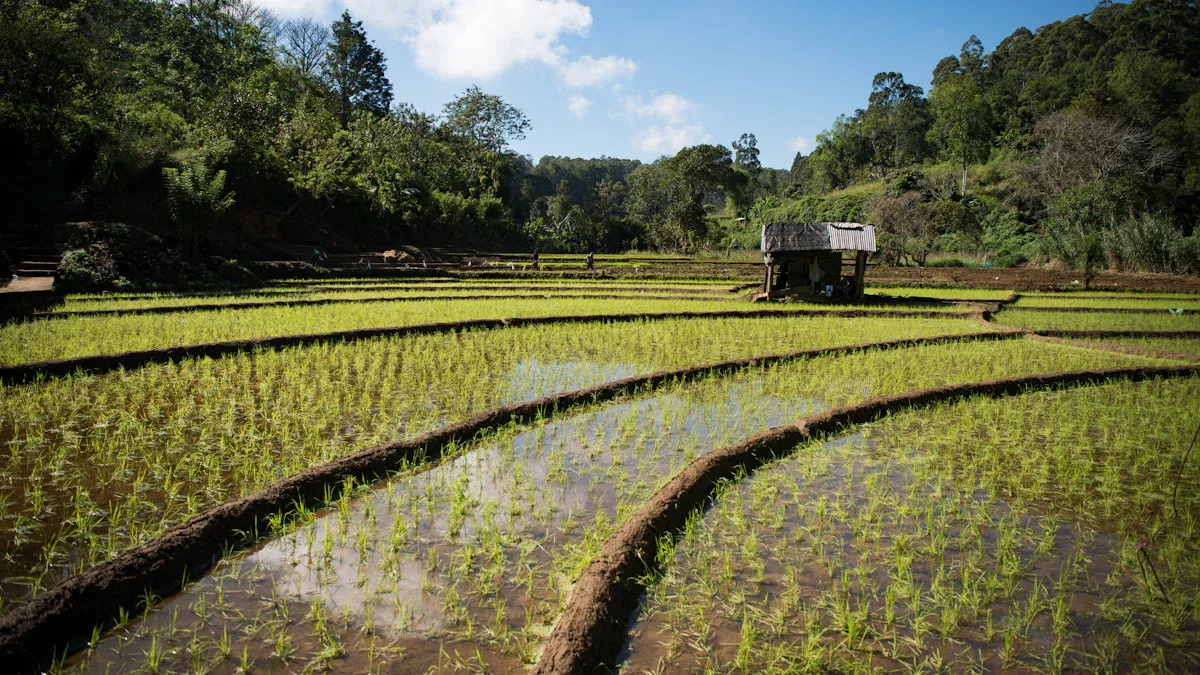
Most riceberry is grown in the North and Northeast of Thailand. These places have the right weather and soil for riceberry. Farmers plant riceberry during the rainy season, from July to December. The soil there is sandy loam and a little bit acidic. Good water helps the rice grow strong and keeps its color bright.
Here is a table that shows the best way to grow riceberry:
Parameter | Details / Values |
|---|---|
Soil texture | Sandy loam |
Soil pH | 6.3 |
Organic matter | 1.6% |
Available phosphorus (P) | 51.0 mg/kg |
Exchangeable potassium (K) | 120.3 mg/kg |
Extractable zinc (Zn) | 1.2 mg/kg |
Water regimes | Waterlogged (10–15 cm above soil) or irrigated daily |
Grain yield range | 2.0–5.8 t/ha |
Best season | Wet season (July to December) |
When you pick riceberry rice, you help Thai farmers who work hard to grow this healthy grain. Scientists and farmers worked together to make riceberry popular for people who want tasty and healthy food.
Image Source: unsplash
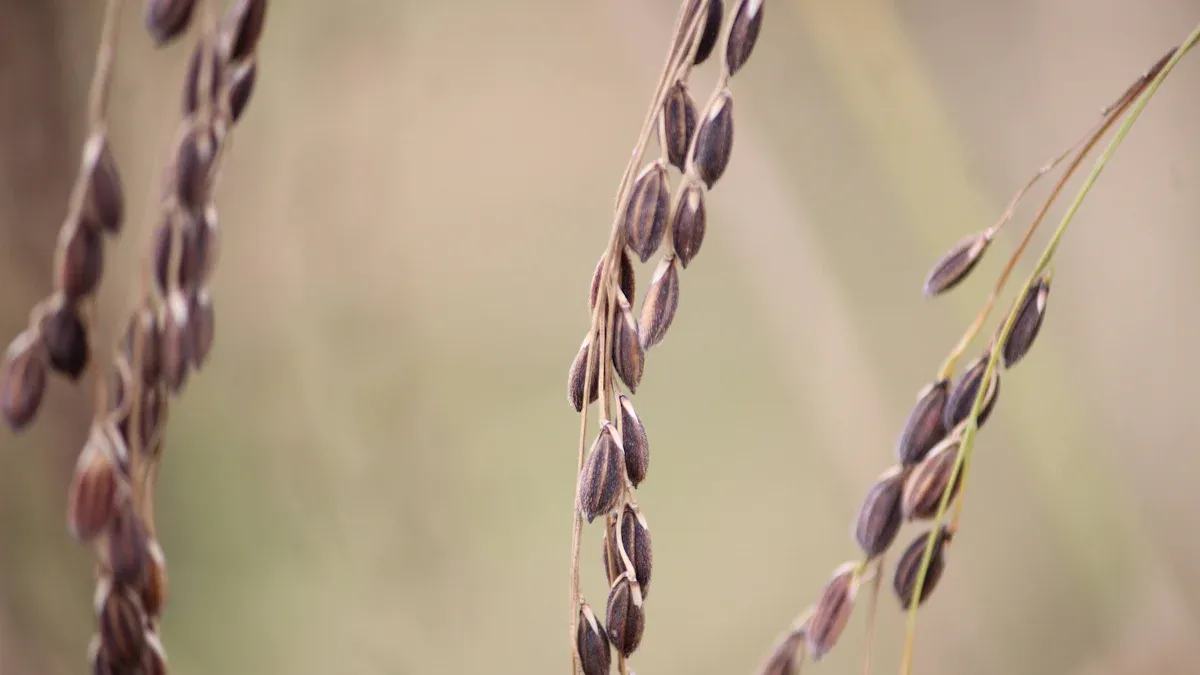
Riceberry has a dark purple-black color. This color comes from anthocyanins and polyphenols. These are plant nutrients in the outer bran layer. They make riceberry look special and add more nutrition. Riceberry has more antioxidants than other rice. Its color is darker and stronger than other colored rice. The grains look less yellow and light, but more red. Riceberry looks richer and brighter than RD 43 or KDML 105. The grains are medium or long. The bran layer is thick. This helps keep more nutrients inside. Riceberry is a whole grain. It keeps the bran, germ, and endosperm together. This makes it a healthy food for you.
Tip: The purple-black color means riceberry has more antioxidants.
Riceberry rice is soft and a little chewy when cooked. The grains do not stick together like sticky rice. They are not as dry as brown rice. Riceberry feels moist and tender. You can eat it with many foods. The texture comes from amylose, protein, and anthocyanins. Riceberry smells gentle and nice. It has a light floral scent like jasmine rice. It also has a mild nutty smell like black rice. Riceberry cooks fast, like jasmine rice. You can make it quickly. When you eat riceberry, you taste a little sweetness and a good flavor.
Soft, moist, and a bit chewy
Mild floral and nutty smell
Riceberry gives you a special way to eat rice. You get a whole grain with pretty color, soft bite, and gentle smell.
Riceberry gives your body lots of antioxidants. These are plant chemicals that protect your cells. The deep purple color comes from anthocyanins. Anthocyanins are strong antioxidants. Riceberry also has other antioxidants. These include phytosterols, triterpenoids, and phenolic compounds. Riceberry flour has about 188 mg of anthocyanins in each gram. This is much more than regular rice. If you eat yogurt with riceberry extract, your body gets more antioxidants fast. Scientists saw that antioxidant levels can go up almost three times.
Compound/Parameter | Concentration/Description |
|---|---|
Anthocyanins in Riceberry rice flour | 188 ± 22 mg/g |
Cyanidin-3-glycosides (C3G) in flour | 50.32 ± 2.01 mg C3G/g |
Total phenolic and anthocyanin content | ~500 times higher in Riceberry flour vs. regular rice flour |
Other antioxidants identified | Phytosterols, triterpenoids, phenolic compounds |
Major anthocyanin components | Cyanidin-3-glycoside (C3G), Peonidin-3-glycoside (P3G) |
Riceberry’s antioxidants fight free radicals. They may help lower your risk of some diseases.
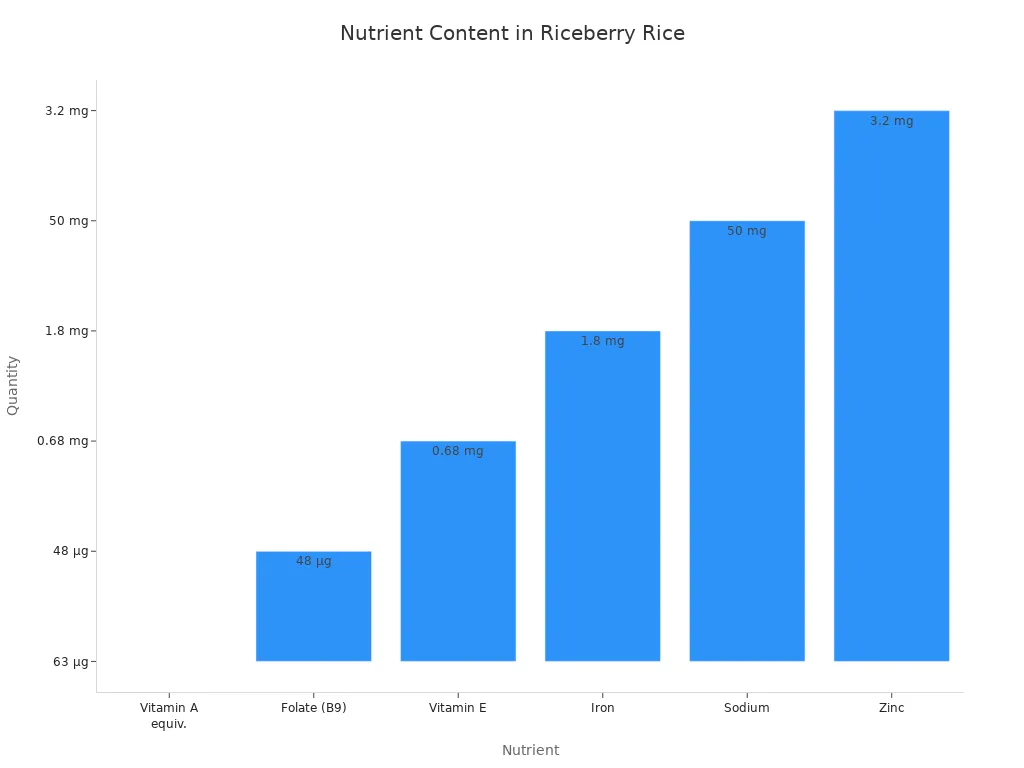
Riceberry has more vitamins and minerals than white rice. It keeps its bran and germ, so it holds more nutrients. You get vitamin A, folate, vitamin E, iron, sodium, zinc, calcium, and potassium in every serving. These nutrients help your immune system and make red blood cells. They also keep your bones strong.
Nutrient | Quantity | % Daily Value (DV) |
|---|---|---|
Vitamin A equiv. (beta-Carotene) | 63 μg | 1% |
Folate (B9) | 48 μg | 12% |
Vitamin E | 0.68 mg | 5% |
Iron | 1.8 mg | 14% |
Sodium | 50 mg | 3% |
Zinc | 3.2 mg | 34% |
Calcium | 20 mg | 1% |
Potassium | 200 mg | 4% |
Riceberry has more nutrition than white rice. White rice loses nutrients when it is processed. Riceberry keeps more fiber, folic acid, magnesium, iron, and zinc.
Riceberry is good for your health in many ways. It helps your heart, blood sugar, and cholesterol. The antioxidants in riceberry lower inflammation. They may also lower your risk of cancer. Riceberry bran oil has γ-oryzanol, tocopherols, and tocotrienols. These help lower blood fats and blood pressure. Studies show riceberry bran and oil can help people with diabetes. You may see lower blood sugar, better cholesterol, and a healthier heart.
Riceberry has a lower glycemic index, so your blood sugar rises slowly.
It has more fiber, which helps you digest food and feel full.
Riceberry helps keep your blood pressure healthy and may prevent heart disease.
You get strong antioxidant and anti-inflammatory effects.
If you want rice that tastes good and is healthy, riceberry is a great choice. It is full of nutrients and health benefits.
You can cook riceberry easily at home. Use the water-absorption method for the best results. Start by measuring 1 cup of riceberry rice and 1⅔ cups of water. Place both in a heavy-bottomed pot. Bring the water to a boil. Cover the pot and lower the heat to a simmer. Let it cook for 20 minutes. Turn off the heat and leave the lid on for 10 more minutes. This step lets the rice steam and finish cooking. You do not need to rinse riceberry before cooking.
To keep the nutrients in riceberry, use the water-absorption method instead of boiling with excess water. This method helps the rice keep its vitamins and antioxidants. If you reheat leftovers, use a microwave. Microwave cooking can help preserve and even boost the healthy compounds in riceberry. Freshly cooked rice has the most nutrition.
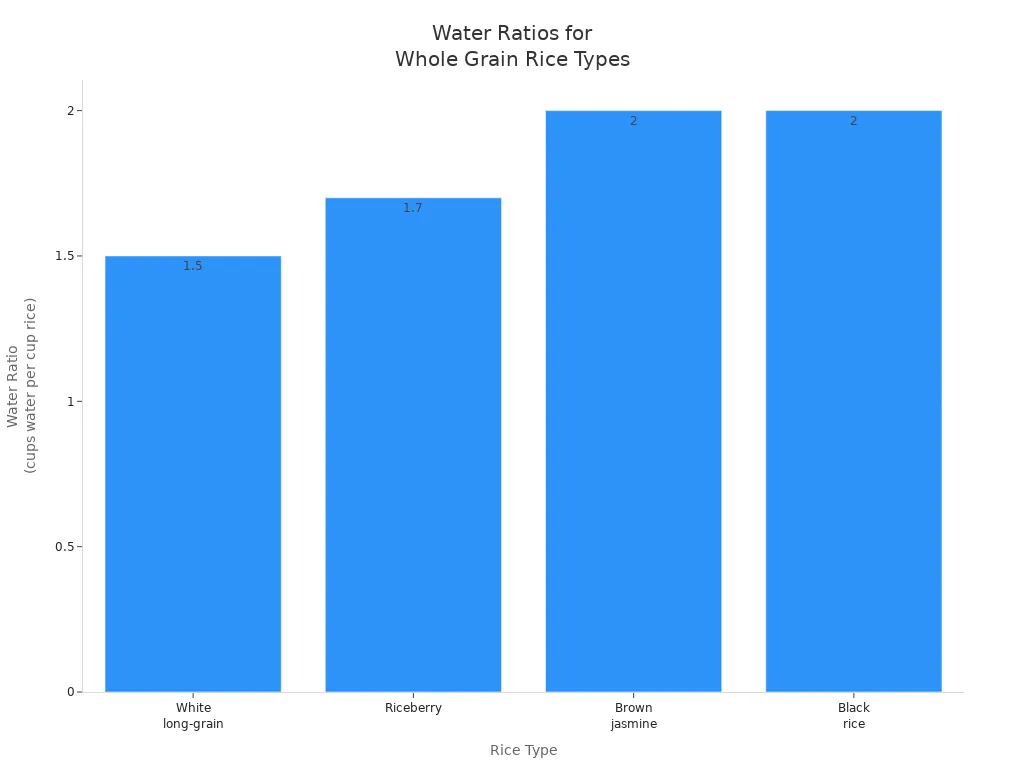
Riceberry has a soft, moist, and slightly chewy texture. It tastes mildly sweet and has a gentle floral aroma. Unlike black rice, you do not need to soak riceberry before cooking. It cooks faster and with less water than brown or black rice. You can see the differences in this chart:
Rice Type | Water Ratio | Cooking Time | Notes |
|---|---|---|---|
Riceberry rice | 1:1.7 | 20 min simmer + 10 min rest | Fast, no soaking, whole grain |
White long-grain | 1:1.5 | Similar to riceberry | Standard white rice |
Brown jasmine | 1:2 | Longer than riceberry | Needs more water and time |
Black rice | 1:2 | Long, needs soaking | Soak 4+ hours, longer cooking |
You can pair riceberry with many foods. It goes well with grilled chicken, fish, tofu, or stir-fried vegetables. Its color and taste make it great for salads and rice bowls. Try it with spicy Thai dishes or sweet tropical fruits.
Riceberry appears in both savory and sweet Thai dishes. You might enjoy Riceberry Congee for breakfast or Riceberry Rice Mango Pudding for dessert. Many people use riceberry in salads, stir-fries, and even sushi rolls.
Riceberry Khao Yam (Southern Thai Rice Salad)
Mix cooked riceberry with shredded coconut, lemongrass, kaffir lime leaves, bean sprouts, and herbs. Add a tangy dressing for a fresh, healthy meal.
Riceberry Sticky Rice with Mango
Steam riceberry until soft. Serve it with ripe mango slices and a drizzle of sweet coconut milk. This dish is colorful and full of flavor.
Riceberry Buddha Bowl with Grilled Vegetables
Fill a bowl with cooked riceberry, grilled zucchini, bell peppers, carrots, and chickpeas. Top with avocado and a light sesame dressing. This bowl is healthy and full of color.
Cooking riceberry lets you enjoy both traditional Thai flavors and modern fusion meals. You get taste, nutrition, and beautiful color in every bite.
Riceberry is a whole grain with a dark purple color. It smells nice and is good for your health. Each serving gives you antioxidants and fiber. It also has a medium to low glycemic index. Riceberry was first made in Thailand. It is soft and has a light, nutty taste. You can use it in many recipes.
Nutritional & Culinary Advantages | Details |
|---|---|
Antioxidants, fiber, vitamins | Good for your heart and stomach |
Soft, chewy, a little sweet | Great for salads, stir-fries, and desserts |
People like riceberry for its taste and nutrition.
Its bright color makes meals look better.
You can eat it in old or new recipes.
Try riceberry if you want meals with more color, taste, and healthy nutrients.
Riceberry rice has a deep purple color and more antioxidants than white rice. You get more vitamins, minerals, and fiber. The taste is slightly sweet and the texture is soft. You eat it as a whole grain.
Yes, you can. Riceberry rice is naturally gluten-free. You can enjoy it if you have celiac disease or gluten sensitivity. It works well in many gluten-free recipes.
Store cooked Riceberry rice in an airtight container in your refrigerator. You should eat it within three days. For longer storage, freeze it in small portions.
Riceberry rice has a lower glycemic index than white rice. It raises your blood sugar more slowly. You may find it a better choice if you manage diabetes.
You can use Riceberry rice in salads, stir-fries, and desserts. Try it in rice bowls or as a side for grilled meats. Its color and taste make every meal special.