Do you ever struggle to get a good night’s sleep because your partner is a hot sleeper? You’re not alone. Many couples face challenges sleeping comfortably when one person tends to get too warm at night. In fact, more than one-third of Americans sometimes sleep in separate rooms due to issues like differing temperature preferences. Experts explain that your body temperature plays a big role in how well you sleep, and not everyone prefers the same sleeping temperature. So, what to do when your partner is a hot sleeper? If you’re looking for effective ways to keep your side of the bed cool and help both of you rest better, you’ve come to the right place.
Pick sheets made from cotton, bamboo, or linen. These help you stay cool and dry at night.
Use thin blankets or your own covers. This lets each person control how warm they feel.
Choose a cooling mattress or put a cooling topper on your bed. This helps lower heat and makes you more comfortable.
Keep your room between 60 and 67°F. Use fans to move air around.
Wear loose pajamas made from linen or bamboo. These help sweat dry faster.
Try cuddling with a sheet between you or touch less skin. This can stop you from getting too hot together.
Talk with your partner about how you like to sleep. Try things like using different blankets or split mattresses.
If you still sweat at night after trying these tips, talk to a doctor. This can help find out if you have a health problem.
Picking the right sheets can help you stay cool at night. Cooling sheets use fabrics that let air move and pull sweat away. This keeps you dry and comfy, even if your partner is warm. Dr. Michael Breus says cooling sheets help people with night sweats. You may sleep better if your bedding keeps your body cool. Bamboo, cotton (percale), and eucalyptus (Tencel) are great for cool sheets. These fabrics pull sweat off your skin and dry fast, so you wake up fresh.
Tip: Choose sheets with a thread count from 200 to 400. This gives you soft sheets and good airflow.
Some sheets keep you cooler than others. Certain fabrics trap heat, but others help you stay cool. Here’s a table to show how some popular fabrics compare:
| Fabric Type | Breathability | Moisture-Wicking | Feel | Best For |
|---|---|---|---|---|
| Cotton (Percale) | High | Good | Crisp, cool | Hot sleepers |
| Bamboo | High | Excellent | Silky, smooth | Night sweats |
| Linen | Very High | Good | Textured, airy | Summer, humid areas |
| Microfiber | Low | Moderate | Soft | Budget options |
| Tencel | High | Excellent | Soft, cool | Sensitive skin |
Natural fabrics like cotton, bamboo, and linen are best for staying cool. Microfiber costs less but does not let air move as well.
A light blanket or cool comforter can stop you from getting too hot. Experts say to pick blankets that breathe, wick moisture, and are easy to wash. Here are some good choices:
| Blanket Type | Key Features & Benefits |
|---|---|
| Cooling Blankets | Lightweight, moisture-wicking, great for hot sleepers |
| Slumber Cloud Lightweight Comforter | Fights humidity, hypoallergenic, soft |
| Reafort Ultra Soft Flannel Fleece | Machine washable, OEKO-TEX certified, all-season use |
| Downluxe Lightweight Down Comforter | Cool sleeping, feather comfort |
| Brooklinen Linen Quilt | Breathable, pre-washed, good for all seasons |
| Cocoon CoolMax Blanket | Compact, moisture-wicking, travel-friendly |
| BlanQuil Chill Cooling Weighted Blanket | Cooling, weighted, removable cover |
| Buffy Breeze Eucalyptus Comforter | Eco-friendly, temperature-regulating, lightweight |
If you and your partner like different covers, try using separate blankets. Each person gets their own layer, so you don’t have to share or argue. Many couples sleep better with their own blankets. You can pick a cool comforter, and your partner can choose a warmer one.
Note: Using separate blankets does not mean you are less close. You can still cuddle and spend time together, but both of you will sleep better.
When you shop for cool bedding, you’ll see natural and synthetic fabrics. Cotton is the most popular for keeping cool. It feels soft, lets air move, and comes in many weaves. Bamboo and linen are also good natural fabrics for cool sheets. Synthetic fabrics like microfiber cost less and wick sweat, but they do not breathe as well. Thread count is not always important for cooling, so focus on the fabric.
The right sheets and blankets can make your bed cooler and help you sleep better. Try different things to see what works for you and your partner.
Choosing the right mattress and bed setup can make a huge difference when you share a bed with a hot sleeper. The type of mattress, the topper you use, and even the size of your bed all play a role in how cool and comfortable you feel at night.
Not all mattresses handle heat the same way. Some trap warmth, while others help you stay cool. Here’s how different types work:
Memory foam mattresses often hold onto heat. You might feel warmer, especially if you sleep close to your partner.
Hybrid mattresses mix foam and coils. The coils let air move, so you get better airflow and less heat.
Gel mattresses use special gel layers that pull heat away from your body. These are great if you want a cooling mattress that fights night sweats.
Latex mattresses have an open cell structure. This makes them a top choice for a breathable mattress that does not trap heat.
| Mattress Type | Heat Retention | Airflow & Cooling Features |
|---|---|---|
| Natural Latex | Low | Excellent breathability, great ventilation |
| Memory Foam | High | Traps warmth, some have gel for cooling |
| Hybrid (Coils + Foam) | Moderate | Coils boost airflow, latex hybrids are best |
| Gel Mattresses | Very Low | Superior cooling, moisture-wicking |
If you want the best cooling mattress, look for latex or gel options. These help you control temperature and keep your bed fresh.
A cooling mattress topper can help if you don’t want to buy a new mattress. Toppers add a layer that controls temperature and keeps you comfortable. Some top-rated options include:
ViscoSoft Active Cooling Copper Topper: Copper pulls heat away and keeps the surface cool.
Sleep Is the Foundation Memory Foam Topper: Gel and a ventilated core help you sleep cooler.
Puffy Deluxe Mattress Topper: Comes in soft or firm, with memory foam that stays cool.
Dormeo Mattress Topper: Uses special cushions for airflow and pressure relief.
Many toppers use gel, copper, or breathable covers. These materials help you and your partner stay at the right temperature. If you both like different feels, try a split topper or a bed climate control system. Products like the BedJet Dual Zone Bundle let you set a different temperature on each side. You get cool air on your side, while your partner stays warm if they want.
Tip: A cooling mattress topper with motion isolation also helps you sleep better if your partner moves a lot.
The size of your bed matters more than you think. A bigger bed, like a king or California king, gives you more space to spread out. This means less body heat builds up between you and your partner. You both get your own space, which helps you stay cool.
| Aspect | Benefit |
|---|---|
| Bed Size | More room means less shared heat and fewer sleep interruptions |
| Edge Support | Strong edges let you use the whole bed without feeling crowded |
| Split Mattresses | Each person can adjust firmness and temperature for personal comfort |
If you want even more control, try a split king mattress with a bed climate control system. This lets you and your partner pick your own temperature settings. You both get the comfort you need without giving up closeness.
A breathable mattress, the right topper, and a bigger bed can all help you sleep cooler—even if your partner sleeps hot.
Creating the right bedroom environment can help you and your partner cool down and sleep better. Here are some tips to keep the room cool and comfortable all night.
Getting the temperature right in your room makes a big difference. Sleep experts say the best bedroom temperature for most adults is between 60 and 67°F. If your room gets warmer than 70°F, you might wake up feeling hot and restless. If it drops below 60°F, you could feel too cold and have trouble breathing easy. Try setting your thermostat in the recommended range and see how you feel. You may need to adjust it a little based on your age or what feels best for you.
A cool, dark, and quiet room helps you fall asleep faster.
Your body cools down naturally at night, so a cooler room supports this process.
If you share a bed with a hot sleeper, keeping the room cool can help both of you rest better.
Fans are a simple way to cool down your room. You can use fans to move air around and stop heat from building up. There are many types of fans, like table fans, floor fans, ceiling fans, and window fans. Each one helps keep the room cool in its own way.
Try placing a fan on your partner’s side of the bed. This can help them cool down without making you too cold.
If you want even more airflow, use fans to create a cross-breeze. Put one fan by the window to pull in fresh air and another to push warm air out. This trick works well when you can’t turn on the AC or want to save energy. If you need extra help, turn on the AC for a while before bed. Air conditioning is a powerful cooling device that quickly lowers the temperature and helps hot sleepers stay comfortable.
Light can heat up your room fast, especially in the summer. Thick curtains or blackout blinds block sunlight during the day and help keep the room cool. When you close the curtains before sunset, you stop heat from getting trapped inside. This keeps your room cooler at night and helps you fall asleep faster.
Exposure to soft, warm light before bed also helps your body get ready for sleep. Bright or blue light can make it harder to fall asleep and may even make your room feel warmer. Try using lamps with yellow bulbs in the evening for a cozy, restful vibe.
Humidity can make your room feel sticky and hot. High humidity stops sweat from drying, so you feel warmer and less comfortable. To keep the room cool, aim for a humidity level between 40% and 60%. You can check this with a small device called a hygrometer.
If your room feels damp, use a dehumidifier to pull extra moisture from the air. This helps you cool down and breathe easier. If your room is dry, a humidifier adds just enough moisture to keep you comfortable. Always keep air moving with a fan or by opening a window when the weather is nice. Clean your air filters and fix any leaks to stop mold and allergens from building up.
Tip: Choose bedding made from cotton or bamboo to help wick away sweat and keep you cool, even when the air feels humid.
By making small changes to your room, you can cool down, sleep better, and wake up feeling refreshed—even if your partner sleeps hot.
What you wear to bed can help you stay cool. Choose sleepwear made from fabrics that let your skin breathe. These fabrics also pull sweat away from your body. Loose pajamas let air move around you. This stops you from feeling sticky or too hot. Here’s a simple chart to show how different fabrics work:
| Sleepwear Type / Fabric | Cooling Effectiveness | Key Properties | Example Products |
|---|---|---|---|
| Cotton | High | Breathable, natural fiber, moderate moisture wicking | Lightweight cotton pajamas, Supima, Egyptian cotton |
| Silk | High | Lightweight, breathable, moisture-wicking, gentle on skin | Silk pajamas, luxury sleepwear |
| Linen | Very High | Highly breathable, excellent moisture wicking, ideal for humid climates | Linen pajamas, summer sleepwear |
| Tencel (Lyocell) | High | Semi-synthetic from plant fibers, breathable, excellent moisture wicking, soft feel | Eberjey Gisele Tencel Modal PJ Set |
| Bamboo-derived viscose | High | Lightweight, moisture-wicking, breathable, soft | Cozy Earth Bamboo Pajama Sets (men’s and women’s) |
| Proprietary cooling fabrics (e.g., NATTCOOL) | Very High | Engineered for thermoregulation, moisture-wicking, breathable | Slumber Cloud Stay Cool Sleepwear |
| Polyester, fleece, flannel | Low | Less breathable, insulating, retain heat | Not recommended for cooling sleepwear |
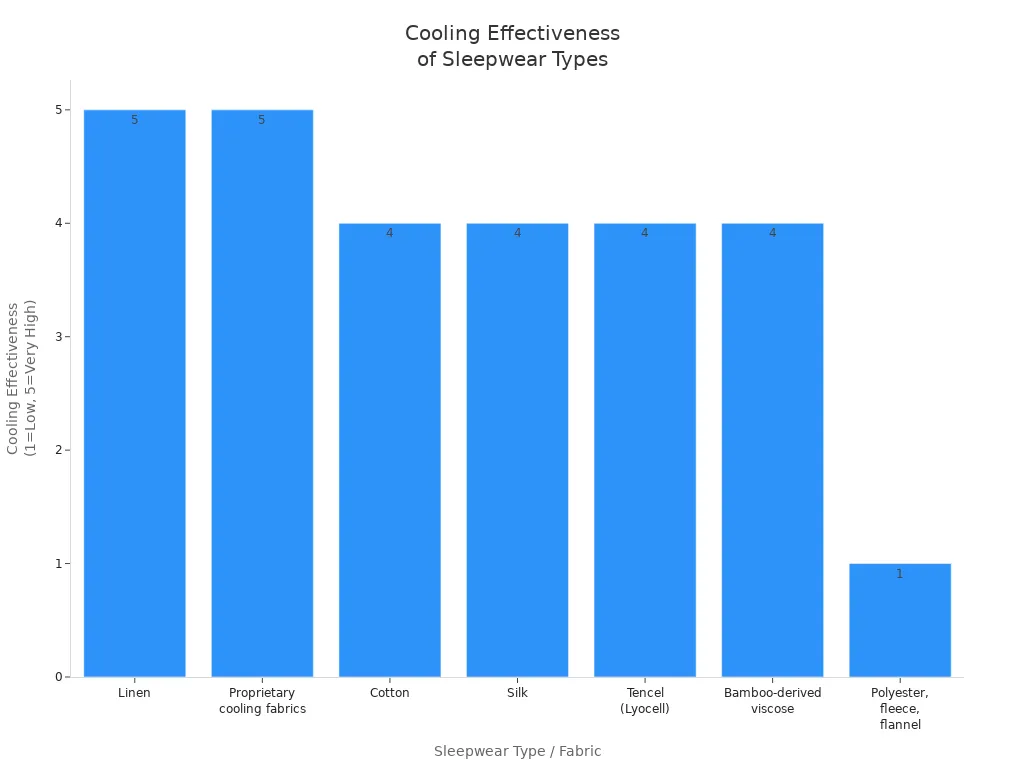
Skip heavy fabrics like fleece or flannel if you want to stay cool. Try linen or bamboo pajamas for the best cooling. These ideas help you wake up dry and comfortable.
A good bedtime routine helps your body cool down. Take a warm shower or bath about 90 minutes before bed. This may sound strange, but it works. Warm water opens your blood vessels. This lets your body lose heat. When you get out, your body cools down. You feel sleepy and fall asleep faster. This trick can help you sleep better.
Bright screens from phones or TVs can keep you awake. The blue light makes your brain stay alert. It can also make your body warmer. Turn off electronics at least 30 minutes before bed. Try reading a book or listening to music instead. This helps your body relax and get ready for sleep.
Drinking enough water helps you stay cool at night. When you are hydrated, your body can sweat and cool off. Keep a glass of water by your bed if you get thirsty. But don’t drink too much right before bed. You might wake up to use the bathroom.
Tip: Drink water during the day, not just at night. This helps your body control temperature and keeps you comfy while you sleep.
By picking the right pajamas, having a smart bedtime routine, and drinking water, you can stay cool and sleep better—even if your partner sleeps hot.
Sharing a bed with your partner can feel cozy, but it often means extra heat. If you want to sleep cool, you need smart cuddling strategies. You can stay close without turning your bed into a sauna. Let’s look at two simple ways to keep the warmth under control.
A sheet barrier is a game-changer for couples who want to stay close but not overheat. You just need an extra layer between you and your partner. This thin layer helps block some of the body heat that passes between you. You can use a lightweight cotton or bamboo sheet for this trick.
Here’s how you can set it up:
Lay a flat sheet on the bed.
When you get into bed, fold part of the sheet between you and your partner.
Each person can tuck their side in for comfort.
Tip: Pick breathable sheets for your barrier. They let air move and help you avoid feeling trapped or sweaty.
A sheet barrier works well if you like to cuddle at first but want to cool off later. You can start the night close, then slide the sheet between you when you get too warm. This way, you both get the best of both worlds—closeness and comfort.
Direct skin contact can make you feel much warmer. Your bodies share heat fast when you touch. If you want to keep sleeping cool, try to limit how much skin touches during the night.
Here are some easy ways to do this:
Try the “back-to-back” position. You both face away but still touch lightly.
Hold hands or touch feet instead of full-body cuddling.
Use a pillow as a buffer between your legs or arms.
You can also set a “cuddle timer.” Spend a few minutes snuggling, then move apart when you start to feel too warm. Many couples find that a little space helps them sleep better and wake up refreshed.
Remember: You don’t have to give up cuddling to stay cool. Small changes can make a big difference in how you feel while sleeping.
A table can help you see which cuddling styles work best for staying cool:
| Cuddling Style | Heat Level | Best For |
|---|---|---|
| Full Spoon | High | Cold nights |
| Back-to-Back | Low | Warm sleepers |
| Hand Holding | Very Low | Staying connected |
| Sheet Barrier | Low | Couples with heat gaps |
| Pillow Buffer | Low | Reducing skin contact |
Try different strategies until you find what works for you and your partner. You can enjoy sleeping together and still wake up cool and comfortable.
Sharing a bed with a hot sleeper can feel tricky, but you have plenty of ways to make things work. If you keep asking yourself what to do when your partner is a hot sleeper, you’re not alone. Let’s break down some simple steps that can help both of you sleep better and keep your relationship strong.
The first step is always talking. You and your partner should share your sleep and temperature preferences. Open and honest conversations help you both understand what you need to feel comfortable at night. Here are some ways to start:
Ask your partner how they feel about the room temperature and bedding.
Share your own comfort level and what helps you sleep best.
Use “I” statements, like “I feel too warm with heavy blankets,” to avoid sounding like you’re blaming.
Listen to each other and try to find solutions together.
You can also try these ideas:
Use separate duvets or comforters so each person controls their own warmth.
Layer blankets, so you can add or remove them as needed.
Invest in a dual-zone mattress or bed climate control system, which lets each side of the bed have a different temperature.
Choose bedding made from natural, breathable fabrics to help with airflow.
Tip: Collaboration and flexibility are key. When you work together, you can keep your sleep quality high and your relationship happy.
Sometimes, the answer to what to do when your partner is a hot sleeper is to look at your sleep schedules. If you and your partner go to bed at different times, you might wake each other up or mess with each other’s comfort. Here’s how you can fix that:
Try the Scandinavian sleep method. Each person uses their own blanket or duvet. This way, you both control your own body temperature and avoid fighting over covers.
If one of you moves a lot or gets up during the night, separate blankets can stop the tug-of-war and help you both sleep better.
Talk about your bedtime routines. If your schedules are different, let the first person fall asleep before the other joins the bed.
Pick a mattress that reduces motion transfer. This means you won’t feel your partner moving around as much.
Keep the room cool, dark, and quiet. This helps both of you relax and fall asleep faster.
Here’s a quick list of tips for aligning your sleep and staying cool:
Use separate bedding layers for personal comfort.
Coordinate bedtime routines to reduce disruptions.
Choose a mattress that keeps movement from spreading.
Keep the room at a comfortable temperature for both of you.
Remember: You can always try new methods and see what works. If something doesn’t feel right, talk about it and adjust together.
Sometimes, no matter what you do, your partner still feels too hot at night. If you keep wondering what to do when your partner is a hot sleeper and nothing helps, it might be time to look for medical reasons. Some health problems can cause people to overheat while sleeping. These include:
Hormonal changes, like menopause or thyroid problems
Stress and anxiety, which raise body temperature
Certain medications, such as antidepressants or hormone therapy
If your partner has night sweats, wakes up tired, or feels irritable even after trying all the usual tips, you should talk to a doctor. Persistent overheating can lead to bigger health issues, like high blood pressure or daytime fatigue. A healthcare professional can help find the cause and suggest the right treatment.
Note: Don’t ignore ongoing problems. Getting help early can improve sleep quality and keep both of you healthy.
| Problem | Solution Example |
|---|---|
| One partner overheats | Use separate blankets or duvets |
| Different sleep schedules | Let one partner fall asleep first |
| Blanket tug-of-war | Try the Scandinavian sleep method |
| Room feels too warm | Lower the thermostat, use a fan |
| Persistent night sweats | Consult a healthcare professional |
If you keep asking what to do when your partner is a hot sleeper, remember that teamwork, patience, and a little creativity go a long way. You can both enjoy restful nights and wake up refreshed.
If you want to sleep cooler and avoid tossing and turning, these tips for hot sleepers can help you right away. Here’s a handy checklist to keep your nights comfortable:
Use separate blankets or comforters so you and your partner each get the right amount of coverage.
Try a larger bed or push two twin beds together to give both of you more space and less blanket stealing.
Pick a mattress that fits both your needs. A medium-firm or split mattress lets each person choose their own comfort.
Add a mattress topper or pad to one side if you can’t get a new mattress. This helps adjust firmness and temperature for each person.
Keep your bedroom cool with a fan, open window, or by lowering the thermostat.
Choose breathable sheets made from cotton or bamboo with a high thread count.
Invest in a quality pillow. Memory foam or ergonomic pillows can help you sleep better and avoid neck pain.
Avoid screens and electronics before bed. A dark, quiet room helps you fall asleep faster.
Try cooling pillows. These use special materials to pull heat away from your head and neck. Wash and pre-cool them for the best results.
Tip: Layer your bedding so you can add or remove covers as needed. This way, you and your partner both stay comfortable.
Many couples make simple mistakes when trying to stay cool at night. Check this table to see what to avoid and why:
| Mistake | Why It’s a Problem |
|---|---|
| Using dense, heat-retaining foam mattresses | Traps body heat and makes you feel hotter |
| Picking synthetic mattress covers (like polyester) | Holds in heat and moisture, causing discomfort |
| Not allowing airflow in mattress layers | Solid foam blocks air, making overheating worse |
| Choosing a mattress that is too soft or too firm | Too soft hugs your body and traps heat; too firm feels uncomfortable for cold sleepers |
| Buying low-quality mattresses without cooling tech | Breaks down fast and loses temperature control |
| Not talking about sleep temperature preferences | Leads to arguments and poor sleep for both partners |
| Skipping cooling pads or heated blankets | Misses out on easy ways to adjust temperature |
| Ignoring expert help when sleep problems continue | Ongoing discomfort can hurt your health and relationship |
Don’t forget to talk with your partner about what feels best for both of you.
Don’t use thick, synthetic bedding if you want to stay cool.
Don’t ignore new products like cooling mattress pads or temperature-regulating sheets. These can make a big difference.
Don’t expect one quick fix to solve everything. Sometimes you need to try a few different tips.
Remember: Good sleep starts with good choices. Small changes can help you and your partner wake up refreshed and happy.
There are many ways to help you and your partner sleep well, even if one person gets hot at night. You can use natural fabrics, cooling sheets, or try using your own blanket. Getting a bigger bed can also help you both feel better. Try different things to see what works best for you. Small changes can make you more comfortable and help you stay close as a couple.
When you both get good sleep, you feel happier and more relaxed together.
You want sheets made from bamboo, cotton, or linen. These fabrics breathe well and wick away sweat. Try a thread count between 200 and 400 for the best airflow. Avoid heavy or synthetic materials.
Yes! Point the fan toward your side of the bed. You can also use a small personal fan. This way, you stay cool, and your partner stays comfortable.
Wear loose, breathable pajamas. Drink water during the day. Take a warm shower before bed. Use cooling sheets and keep your room between 60°F and 67°F. These steps help you sweat less.
Absolutely! Many couples use their own blankets. You both get the comfort you want. This trick helps you avoid fighting over covers and keeps you cool.
Try a bigger bed or use a sheet barrier between you. Sleep back-to-back or hold hands instead of full-body cuddling. These ideas help you sleep cooler and still feel close.
Yes, they help a lot. Cooling toppers use gel, copper, or breathable foam. These materials pull heat away from your body. You feel cooler and sleep better.
If you sweat every night, wake up soaked, or feel tired all day, talk to your doctor. Night sweats can signal a health problem. It’s better to check early.
You can! Try short cuddle sessions, then move apart. Use a sheet or pillow as a barrier. Hold hands or touch feet for closeness without too much heat.


