Recognizing the differences between rice grains is essential, and using a guide to different rice grains can help you cook better meals. With the right guide, you can achieve the perfect texture and taste in your dishes. For example, if you choose Basmati rice, you’ll enjoy fluffy grains that don’t stick together. Other varieties like Long A or Long B offer softer or firmer rice options. The table below provides a guide to different rice grains by showing their amylose, protein, and fiber content. These factors influence how each type of rice cooks and tastes. By following a guide to different rice grains, you can select the best rice for your recipe and get great results every time.
Long, medium, and short grain rice are not the same size. They also have different stickiness. This changes how you should cook them.
Look at the grain size, shape, color, smell, and feel. These things help you know the rice type and if it is good.
Pick good rice with grains that look the same. It should smell fresh and not have broken pieces. This makes your food taste better.
There are many rice types like Basmati, Jasmine, Brown, Black, and Wild rice. Each one tastes different and is good for your health in its own way.
Wash rice before you cook it. Use the right amount of water. Store rice the right way to keep it fresh and yummy.
Image Source: pexels
When you look at the types of rice grains, you notice clear differences in size, shape, and texture. These features help you choose the best rice for your meal.
Long grain rice has slender grains that measure at least three to four times longer than their width. You find these grains in popular long grain varieties like Jasmine and Basmati. When you cook long grain rice, the grains stay separate and fluffy. This texture works well for dishes such as pilaf, biryani, and fried rice. You get a light mouthfeel and grains that do not stick together.
Tip: If you want rice that does not clump, pick long grain varieties for your recipes.
Medium grain rice has grains that are shorter and wider than long grain rice. The grains feel tender and slightly chewy after cooking. Medium grain rice holds a bit more moisture and has a semi-sticky texture. You often use medium grain rice in risotto, paella, and rice pudding. The grains stick together just enough to create creamy or tender dishes.
Short grain rice has the shortest and roundest grains. The grains measure less than twice as long as they are wide. When you cook short grain rice, it becomes very sticky and soft. This stickiness makes short grain rice perfect for sushi, rice balls, and desserts. You can easily shape it or press it together.
Here is a quick comparison table:
Rice Type | Size (Length to Width Ratio) | Shape | Stickiness/Texture When Cooked |
|---|---|---|---|
Long Grain | At least 3 to 4 times as long as wide | Slender, cylindrical | Light, fluffy, grains separate |
Medium Grain | Shorter and wider than long grain | Shorter, wider | Chewy, tender, slightly sticky |
Short Grain | Less than twice as long as wide | Short and wide | Soft, tender, very sticky |
As the grain length decreases, the stickiness of rice increases. Short grain rice has the highest stickiness because it contains less amylose and more amylopectin. This sticky texture helps you make sushi and other dishes that need rice to hold together. Long grain varieties have more amylose, so they stay firm and separate. You can use this knowledge to match the right rice to your favorite recipes.
You can use a guide to different rice grains to help you spot the right type for your dish. When you look at rice grains, you notice many features that set them apart. You see differences in size, shape, and color. These features help you identify each variety quickly.
Size and shape: You see long, slender grains in some types. Other grains look short and round. The length-to-width ratio tells you if the rice is long, medium, or short grain.
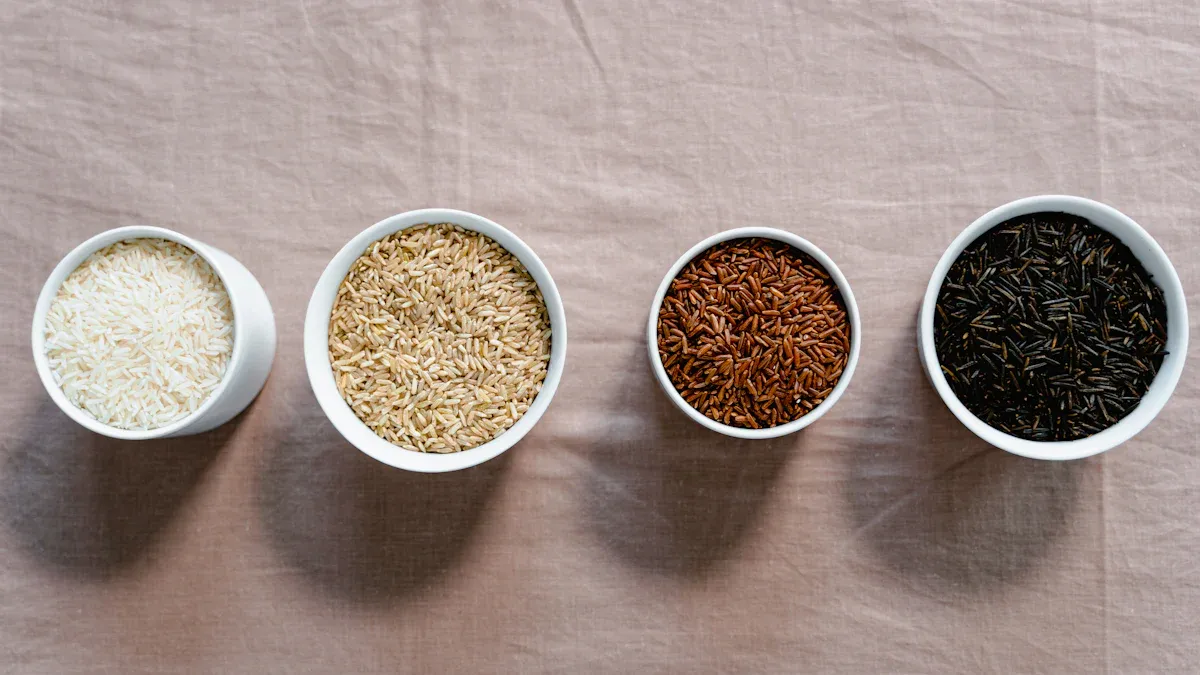
Color: You notice white, brown, red, and even black rice. The color comes from the outer layer and the type of rice.
Surface: Some grains look smooth and shiny. Others appear chalky or dull.
Aroma: You can smell a fresh, clean scent in high-quality rice. Some varieties, like Jasmine or Basmati, have a special fragrance.
Texture: When you touch the grains, you feel if they are firm or soft. Smooth grains often mean better quality.
A guide to different rice grains uses these visual features to help you choose the best rice for your recipe. You can check the grains by looking at their size, shape, and color. You can also use your sense of smell and touch to find the right rice.
Tip: Use a guide to different rice grains to compare the grains side by side. This helps you pick the perfect rice for your meal.
You want to buy rice that meets high standards. A guide to different rice grains shows you what to look for in top-quality rice. You can check several indicators before you cook or serve rice.
Quality Indicator Type | Specific Indicators | Description and Relevance to Food Safety Standards |
|---|---|---|
Intrinsic Qualities | Colour | Uniform color means good quality. Pigmentation affects taste and milling yield. |
Composition | Protein and carbohydrate levels change texture and nutrition. | |
Bulk Density | Heavy grains show better quality. Low density may mean pests or moisture problems. | |
Odour/Aroma | Fresh aroma signals safe and tasty rice. Some types have unique scents. | |
Size and Shape | Uniform grains make cooking easier. Length and width help classify rice. | |
Induced Qualities | Age | Older rice changes texture. Fresh rice tastes better. |
Broken Grain | Fewer broken grains mean higher quality. Broken grains lower yield and taste. | |
Chalky or Immature Grain | Chalky grains break easily and attract pests. | |
Foreign Matter | Clean rice has no stones, husks, or dust. | |
Infestation/Infection | No bugs or mold means safe rice. | |
Mixed Varieties | Pure batches cook evenly. Mixed types change texture and taste. | |
Moisture Content | Dry grains store well. Wet grains spoil faster. |
You can use a guide to different rice grains to check for these signs. Look for rice with uniform size and color. Avoid bags with broken grains, dust, or foreign matter. Smell the rice to make sure it has a fresh aroma. Pick rice stored in airtight containers to keep it safe and tasty.
Note: High-quality rice helps you cook better meals and keeps your food safe.
A guide to different rice grains gives you the tools to spot the best rice every time. You can use your eyes, nose, and hands to check the grains. This simple process helps you choose rice that cooks well and tastes great.
You can find many types of rice around the world. Each one has unique features that make it special for certain dishes. Learning about different types and varieties of rice helps you choose the best one for your meal.
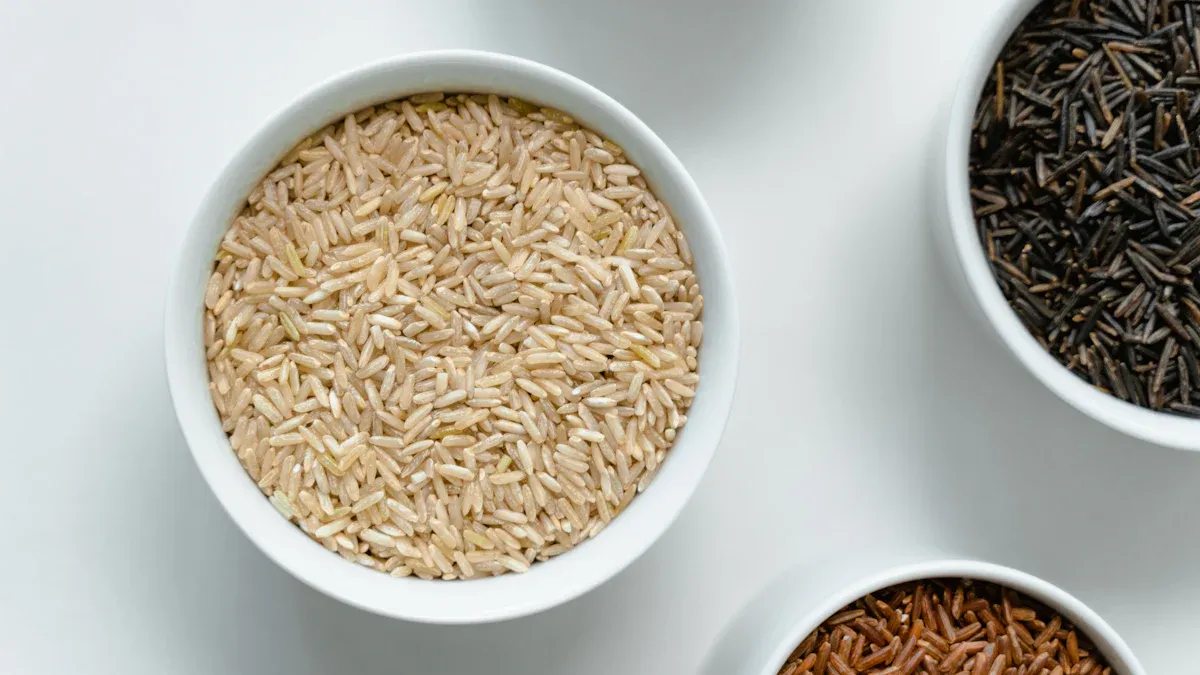
Brown rice keeps its bran layer, giving it a darker color and a stronger aroma than white rice. The texture feels harder and chewier because of the fiber in the bran. Some people find brown rice less appealing because of its tough texture and intense smell. You can see the differences in this table:
Characteristic | Description | Impact on Acceptance |
|---|---|---|
Appearance | Darker, more yellow | Less preferred than white rice |
Aroma | Stronger, sometimes off-flavors | Aroma can affect liking |
Texture | Hard, chewy | Many find it too tough |
You can use brown rice in salads, grain bowls, and as a healthy side dish.
Black rice stands out with its deep purple-black color. This color comes from anthocyanins, which are powerful antioxidants. You get a nutty flavor and chewy texture. Black rice gives you more protein and iron than brown rice. It also supports heart and eye health. Try black rice in salads, stir-fries, or as a colorful side.
Rich in antioxidants and fiber
Supports heart and eye health
Great for salads and bowls
Red rice has a red bran layer because of anthocyanins. You can spot it by its reddish color and slightly nutty taste. Red rice contains more zinc and iron than white rice. It works well in pilafs, mixed rice dishes, and as a base for grain salads.
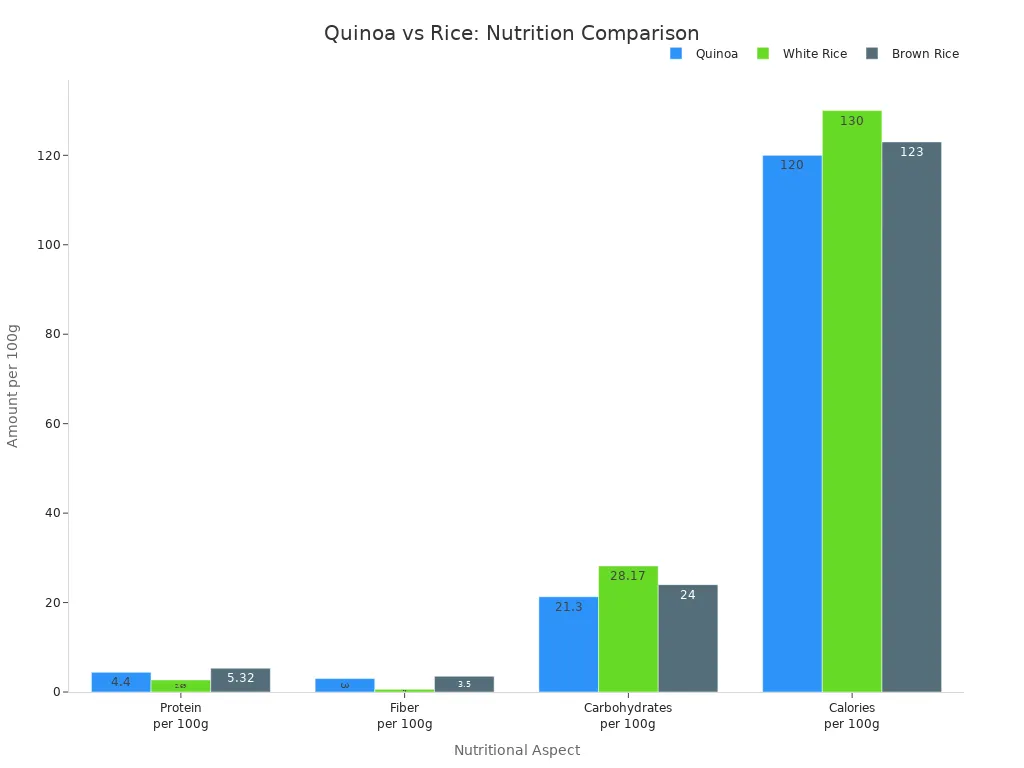
Quinoa is not a true rice, but you can use it like rice in many recipes. It has a nutty flavor and fluffy texture. Quinoa gives you more protein and fiber than most rice varieties. It is gluten-free and works well in salads, bowls, and as a rice substitute.
Wild rice is not a true rice but a grass seed. You can identify wild rice by its long, dark grains. Some wild rice looks shiny and black, while hand-harvested types have a matte finish and curl into a "c" shape when cooked. Wild rice adds a chewy texture and nutty flavor to soups, salads, and stuffing.
Basmati rice has long, slender grains and a sweet, nutty flavor. You will notice its strong, pandan-like aroma, which comes from a special compound. When you cook basmati rice, the grains become even longer and stay separate. This rice is perfect for biryani, pulao, and as a side for curries. Aging basmati rice improves its aroma and texture.
Jasmine rice is popular in Thai cuisine. The grains are shorter and fatter than basmati rice but longer than japanese white rice. You will notice a soft, fluffy, and slightly sticky texture. Jasmine rice has a floral aroma that smells like jasmine flowers. Thai jasmine rice is best for stir-fries, curries, and as a base for many Asian dishes.
Rice Variety | Grain Shape | Texture | Aroma/Flavor |
|---|---|---|---|
Jasmine Rice | Medium-long | Soft, fluffy | Floral, jasmine-like fragrance |
Basmati Rice | Very long | Dry, tender | Nutty, grassier aroma |
Sushi Rice | Short, round | Very sticky | Mild aroma |
You can use jasmine rice in Thai fried rice, coconut rice, and with grilled meats. Thai jasmine rice is also a favorite for rice bowls.
Kolam rice has small, spongy grains and a gentle, flowery fragrance. You will taste a sweet, delicate flavor. Kolam rice has a low glycemic index, making it good for people who watch their blood sugar. It is rich in fiber, vitamins, and minerals. You can use Kolam rice in idlis, dhoklas, and khichdi. It is also gentle on digestion and more affordable than other rice varieties.
Tip: Kolam rice is a healthy choice for daily meals and traditional Indian dishes.
Arborio rice has short, plump grains. It is high in starch, which makes it creamy when cooked. You use Arborio rice for risotto, arancini, and rice pudding. The grains stay firm in the center but release starch for a creamy texture.
Sushi rice, also called japanese white rice, has short, round grains. It becomes very sticky and chewy after cooking. You use sushi rice for sushi rolls, rice balls, and Japanese dishes that need sticky rice.
Sona Masoori is a medium-grain rice with a mild aroma and soft, fluffy texture. It is lower in calories and has a moderate glycemic index. You can use Sona Masoori in biryanis, pulaos, pongal, and South Indian dishes. It cooks quickly and absorbs flavors well.
Parboiled rice is steamed before milling. This process keeps more vitamins and minerals in the grain. Parboiled rice has a firmer texture and is less sticky than regular white rice. It is easy to cook and works well in pilafs, casseroles, and as a side dish.
Note: Learning about the different types of rice helps you pick the right one for every recipe. You can explore different rice varieties to find new flavors and textures.
Image Source: pexels
This guide helps you pick the right rice. You can match each grain to your dish. The chart shows rice types and their main features. It also lists the best ways to cook each one. This makes choosing rice for your meal simple.
Rice Type | Best Dishes | Cooking Method | Grain Texture | Special Notes |
|---|---|---|---|---|
Long Grain | Pilaf, Fried Rice, Biryani | Boil, Steam | Fluffy, Separate | Use for non-sticky dishes |
Medium Grain | Risotto, Paella, Pudding | Simmer, Stir | Creamy, Tender | Good for creamy recipes |
Short Grain | Sushi, Rice Balls, Desserts | Steam, Boil | Sticky, Soft | Easy to shape and press |
Brown | Salads, Bowls, Sides | Boil, Steam | Chewy, Nutty | High in fiber |
Black | Salads, Stir-Fries | Boil, Steam | Chewy, Nutty | Rich in antioxidants |
Red | Pilaf, Grain Salads | Boil, Steam | Nutty, Firm | High in minerals |
Quinoa | Salads, Bowls, Sides | Boil | Fluffy, Light | Gluten-free, high protein |
Wild | Soups, Stuffing, Salads | Boil | Chewy, Nutty | Not true rice, high protein |
Basmati | Biryani, Pulao, Curries | Soak, Boil, Steam | Long, Fluffy | Aromatic, grains expand |
Jasmine | Stir-Fries, Curries, Bowls | Boil, Steam | Soft, Slightly Sticky | Floral aroma |
Kolam | Idli, Khichdi, Dhokla | Steam, Boil | Soft, Spongy | Low glycemic index |
Arborio | Risotto, Arancini | Simmer, Stir | Creamy, Firm Center | High starch, creamy texture |
Sushi | Sushi, Rice Balls | Steam, Boil | Very Sticky | Short, round grains |
Sona Masoori | Biryani, Pongal, Pulao | Boil, Steam | Soft, Fluffy | Absorbs flavors well |
Parboiled | Pilaf, Casseroles, Sides | Boil, Steam | Firm, Non-Sticky | Retains nutrients |
Tip: Check the grain type before you cook. This helps you get the right texture and flavor.
You can print or save this chart for your kitchen. Use it when you try new recipes. The chart helps you choose rice quickly. You will cook with confidence and enjoy tasty meals.
Cooking brown rice takes a bit more time than white rice, but you get a nutty flavor and chewy texture. Here’s how to cook brown rice for the best results:
Rinse the brown rice under cold water until the water runs clear. This removes extra starch and keeps the grains from sticking.
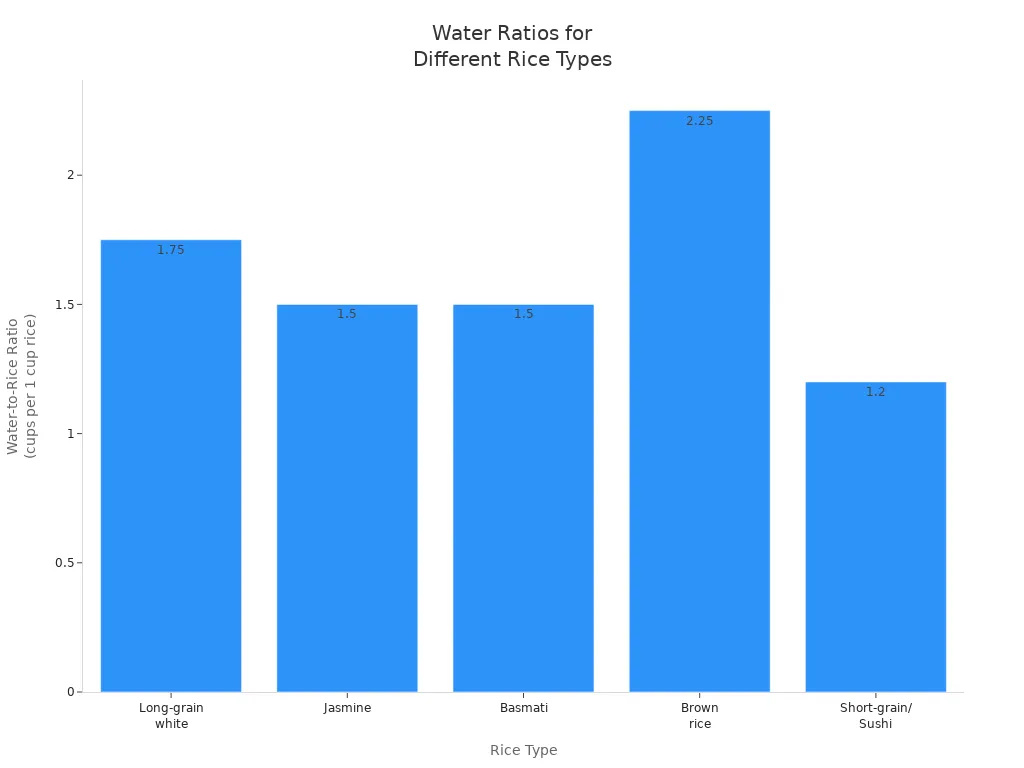
Measure 2¼ cups of water for every 1 cup of brown rice. Add both to a medium saucepan. You can add a teaspoon of olive oil for flavor.
Bring the water to a boil. Lower the heat, cover the pot, and let it simmer for about 45 minutes. The rice should absorb all the water and become tender.
Turn off the heat. Let the rice sit, covered, for 10 minutes. This step helps the rice steam and become fluffy.
Fluff the rice with a fork before serving.
Tip: Always check the type of brown rice you have. Cooking times may change for short, medium, or long grain.
When you shop for rice, look for these signs of quality:
Choose rice with uniform grain size and color. This helps you get perfect white rice every time.
Avoid packages with broken grains, dust, or debris.
Smell the rice. Fresh rice has a clean aroma. Stay away from musty or sour smells.
Pick rice in airtight packaging for freshness.
Check the label for rice type and origin. This helps you know how to cook white rice, how to cook basmati rice, or how to cook jasmine rice.
Proper storage keeps your rice fresh and safe:
Store uncooked rice in airtight, food-grade containers.
Keep rice in a cool, dry place away from sunlight.
Brown rice has more oil, so store it in the fridge or freezer to prevent spoilage.
Use white rice within one year and brown rice within six months for the best quality.
Always check for pests, moisture, or off smells before cooking.
Rinse rice before cooking to remove starch and improve texture.
Use the right water-to-rice ratio for each type. For example, use 1.75 cups of water for long-grain white rice, 1.5 for basmati rice, 1.5 for jasmine rice, 2.25 for brown rice, 1.2 for sushi rice, and 1.5 for arborio rice.
Let rice rest after cooking. This step helps you achieve perfect white rice.
Use a heavy-bottomed pot to prevent burning and ensure even cooking.
Problem | Solution |
|---|---|
Rice is too hard or undercooked | Add a little hot water, cover, and cook for a few more minutes. |
Rice is mushy or overcooked | Use less water next time. Avoid stirring while cooking. |
Rice sticks to the pot | Use a nonstick or heavy-bottomed pot. Add a small amount of oil. |
Rice has an off smell or taste | Check storage. Always use fresh rice. |
Note: For perfect white rice, always rinse, measure water carefully, and let the rice rest before serving. Try these tips for how to cook sushi rice, how to cook arborio rice, or how to cook parboiled rice for the best results.
Knowing how rice grains are different helps you make better meals. You can change the texture, flavor, and nutrition in your food. Research shows grain shape and milling quality matter a lot. Cooking properties also change how your meal turns out.
Quality Attribute | Impact on Meal Quality |
|---|---|
Appearance | Looks good and people like it |
Cooking-Eating Quality | Texture, smell, taste, and how it feels |
Nutritional Content | Gives vitamins, minerals, and starch |
Try new types like jasmine, basmati, or wild rice. You will find new flavors and textures. Picking the right rice can make any dish taste better.
White rice has the bran and germ removed. Brown rice keeps these layers, so you get more fiber and nutrients. Brown rice tastes nuttier and feels chewier.
You should pick short-grain rice. Sushi rice becomes sticky when cooked. This stickiness helps you shape rolls and balls easily.
Yes, you can store cooked rice in the fridge for up to four days. Use an airtight container. Always reheat rice until steaming hot before eating.
Rice turns sticky if you use too much water or choose a short-grain variety. Rinsing rice before cooking helps remove extra starch.
Wild rice gives you more protein and fiber than white rice. You also get extra antioxidants. Wild rice supports heart health and digestion.