You might wonder why your rice sometimes turns out sticky or too dry. The rice measuring cup explained: it holds 180 milliliters, which is less than a standard cup. When you use the rice measuring cup, you measure rice for cooking accurately. Standard cups hold more, so using one can change the texture of rice. If you want fluffy rice, use the right cup for cooking. Rice cookers use the rice measuring cup for water levels, so mixing cups can confuse your rice results. Many people make mistakes in cooking rice because they use the wrong cup. You get better serving sizes and rice texture with the correct cup. Cooking rice becomes easier when you follow these steps:
Use the rice measuring cup for each batch of rice.
Match rice and water for perfect cooking results.
Check your rice cooker markings before cooking.
Tip: Always use the rice measuring cup for consistent rice texture when cooking.
Use the rice measuring cup. It holds 180 ml. This helps you measure rice and water for good cooking results.
Rice cookers and recipes use the rice measuring cup size. If you use a standard cup (240 ml), your rice can turn out dry or mushy.
Always use the same cup for rice and water. This keeps the right rice-to-water ratio.
Rinse the rice before cooking. Follow your rice cooker’s water level lines for the same texture and taste each time.
If you lose your rice measuring cup, use a standard cup. Fill it three-quarters full. Change the water amount to match.
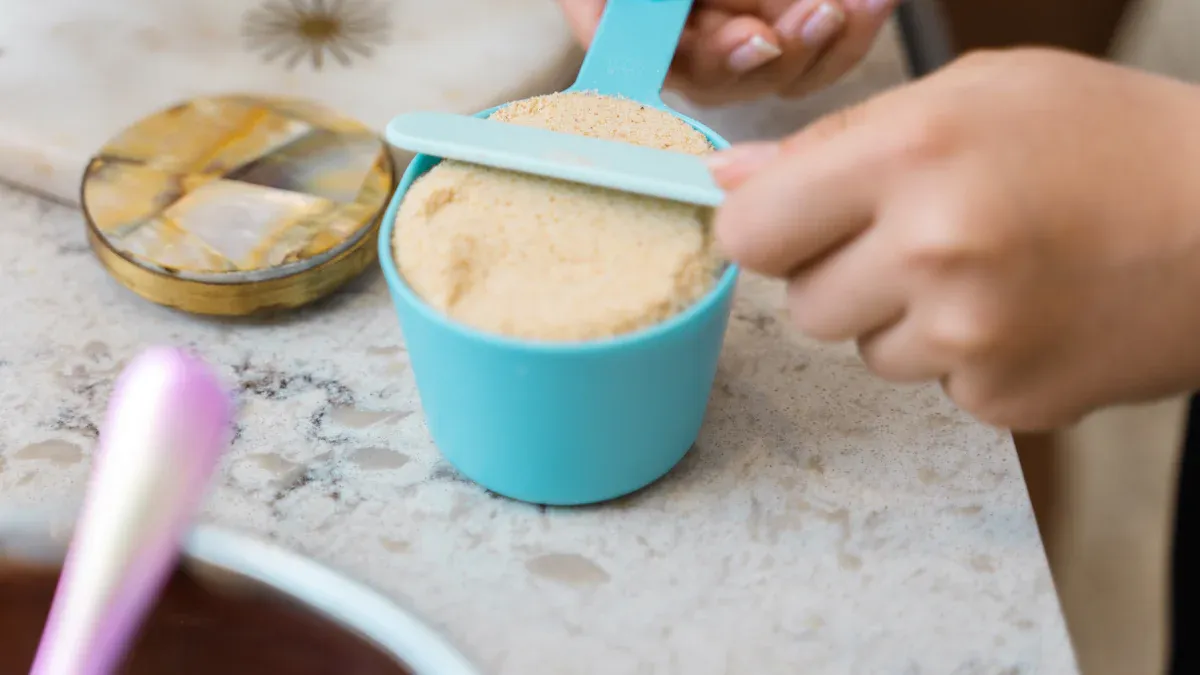
Image Source: unsplash
You see the rice measuring cup explained in many kitchens around the world. This small cup helps you measure rice for cooking. Most rice cookers include a rice measuring cup. The rice measuring cup explained: it holds exactly 180 milliliters. This size comes from the Japanese 'gō' unit. You use this cup to get the right amount of rice and water for perfect cooking. Other cups, like the Indian teacup, have different volumes and do not match the standard for rice. When you measure rice with this cup, you make sure your rice cooks evenly and tastes great.
The Japanese rice cup is standardized at 180 ml.
Rice cookers often include this cup for accurate measuring.
Other cups from different cultures do not match this standard.
You find rice measuring cups made from plastic or metal. Most cups have straight sides and a flat rim. This design lets you level off to get the 180ml every time. Some cups have markings to show the full 180ml measuring cup. You can easily scoop rice and pour it into your cooker.
The rice measuring cup explained: it always holds 180 milliliters. This volume is smaller than a standard U.S. cup, which holds 240 milliliters. The metric cup holds 250 milliliters. The rice measuring cup gives you about three-quarters of a U.S. cup. Rice cookers use this size to set water levels for cooking. If you use a standard cup, you might get rice that is too dry or too mushy.
You notice the rice measuring cup explained as a global standard. The full measuring cup matches the Japanese 'gō' unit. This tradition helps you get the right rice-to-water ratio. Using the wrong cup changes the texture and taste of your rice.
The rice measuring cup explained: it comes from the Japanese 'gō' unit. People used the 'gō' to measure rice and sake. One 'gō' equals 180 milliliters. This unit became the standard for rice cookers.
You see the rice measuring cup explained in Japanese homes. The 'gō' is part of a larger system. One thousand 'gō' make one 'koku', which fed a person for a year. The rice measuring cup keeps this tradition alive.
You use the rice measuring cup explained to follow cultural traditions. The full 180ml measuring cup helps you prepare rice the way families have done for generations. You level off to get the 180ml and honor the history of rice cooking.
Tip: Always use the rice measuring cup explained for consistent rice texture and taste.
Image Source: pexels
When you look at a rice measuring cup and a standard cup, you notice a clear difference in cup size. The rice measuring cup, also called a rice cooker cup or standard rice measuring cup, holds 180 milliliters. A standard cup holds 240 milliliters. This means the rice measuring cup is about 25% smaller than the standard cup. You fill the rice cooker cup to the top and level it off to get the right amount for cooking rice. This smaller cup size comes from Japanese tradition and is now used in rice cookers around the world. The exact difference—60 milliliters—matters for cooking and for following recipes.
You might see both cups in your kitchen and wonder which one to use for cooking rice. The rice cooker cup often looks similar to other measuring cups, but the markings show a different volume. Some rice cookers label their water lines for the rice measuring cup, not the standard cup. If you mix up the cups, your rice may not turn out as expected.
Using the correct rice cooker cup helps you get the right water to rice ratio. If you use a standard cup, you add too much rice or water, which changes the cooking process. The rice-to-water ratio is key for perfectly cooked rice. Chefs recommend using the same cup for both rice and water to keep the ratios accurate.
When you use the right rice cooker cup, you help your rice cook evenly. The texture and consistency of your rice depend on these ratios. Too much water makes rice mushy. Too little water leaves it dry. Consistency in measuring leads to consistency in results.
Many recipes for cooking rice use the rice cooker cup as the base measurement. If you use a standard cup, you get more rice than the recipe expects. This affects serving size and can make recipes unreliable. Always check which cup size your recipe uses.
If you use a standard cup instead of a rice cooker cup, you need to adjust the water level. Add a bit more water to match the larger cup size. For best results, use the rice cooker cup that came with your rice cooker.
Many people mix up the rice cooker cup and standard cup. This mistake leads to the wrong water to rice ratio and poor consistency. You might get rice that is too sticky or too dry.
Use the same rice cooker cup for both rice and water.
Keep the lid on during cooking to trap steam.
Avoid stirring rice while it cooks.
Use clear markings on your rice cooker cup for accuracy.
Try a rice cooker for the most consistent results.
Note: Consistency in measuring and following ratios gives you a perfect cup of rice every time. You get perfectly cooked rice with the right texture and flavor.
You want an accurate way to get the right rice volume for cooking rice. Follow these steps for accurate measurements every time:
Scoop raw rice into the rice cooker cup and level it off.
Rinse the rice in cold water using a fine mesh sieve until the water runs clear. This removes extra starch.
Pour the rinsed rice into your pot or rice cooker.
Add water. For most white rice, use about 1.5 cups of water for each rice cooker cup of rice. For jasmine or basmati, use 1.25 cups of water per cup. For brown rice, use 2 cups of water per cup.
Place the rice and water in the cooker or pot.
Bring to a boil, then cover and simmer. Let the rice rest after cooking for a few minutes.
Fluff the rice gently with a fork before serving.
Tip: Always use the same rice cooker cup for both rice and water to keep ratios and measurements consistent.
Rinsing rice helps remove surface starch. You should rinse raw rice under cool water until the water runs clear. This step helps you get fluffy, perfectly cooked rice.
Use accurate measurements for the water to rice ratio. For most rice types, the rice cooker cup guides you. Adjust water based on the rice type and your texture preference.
After measuring rice and water, place both in the rice cooker. Follow rice cooker instructions for best results. The rice cooker cup ensures you use the right ratios every time.
Rice cookers have water level markings inside the pot. These lines match the number of rice cooker cups of rice you add. For example, if you add 2 cups of rice, fill water to the "2" line.
Rice Type | Rice Measuring Cup Volume | Water Volume per Cup of Rice | Water Level Marking Correspondence |
|---|---|---|---|
Jasmine Rice | 1 rice cooker cup (~145g) | ~1 1/4 cups water (225g) | Water level marking '1' corresponds to 1 cup of rice |
Multiple Cups | 3 cups rice | Fill water to '3' water level | Water level markings match number of rice cups added |
Manufacturers design rice cooker instructions and water lines for rice cooker measuring cups. This makes measuring rice and water simple and accurate.
Different rice types need different water to rice ratios. Check your rice cooker instructions for special notes on brown, jasmine, or basmati rice.
If you lose your rice cooker cup, use a standard cup and adjust measurements. One rice cooker cup equals about 3/4 of a standard cup.
You can use a standard cup if you do not have rice cooker measuring cups. Use this table to match measurements:
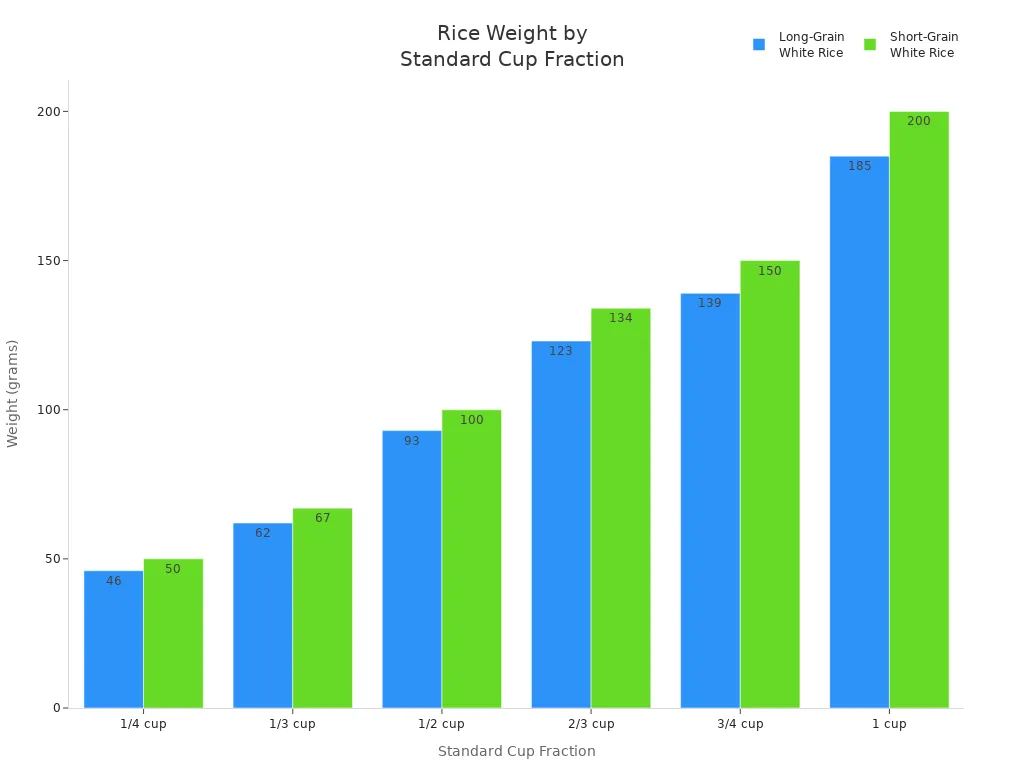
Rice Type | Cup Fraction | Approximate Weight (grams) |
|---|---|---|
Uncooked Long-Grain White | 3/4 cup | 139 g |
Uncooked Short-Grain White | 3/4 cup | 150 g |
When using a standard cup, adjust the water to rice ratio. For new-crop rice, use a 1:1 ratio. For older rice, use 1.25 cups of water for each cup of rice. This helps you get tender, perfectly cooked rice.
Always rinse rice before cooking.
Use accurate measurements for both rice and water.
Let rice steam after cooking for better texture.
Many people use the wrong cup or mix up measurements. Always match your rice cooker cup to the water lines. Adjust ratios if you use a standard cup. This keeps your cooking rice results consistent.
You often need to convert between a rice cooker cup and a standard measuring cup when following recipes. The rice cooker cup holds 180 ml, while a standard cup holds 240 ml. Use this chart for quick reference:
Rice Cooker Cups | Standard Cups (approx.) | Milliliters |
|---|---|---|
1 | 0.75 | 180 |
2 | 1.5 | 360 |
3 | 2.25 | 540 |
4 | 3 | 720 |
You can also measure rice by weight. One cup of rice weighs about 185 grams.
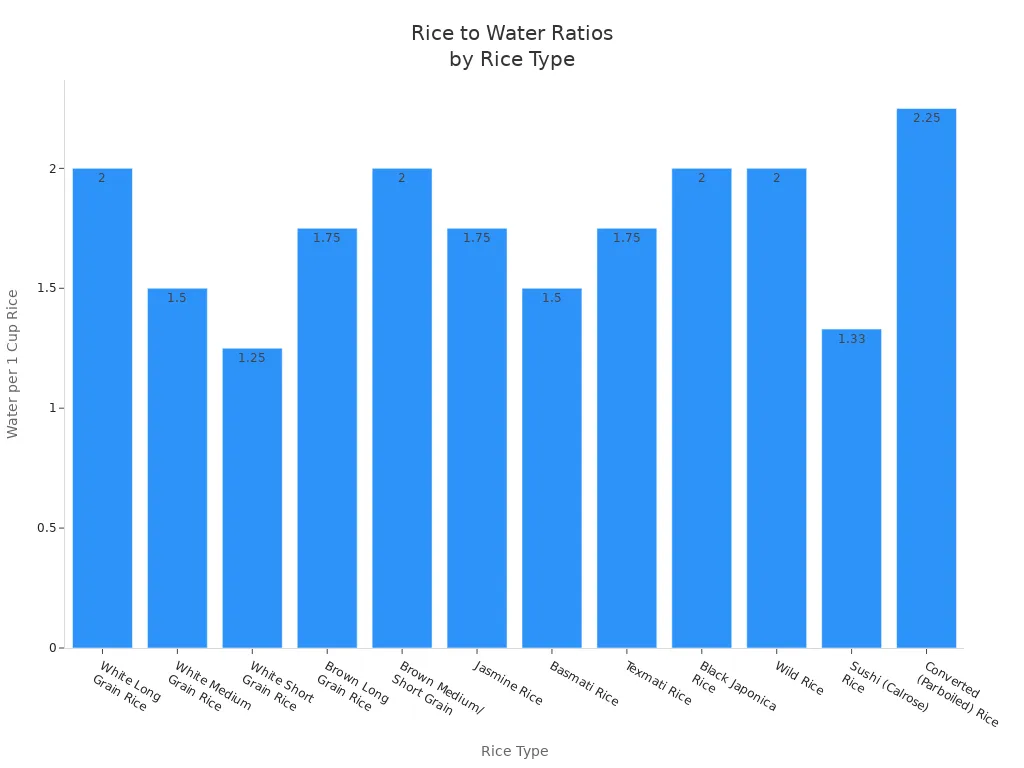
To get the right rice serving size and texture, use the correct rice-to-water ratio for your rice type. Multiply the rice volume by the ratio for your chosen rice. For example, for white long grain rice, use a 1:2 ratio. If you use 2 rice cooker cups, add 4 cups of water.
Rice Type | Rice to Water Ratio (by volume) |
|---|---|
White Long Grain Rice | 1 : 2 |
White Short Grain Rice | 1 : 1.25 |
Brown Long Grain Rice | 1 : 1.75 |
Jasmine Rice | 1 : 1.75 |
Basmati Rice | 1 : 1.5 |
Always use the same rice cooker cup for both rice and water.
Focus on the ratio, not just the cup size.
Measure water in milliliters for more accurate measurements.
If you do not have a rice cooker cup, use a standard measuring cup. Measure 3/4 cup of dry rice to replace one rice cooker cup. Rinse, add to your cooker, and fill water to the correct line.
A kitchen scale helps you get consistency. Weigh 185 grams for one cup of rice. If you do not have a scale, use visual cues like filling a standard cup three-quarters full.
Different rice types need different water amounts. Brown rice needs more water than white rice. Basmati and jasmine rice may need less water if you rinse them well. Adjust water based on rice type, freshness, and your cooking method.
If your rice turns out too dry, add a bit of hot water and steam it. For mushy rice, spread it out and heat gently to remove moisture. Always check rice texture and adjust next time for better consistency.
Using a standard measuring cup instead of a rice cooker cup changes the rice-to-water ratio. This mistake leads to inconsistent results.
Too much water makes rice mushy. Too little water leaves it undercooked. Always match the ratio to your rice type.
High heat or not enough water causes undercooked rice. Too much water or cooking too long makes rice mushy. Keep the lid closed and let rice rest after cooking.
Each rice variety absorbs water differently. Adjust your measurements for the best results.
Use dry measuring cups and level off rice.
Remember the rice cooker cup is smaller than a standard cup.
Adjust water for rice type and freshness.
Try the fingertip method for quick water measurement.
Focus on consistency and ratios for perfect rice every time.
Tip: Consistent measurements and attention to rice type help you achieve the best rice serving size and texture in all your recipes.
You now see why the rice cooker cup matters for cooking rice. Using the rice cooker cup helps you measure rice and water correctly. This step gives you better rice every time. Always check if you use the rice cooker cup or a standard cup before cooking. The rice cooker cup keeps your rice soft and fluffy. You avoid mistakes by using the rice cooker cup for every batch. Cooking rice with the rice cooker cup makes recipes easier to follow. Try to match your rice cooker cup to your rice cooker markings. You will notice better results in your cooking. The rice cooker cup is your best tool for perfect rice.
Tip: Always keep your rice cooker cup with your rice cooker for easy cooking.
You might notice your rice turns out too dry or too sticky. Standard cups hold more, so the water-to-rice ratio changes. For best cooking results, always use the rice measuring cup that comes with your rice cooker.
You can use the rice measuring cup for measuring grains or beans. However, recipes for baking or other cooking often use standard cups. Always check your recipe before you start cooking with a rice measuring cup.
You can use a standard measuring cup. Fill it to three-quarters full to match the rice measuring cup. This helps you keep the correct ratio for cooking rice. You can also use a kitchen scale for more accurate cooking.
Manufacturers design rice cookers for easy cooking. The water lines match the rice measuring cup size. When you use the right cup, you get perfect cooking results every time. This system helps you avoid mistakes in cooking rice.